


Vietnam updates aviation laws for foreign investment
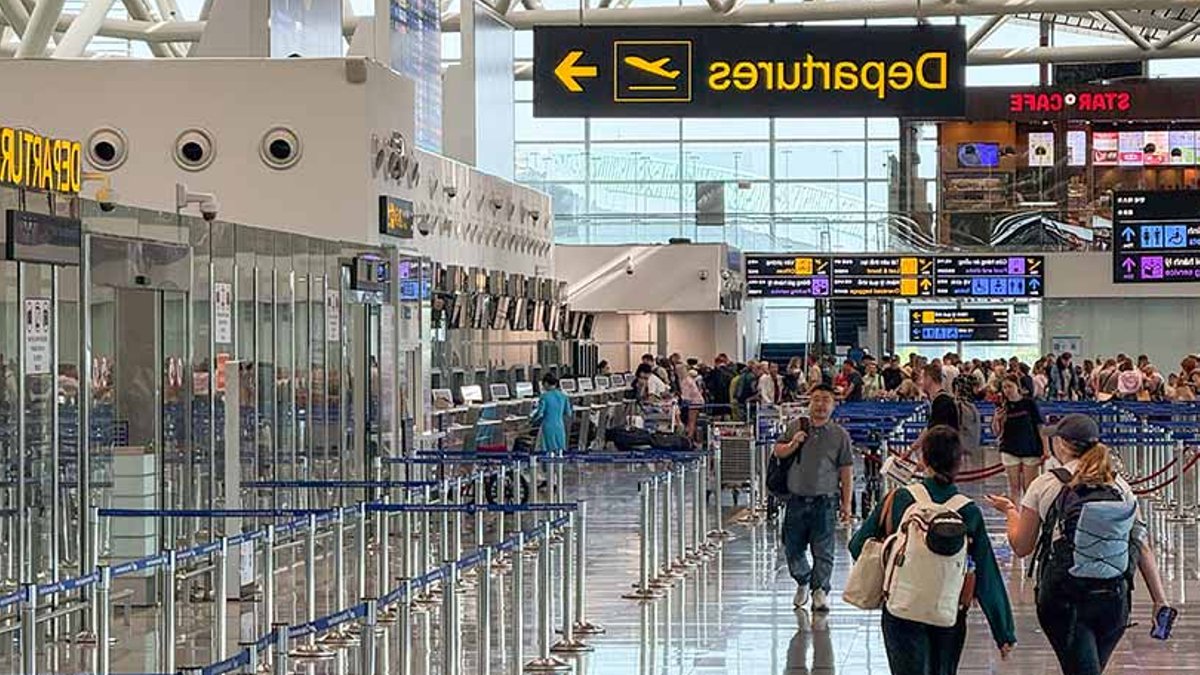
Vietnam’s aviation sector will operate under a new legal framework starting next year after the National Assembly passed the Law on Civil Aviation of Vietnam No. 130/2025/QH15 on December 10, 2025. The law took effect July 1, 2026, replacing the 2006 legislation to clarify rules for aircraft financing, private airport investment, and cross-border operations.
The update arrives as the country’s aviation market expands. In 2025, Vietnam handled 83.5 million passengers and 1.5 million tonnes of cargo, marking increases of 10.7% and 18.5% from the previous year. The Civil Aviation Authority of Vietnam projects the sector will need 36 airports by 2030, with a combined annual capacity of 249 million passengers. Meeting that goal will require an estimated $22.2 billion in investment.
Stronger protections for aircraft financiers and lessors
The 2025 Aviation Law explicitly recognizes Irrevocable Deregistration and Export Request Authorisations in primary legislation. Under Article 21, the CAAV can revoke an aircraft’s registration and airworthiness certificates and deregister it without prior court approval when enforcing remedies for a registered IDERA holder. Article 15 removes the requirement for an export certificate of airworthiness when an aircraft leaves the country, unless the importing jurisdiction demands one.
Article 21 addresses deregistration, export, and inter-agency assistance; it does not itself prescribe the handover of possession or technical records or the settlement of local liabilities. Lessors and financiers should combine an IDERA with a Vietnam-specific enforcement plan covering these issues.
Private investment in airports gets a clearer path
The new law establishes a statutory framework for non-state capital in airport development. Article 5 sets out investment principles, emphasizing fair competition and the protection of foreign investors’ lawful interests. It also permits diversified investment forms, including public-private partnerships and business-investment models.
Investors can develop dual-use infrastructure and improve public airport assets without transferring land-use or asset ownership under Article 30. However, Article 31 requires consultation with the Ministry of National Defence and Ministry of Public Security before finalizing the investment form. For business-investment projects, aviation infrastructure assets must generally be transferred to the state at the end of the project term, with compensation based on their carrying value.
Related: Vietnam Lures High-Tech Manufacturers
Articles 33 and 34 expand opportunities for airport enterprises to operate facilities, appoint operators, and provide aviation-related services.
The revised national airport plan reflects these changes. Foreign participation is already visible in airport services, such as Saigon Cargo Service Corporation’s international cargo terminal at Tan Son Nhat International Airport, where foreign shareholders hold about 10% of the company.
Leasing, ownership, and foreign operator rules
Decree No. 208/2026/ND-CP, which took effect alongside the 2025 Aviation Law, introduces clearer requirements for fleet planning, aircraft leasing, and foreign ownership. Vietnamese air transport enterprises must notify the CAAV of their annual fleet plans by December 1 of the preceding year and submit their first five-year plans within 60 days of the decree’s implementation. Amendments require notification within 30 days.
Article 28 requires CAAV approval before leased or purchased aircraft can enter civil aviation operations. Airlines must consider both fleet-plan notifications and transaction approvals when scheduling deliveries. Wet leasing is permitted under Article 26, but with limits: airlines holding an Air Operator Certificate can wet lease up to 10 aircraft from foreign operators, with each lease capped at 12 consecutive months. This flexibility helps address seasonal demand, maintenance delays, or other short-term capacity gaps.
Foreign operators conducting scheduled commercial flights in Vietnam must obtain a foreign air operator certificate from the CAAV, per Article 41 of Decree No. 223/2026/ND-CP. The certificate is issued after the CAAV recognizes the operator’s home-state certificate. Foreign ownership in Vietnamese commercial airlines remains capped at 34%, under Article 7 of Decree No. 208. At least one Vietnamese individual or entity must hold the largest interest, and if that entity is foreign-invested, foreign capital cannot exceed 49% of its charter capital.
Aviation services and technology as priority sectors
The 2025 Aviation Law identifies manufacturing, maintenance, repair, and overhaul as key areas for development. It also highlights opportunities in aviation software, automation, artificial intelligence, and specialized materials. Workforce training programs are another focus, with the law encouraging partnerships between foreign firms and local institutions to build technical expertise.
Related: Vietnam’s middle class reshapes consumer markets
Sustainable aviation fuel receives particular attention. Article 5 provides a policy basis for tax, credit, and land incentives covering SAF research, production, import, distribution, and infrastructure. Vietnam Airlines used around 2,200 tonnes of neat SAF in 2025, and the country joined the voluntary phase of the Carbon Offsetting and Reduction Scheme for International Aviation on January 1, 2026. These steps could create opportunities across the SAF value chain, from production and certification to storage and airport refueling infrastructure.
The emphasis on SAF aligns with broader regional trends, but domestic production capacity remains limited. Most SAF used in 2025 was imported, and scaling up local production will depend on feedstock availability, regulatory clarity, and investment in processing facilities. The incentives outlined in Article 5 may help, but their effectiveness will depend on how quickly implementing regulations are finalized.
Investors and industry participants should approach the reforms in stages. Lessors and financiers need to register international interests and IDERAs promptly, while airlines must align fleet plans with approval timelines, wet-lease limits, and ownership restrictions. For airport projects, verifying investor eligibility, market-access conditions, and asset-transfer terms upfront will be critical. Businesses in MRO, technology, and SAF should monitor eligibility for tax and credit incentives, as well as evolving fuel certification and CORSIA requirements.
The law strengthens Vietnam’s legal framework for aircraft finance, airport investment, and aviation services. Its success will depend on how smoothly the new rules are implemented.
Companies looking to enter the market may find guidance in resources covering Vietnam’s company formation requirements.

Vietnam Lures High-Tech Manufacturers


