


Lael Bethlehem launches agency to boost local infrastructure
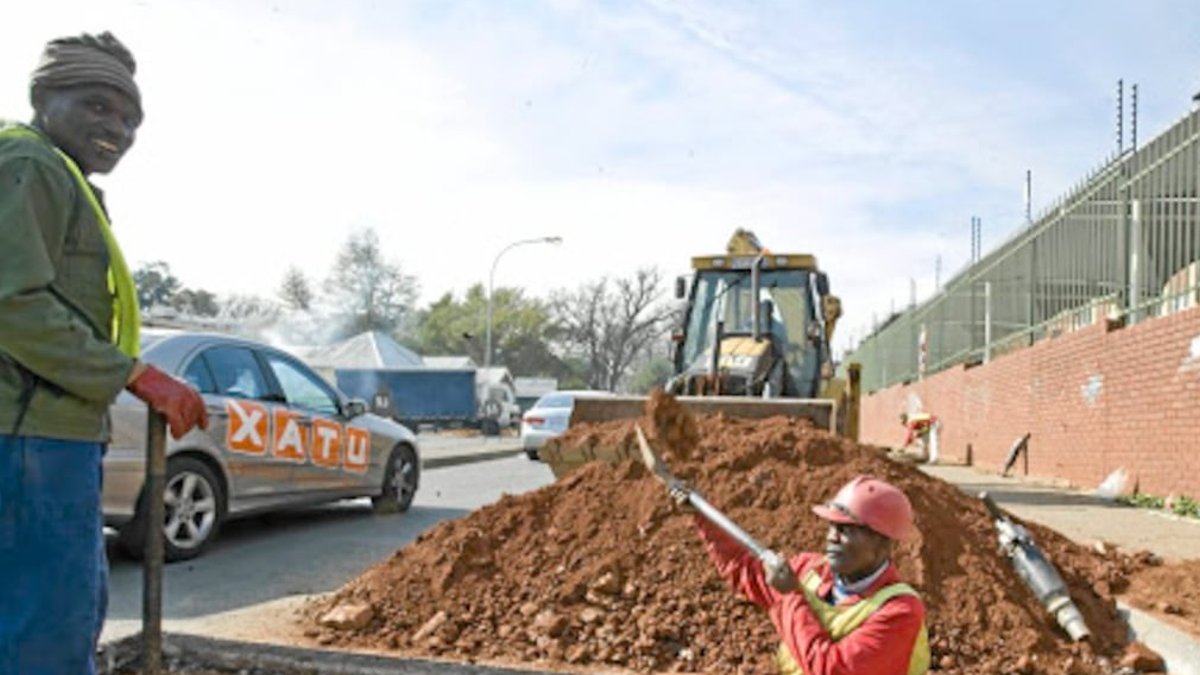
Johannesburg’s financial troubles go deeper than its shrinking budget for daily operations. The real problem, according to a new analysis, is that Johannesburg is starving its own infrastructure of the investment needed to keep water flowing and lights on.
City officials have cut the capital portion of the budget from 15% to 7% over the past 15 years. That means less money for the pipes, substations, and roads that form the basis of the metro’s future earnings.
Spending on the essentials has collapsed
The numbers tell a grim story. By May, the 11th month of Johannesburg’s financial year, it had spent only 50% of its already-reduced capital budget. Projections suggest Johannesburg will spend just over half of that reduced allocation in the 2026 financial year.
That leaves roughly 96% of the budget consumed by operating costs. The result: Johannesburg will spend about R5bn on infrastructure while Cape Town spends closer to R12bn.
This is the key source of the metro’s water leaks and power outages, the report argues.
The problem isn’t confined to Johannesburg. All major metros except Cape Town have steadily reduced capital spending relative to operational costs. Between 2010 and 2023, such expenditure by South African large cities declined by 40% in real terms, while personnel spending grew 68%.
The municipal infrastructure backlog now stands at R1-trillion.
Related: Trump holds back on Iran trade sanctions
That’s a national-scale fiscal risk, not just a local headache.
For a newcomer, it helps to understand what’s at stake. The city’s balance sheet—its underlying assets—determines its capacity to charge rates and tariffs. When those assets decay, the ability to generate future revenue decays with them. It’s a cycle that’s hard to break without outside help.
Private capital is the missing piece
The study argues that shifting expenditure back toward capital spend and ring-fencing electricity and water revenues won’t be enough. Public-private partnerships at the local level are needed to invest in infrastructure.
South Africa has the pools of private capital, skills, and equipment to address the problem, but they aren’t being called on sufficiently.
There was a time when this worked.
In 1998, the national government established the Municipal Infrastructure Investment Unit to mobilise and regulate private investment in local infrastructure. It was run by a number of talented public servants, including Monhla Hlahla, and worked closely with the Development Bank of Southern Africa.
The unit was closed down in 2006, leaving the initiative to individual municipalities.
Related: New tax rules ease capital transfer exemptions
Since then, there have been precious few projects because most local governments lack the skills to plan and regulate them or the commitment to focus on their infrastructure.
The tide seems to be turning.
The Infrastructure Finance & Implementation Support Agency (Ifisa) has now been created by finance minister Enoch Godongwana to assist local governments and others.
Earlier this week, President Cyril Ramaphosa pointed to the critical shortage of funding and expertise for local infrastructure and called for partnerships to address this.
That requires not just the support of Ifisa but a step-change in the capability of municipal leadership.
The analysis concludes that if there is any hope of delivering on developmental promises, the country must expand its partnerships with capable private players and regulate these successfully.

Trump holds back on Iran trade sanctions


