


Banks Insurers Regulators Missing in Expropriation Case
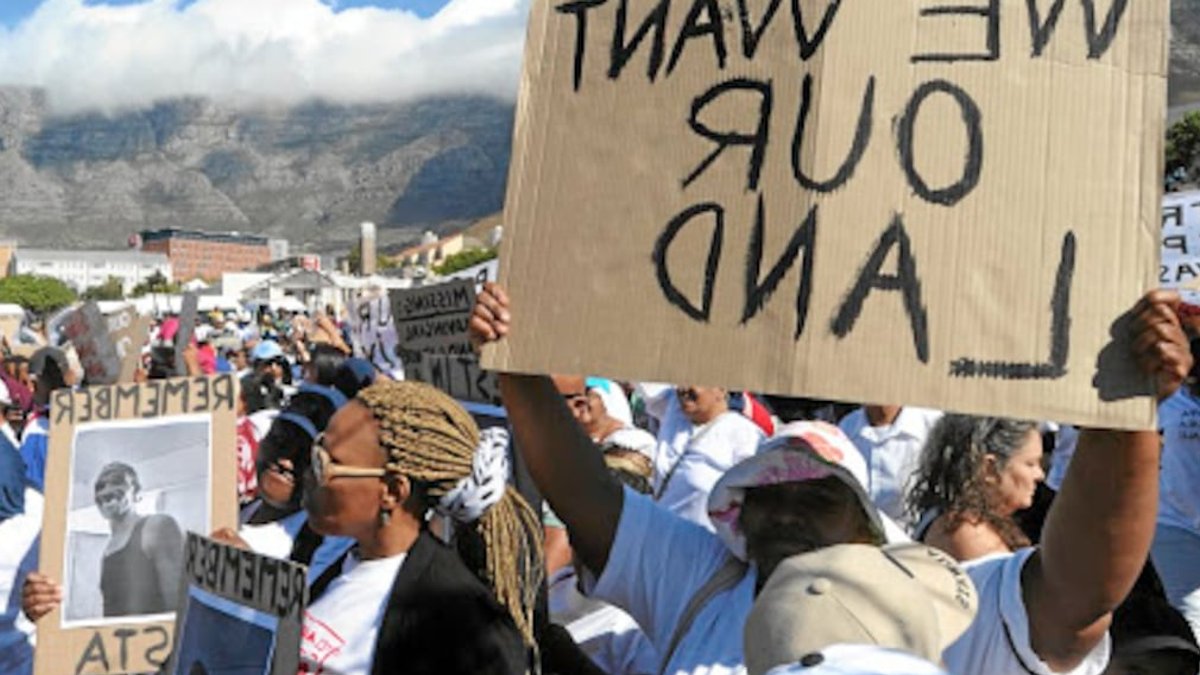
Expropriation under South Africa’s new law allows the state to take property for “nil” compensation, a provision now being tested in the Western Cape High Court. The case, brought by the Democratic Alliance, AfriForum and other groups, has drawn attention far beyond the land‑owners themselves.
Who is contesting the law?
The petitioners include the Democratic Alliance, AfriForum, Vaderland Stigting and the Institute of Race Relations Legal, with the Free Market Foundation’s Rule of Law Project and the Society for the Protection of Our Constitution joining as amici curiae. Their challenge focuses on whether the act’s open‑ended power aligns with the constitution’s property‑rights guarantee.
The court’s deliberations have highlighted a gap: the entities most exposed to the risk—banks, insurers, pension trustees and regulators—have remained largely silent. One of the three judges even asked where municipal officials were, given that local revenues hinge on productive property.
How lenders could be affected
When a farm valued at R30 million carries a R20 million mortgage, the bank relies on the land as security. If the state expropriates the farm for “nil” or a fraction of market value, the borrower loses the asset while the debt stays intact.
This scenario strips the lender of collateral but leaves the loan outstanding, potentially triggering default and insolvency. A single case might be absorbed, yet dozens could strain balance sheets, eroding earnings and capital.
Related: Gauteng opens biggest nature reserve to private operators
Shareholders of banks—often insurers and pension funds—would feel the loss through falling share prices. The ripple effect could spread to any institution holding those equities, magnifying the financial shock.
Financial institutions routinely model credit, liquidity and market risks. Yet there is little public evidence of comparable modelling for expropriation risk. The absence of stress‑testing by the Prudential Authority or the Reserve Bank raises questions about preparedness.
Collateral for commercial and industrial loans faces the same uncertainty. If property rights appear tenuous, lenders may demand higher interest rates or tighten credit, slowing investment.
Regulators, municipalities and the broader economy
Municipalities collect rates and fees based on property values and related economic activity. Large‑scale dispossession could shrink the tax base, reducing funds for services such as water and electricity.
The Treasury, Reserve Bank and Financial Sector Conduct Authority are expected to assess how widespread “nil” compensation might alter credit risk and capital adequacy. So far, public statements have been limited to political assurances of “responsible” use.
Related: Supreme Court Blocks Trump’s Tariffs on Vietnam Trade
Investors price in the security of assets. When the legal environment suggests that property could be taken without adequate compensation, risk premiums rise and foreign capital may look elsewhere.
Insurance companies and pension trustees, as large shareholders in banks, must consider the impact on the value of those holdings. If banks write down loan losses, the downstream effect on fund assets could be material.
Stakeholders have a straightforward set of questions: Have they modelled a scenario where a significant portion of mortgaged property is expropriated with little or no compensation? What would be the effect on loan‑to‑value ratios and on the capital buffers required by regulators? If analyses exist, why are the findings not public?
Financial stability hinges on transparent risk assessment. The silence from institutions directly responsible for monitoring and mitigating such risks is, in itself, a cause for concern.
As the court prepares its ruling, the broader financial community must move beyond political rhetoric and address the concrete credit‑risk implications. The outcome will shape not only land reform but also the confidence of investors, both domestic and foreign, in South Africa’s economy.

Gauteng opens biggest nature reserve to private operators


