Are you preparing for a vacation and traveling by plane? There are ways to shield your body against jet lag and overcome it, reducing the symptoms that can ruin your vacation.
Why do we get jet lag?
Jet lag occurs when we travel by plane and change two or more time zones, this disrupts the body’s circadian rhythm. The symptoms are a result of the circadian rhythm being detuned. The circadian rhythm is the pattern that our body follows within a 24-hour period. This rhythm essentially determines when it’s time to sleep and when it’s time to wake up. It also affects other functions in the body, such as hormone synthesis, digestion and body temperature.
Our body regulates these rhythms, with the guidance of the brain. But of course there are external factors (such as light) that affect these rhythms. For example, when light enters the eyes, a message is sent to the brain to stop producing melatonin (the sleep-promoting hormone).
Air travel makes jet lag even worse because the body is moving much faster than the brain, which needs time to understand the time changes. Jet lag means the body is out of sync with the day and night of our destination. Our body has the ability to adapt to environmental changes, but it takes time. In general, the evidence shows that when we fly to the east the jet lag is more intense than when we fly to the west. This is because the body can adjust more quickly to going to bed later than going to bed earlier.
Other factors that contribute to jet lag are:
when we sit for long hours on the plane
the lack of oxygen and reduced air pressure in the airplane cabin
the increased temperature in the cabin and low humidity, which can cause dehydration
How to tell if you have jet lag: the symptoms
Jet lag occurs when you travel by plane to different time zones. Some biological rhythms such as sleep-wake and the human growth hormone secretion adjust almost immediately to local time, while others, such as body temperature, cortisol secretion, and the ability to sleep adjust gradually and much later.
The most common symptoms of jet lag are:
Exhaustion
Dizziness
Decreased concentration
Reduced performance
Constipation or diarrhea
Insomnia
Decreased appetite
Headaches
Night vision disorder and limited peripheral vision.
Jet lag affects each person differently. In general, the symptoms are more severe when one travels long distances. This is because longer distances require the body to adapt more. If the journey lasts many hours, then it may be difficult for one to sleep as the body adjusts to the new time zone.
The duration of jet lag depends on many factors. These include how far we travel, our circadian rhythm and our overall health. Many people who have symptoms of jet lag feel better within a few days of arriving at their destination. For some people, it can take a week to feel like themselves again.
How to overcome jet lag
1. Set your watch
Set your watch to the time of the country you are visiting as soon as you get on the plane. This is a psychological trick that will help the brain adapt to new data more easily. Remember that the body uses three parameters to set your biological clock: daylight, eating times and sleeping times.
2. Sleep on the plane
Whether or not you will sleep during the flight depends on whether the flight is during the day or at night and whether you are traveling east or west. If you want to sleep during the flight, prefer to do it when it will be night at your destination, even if that means it will be noon at your local time. In this way you prepare your body to enter a new rhythm.
To sleep on the plane, an eye mask and earplugs are essential. A few drops of lavender oil can also help you relax.
If you fly east you will fall asleep earlier than usual. If you don’t sleep on the plane, you will be quite tired upon arrival and will be reasonably sleepy at bedtime.
3. Make the right food choices
Rich meals can cause sleep problems and upset your stomach. Therefore, it is good to eat lightly. When you get to your destination, protein will help you stay awake: smoked salmon with scrambled eggs is a perfect breakfast, while carbs will help you sleep (so choose a pasta meal three hours before bed).
4. Stay hydrated
Drink plenty of water and avoid alcohol and too much caffeine to compensate for dry airplane water, which increases the chances of dehydration.
5 Move to the new time zone
Don’t be tempted to keep calculating what time it is in your home country. When you arrive and it’s daytime don’t be tempted to rest the first day. Avoid sleeping, even if you feel tired. Keep yourself busy, but not too busy. Daylight helps reset the body’s biological clock. In general, remember that with large time differences it is good to stay awake and sleep at the usual bedtime in your new destination.
6. Get out in the sun
Light helps the body recognize that it’s time to wake up. Artificial light (light bulbs emit) have the same benefits as natural light if you can’t go outside.
7. Exercise
Take a walk upon arrival to beat sleepiness.
8.Drink cherry juice!
Cherries regulate the body’s biological clock, as they are a natural source of melatonin. Two servings of cherries or cherry juice a day will help your body recover from jet lag.
9. Take melatonin
Melatonin is a hormone produced by the human body that plays an important role in regulating the sleep-wake cycle. Taking a melatonin supplement 20 minutes before going to bed can help reduce jet lag symptoms.
Creamy Cauliflower Soup topped with delicious homemade seasoned croutons, loaded with fresh vegetables, and makes the perfect cozy comfort meal that can easily be made in just 30 minutes!
Is there anything better than a warm, cozy soup on a chilly winter day? Well, this creamy cauliflower soup is loaded with fresh vegetables, packed with tons of flavor and is so silky smooth that it really hits the spot when craving a comforting meal. If you aren’t watching your carbs, try topping this soup with my delicious homemade seasoned croutons made with rustic whole grain bread that just perfectly soaks up this soup and makes this a complete meal!
Why You’ll Love This Soup
SO cozy and comforting on a chilly winter day.
Packed with fresh veggies and topped with perfectly seasoned homemade croutons.
This soup is rich, velvety and SO flavourful!
You only need to use one pot which makes cleaning up a breeze.
Easily made in just 30 minutes!
Here’s What You’ll Need
Cauliflower – you’ll need one large head of cauliflower cut into florets or you can easily purchase the pre-chopped cauliflower found in your local produce section
Onions, carrots & celery – the combination of these veggies adds so much flavor and nutrition to this soup
Garlic – you can use fresh chopped garlic or minced garlic from the jar
Vegetable broth – you could also use chicken broth or any stocks you have in your pantry
Cheeses – I use freshly grated sharp white cheddar cheese to really add to the creaminess and flavor of the soup, but you can also use grated Parmesan cheese,
Half and half – this makes the soup rich, smooth and oh so creamy while being a lighter option than heavy cream, but if you don’t have half and half, feel free to use full-fat coconut milk or heavy cream
Herbs and seasonings – a combination of fresh thyme, dry mustard, salt and black pepper
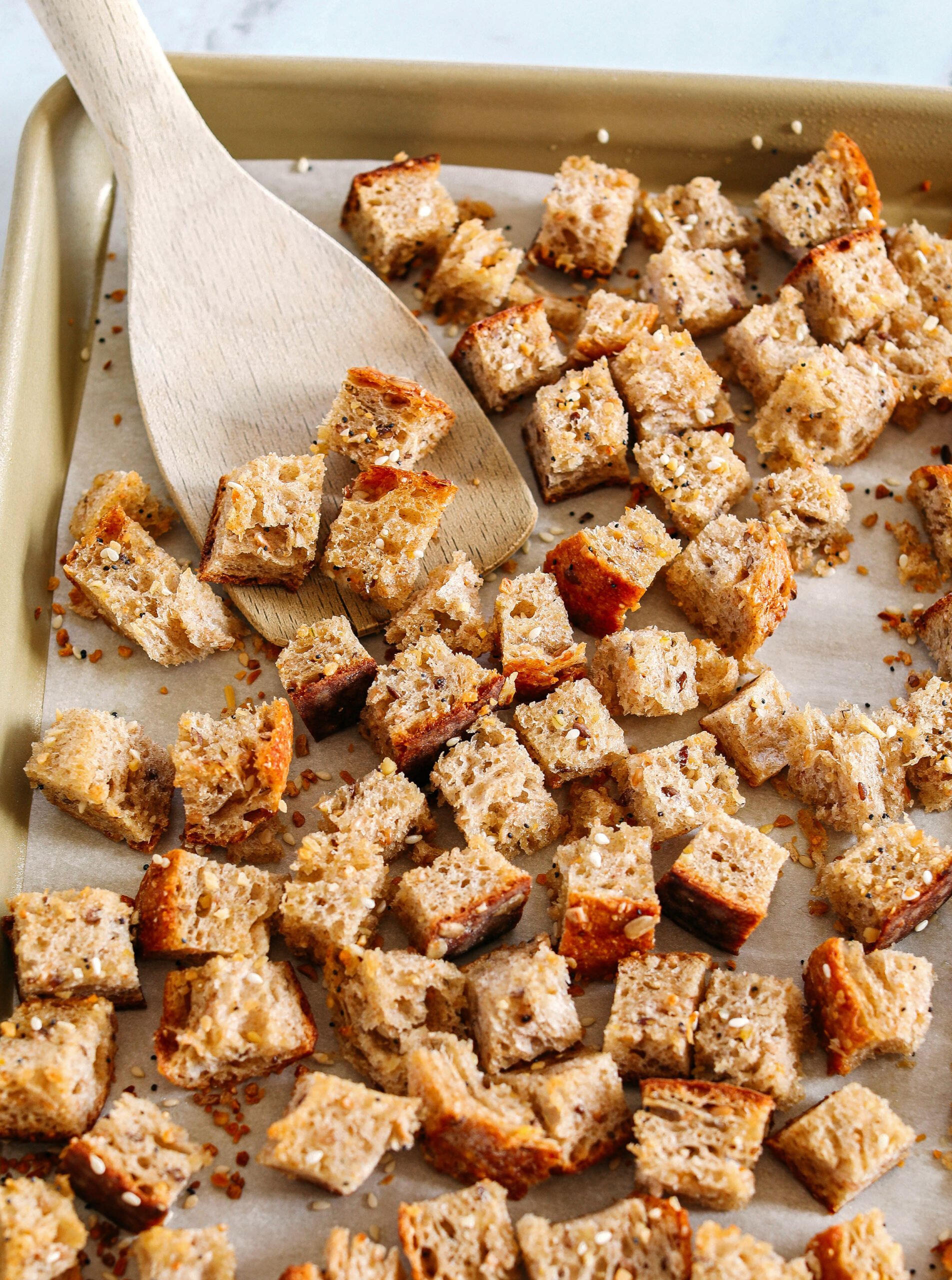
Rustic whole grain bread – this is optional, but tastes amazing seasoned with Everything But the Salt seasoning blend and toasted in the oven for the perfect crunchy topping for this soup!
Pro Tip to Lower the Sodium
If you haven’t tried Mrs. Dash Everything But the Salt seasoning blend, it’s a MUST! I actually swapped out half the salt in this soup with this salt-free seasoning which not only added more flavor, but cut out some of the sodium in this soup. I also seasoned the croutons with this blend and used lower sodium vegetable broth as the base of this soup. So delicious and an easy way to lower the sodium!
How to Make Creamy Cauliflower Soup
Sauté veggies. In a large pot or Dutch oven over medium-high heat, drizzle olive oil (or butter) and add onions, carrots and celery, sautéing until softened, about 4 to 5 minutes. Add the garlic and sauté for an additional 30 seconds, mixing everything together.
Bring to a boil. Add in the vegetable broth, cauliflower, fresh thyme, dry mustard, and season with salt and pepper. Mix well and bring the soup to a boil. Reduce the heat to medium-low and simmer for about 15 to 20 minutes, until the cauliflower is soft and tender.
Make the croutons. While the soup is simmering, cut the loaf of bread into 1-inch cubes and toss with olive oil and Everything But the Salt seasoning blend (or other seasonings you like). Spread the bread cubes onto a prepared baking sheet and bake in the oven at 350 degrees F for about 16 to 20 minutes, until the croutons are crispy and starting to brown.
Make it creamy! Using a hand immersion blender (10/10 recommend getting this handy little device!) or you can transfer the soup to a regular blender or food processor, blend until the veggie mixture is smooth and creamy. If using a blender, carefully pour the soup back into the pot and mix in the half and half and shredded cheese. Season with additional salt and pepper, if needed, ladle the soup into bowls and top with homemade croutons. Serve and enjoy!
Prepping and Storing
To-Store: This creamy cauliflower soup will last in your fridge in a sealed, airtight container for up to 3 to 5 days. You can easily reheat this soup on the stovetop or microwave for a quick, delicious meal.
To Freeze: Let the soup cool completely and store it in a sealed container in the freezer for up to 3 months. When ready to enjoy, let the soup thaw completely in the fridge. The soup may separate a little bit which is normal when freezing soups with milk or cream, but you can simply mix them together while reheating!
In a large pot or Dutch oven over medium-high heat, drizzle olive oil (or butter) and add onions, carrots and celery, sautéing until softened, about 4 to 5 minutes. Add the garlic and sauté for an additional 30 seconds, mixing everything together.
Add in the vegetable broth, cauliflower, fresh thyme, dry mustard, and season with salt and pepper. Mix well and bring the soup to a boil. Reduce the heat to medium-low and simmer for about 15 to 20 minutes, until the cauliflower is soft and tender.
While the soup is simmering, toss the bread cubes with olive oil and Everything But the Salt seasoning blend (or other seasonings you like). Spread the bread cubes onto a prepared baking sheet and bake in the oven for about 16 to 20 minutes, until the croutons are crispy and starting to brown.
Using a hand immersion blender or you can transfer the soup to a regular blender or food processor, blend until the veggie mixture is smooth and creamy. If using a blender, carefully pour the soup back into the pot and mix in the half and half and shredded cheese.
Season with additional salt and pepper, if needed, ladle the soup into bowls and top with homemade croutons. Serve and enjoy!
Nutrition Facts:
Serving Size:1/5th of recipe
Calories:330
Sugar:10.7 g
Sodium:1,118.7 mg
Fats:39.1 g
Saturated Fat:18.5 g
Carbohydrates:35.6 g
Fibers:7.8 g
Proteins:30.8 g
* Please note that all nutrition information is just estimates. Values will vary among brands, so we encourage you to calculate these on your own for the most accurate results.
Amid economic uncertainties, Deloitte forecasts marketers will experience breakthroughs in tech, increased consumer focus on sustainability and more in 2023 according to annual report
NEW YORK, Jan. 24, 2023 /PRNewswire/ —
Deloitte’s 2023 Global Marketing Trends Report Outlines Opportunities in Uncertain Times.
Amid economic uncertainties, Deloitte forecasts marketers will experience breakthroughs in tech, increased consumer focus on sustainability and more in 2023 according to annual report.
With a new year comes new challenges, but also opportunities as business leaders and marketers set their sights on embracing trends and solutions that can set them up for success. Curated through surveys and in-depth conversations with more than 1,000 C-suite executives, Deloitte’s “2023 Global Marketing Trends” report offers guidance through uncertainties that business leaders may face, while presenting meaningful approaches to consider which may help propel businesses forward. The report focuses on four topics: financial uncertainty, sustainability, creativity and tech trends to watch. Listed are a few key recommendations marketers can consider going into 2023:
invest in digital technologies, platforms, new markets and customer personalization.
Iimprove sustainability efforts within internal marketing practices and establish long-term commitments.
Make more room for creativity by bringing the rest of the organization along for the ride.
Consider laying the foundation for metaverse or blockchain adoption.
Why this matters Amid fluctuating and uncertain economic indicators of 2023, marketers are focusing on investments that can help their organizations be resilient in the face of rapid change. As new platforms disrupt existing digital marketing models and slipping consumer confidence requires focused attention on customer loyalty and innovating new growth opportunities, the “2023 Global Marketing Trends” report offers inspiration and motivation to help bring considerable, creative and lasting impact. Marketers, business leaders and C-suite executives can glean insights from the report as they set their sights on what 2023 holds for the business. The report outlines solutions curated directly from leaders and CMOs alike who have ushered in their thoughts, predictions and guidance to help drive brands forward in an ever-changing world.
Key takeaways
Brands answer economic instability through investment: Brands surveyed continue to reiterate economic instability and inflation as a top concern as in 2023. But, instead of hedging their bets and cutting costs, brands are well-prepared to answer this instability and uncertainty with an investment mindset that grows their organization’s capabilities and capacity to be resilient in the face of rapidly changing economic conditions
Through interviewing, CMOs identified their top-three priorities in the face of a potential economic downturn:
Accelerating the move to new digital technologies or platforms (Metaverse, AI, social platforms, AR and digital currencies).
Expanding into new markets, segments, or geographies.
Implementing systems or algorithms to enhance customer personalization.
CMOs drive growth through internal sustainability efforts: As consumer concerns around sustainability issues grow, surveyed brands are now concentrating their efforts on shoring up their own internal sustainability practices. This inward focus is a strong sign that brands are looking to make a more authentic impact over the longer term in order to build trust with consumers.
Brands reported that their top-three priorities for sustainability efforts this year include:
Improving sustainability of internal marketing practices (51%).
Promoting more sustainable product and service offerings (47%).
Establishing long-term sustainability commitments (eg, “… by 2030, our organization will …”) (45%).
Creativity as a force for growth: As noted in the 2022 “Creative Business Transformation” study, developed in partnership with Deloitte Digital and Cannes LIONS, there is a growing creativity gap through diminishing creative leadership in the C-suite and declining creativity skills among CMOs and their marketing talent. 2023 may present an opportunity for individual brands to rise above the competition by making more room for creativity. Research shows that high-growth brands (defined as those with annual revenue growth of 10% or more) are more likely than their negative-growth peers to have the mindset and processes in place that allow creativity to flourish.
CMOs might consider the following strategies to be the creative leader in their own organization:
Redefine what creativity can offer.
Bring the rest of the organization along for the ride.
Inspire the organization to think differently.
Rising technologies to watch: Marketers are now faced with big decisions about when and how to invest in adopting cutting-edge marketing practices as new technologies take center stage as top trends for marketers to watch.
Marketers cited 2023 top trends by the numbers:
Metaverse: About 80% of marketing executives surveyed across the energy, resources, and industrials (ER&I) and life sciences and health care (LS&HC) industries are gravitating toward the metaverse within the next two years.
Digital Currencies: 41% of CMOs surveyed plan to support their advertising strategy with blockchain in the next 12 months.
Key quotes “2023 is set to be a year of disruption resulting in both obstacles and business opportunities being able to use to identify new levers for growth. Given the current economic pressures, CMOs will be asked to do more with less. The challenge is to remain squarely on the path to optimization and outcomes. Deloitte’s ‘2023 Global Marketing Trends’ report presents a comprehensive guide to help position businesses for success in this dynamic year and beyond, informed by strategic insights from business leaders and marketers alike.” — Suzanne Kounkelchief marketing officer, Deloitte US
“Brands that want to survive and thrive in 2023 will make purposeful investments to connect creativity to brands and marketing performance. We anticipate those that continue to invest in marketing activities and creativity both within and outside of the marketing organization will capitalize on opportunities. Others that vacate the space will likely have to catch up tenfold to get back to where they were before, much less be on the same level as those that nurtured and invested in creativity from the outset.” — Mark SingerUS chief marketing officer, Deloitte Digital
“In 2023 focus and integrity are key. Consumers can see through unauthentic brands and are compelling brands to live their purpose. As a result, this year, marketers are focused on internal sustainability and inclusion of actions that render tangible impact. Investing in their organization and ensuring the integrity of who they are, what they say and what they do is good for business, good for our communities and good for our planet.” — Stacy Kempprincipal, Deloitte Consulting LLPhead of Ethos and executive lead of Deloitte’s CMO Program
Methodology To ensure a globally relevant, cross-topic understanding of marketing and the customer experience, Deloitte conducted two global surveys and 23 in-depth interviews with global executives.
The “2023 Global Marketing Trends” executive survey polled 1,015 C-suite executives from global companies located in the United States (50%), United Kingdom (10%), Switzerland (10%), Japan (10%), the Middle East (10%) and Australia (10%)i in July 2022. The survey respondents included marketing executives holding roles such as chief marketing officer, chief customer officer, chief revenue officer, chief digital officer, chief growth officer, and other related titles and were sampled across a wide range of industries. Each respondent offered their perspective on a variety of topics related to the future of marketing in the coming one to two years.
Separately, 23 executive interviews were conducted during September and October of 2022. These executives are currently serving in marketing executive roles and their insights were a key part of shaping this report.
For more information about Global Marketing Trends, please visit www.deloitte.com/globalmarketingtrends.
Deloitte Digital helps companies create new growth by elevating the human experience — with connected ideas, technology and talent. Our ambition is to make the best customer-oriented organizations in the world. Alongside all of Deloitte, we foster the connections necessary to shape a better future for our clients, our culture, our society and our planet. visit www.deloittedigital.com or follow Deloitte Digital on LinkedIn or Twitter to learn more.
About Deloitte Deloitte provides industry-leading audit, consulting, tax and advisory services to many of the world’s most admired brands, including nearly 90% of the Fortune 500® and more than 7,000 private companies. Our people come together for the greater good and work across the industry sectors that drive and shape today’s marketplace — delivering measurable and lasting results that help reinforce public trust in our capital markets, inspire clients to see challenges as opportunities to transform and thrive, and help lead the way toward a stronger economy and a healthier society. Deloitte is proud to be part of the largest global professional services network serving our clients in the markets that are most important to them. Building on more than 175 years of service, our network of member firms spans more than 150 countries and territories. Learn how Deloitte’s more than 415,000 people worldwide connect for impact at www.deloitte.com.
Deloitte refers to one or more of Deloitte Touche Tohmatsu Limited, a UK private company limited by guarantee (“DTTL”), its network of member firms, and their related entities. DTTL and each of its member firms are legally separate and independent entities. DTTL (also referred to as “Deloitte Global”) does not provide services to clients. in the United StatesDeloitte refers to one or more of the US member firms of DTTL, their related entities that operate using the “Deloitte” name in the United States and their respective affiliates. Certain services may not be available to attest clients under the rules and regulations of public accounting. Please see www.deloitte.com/about to learn more about our global network of member firms.
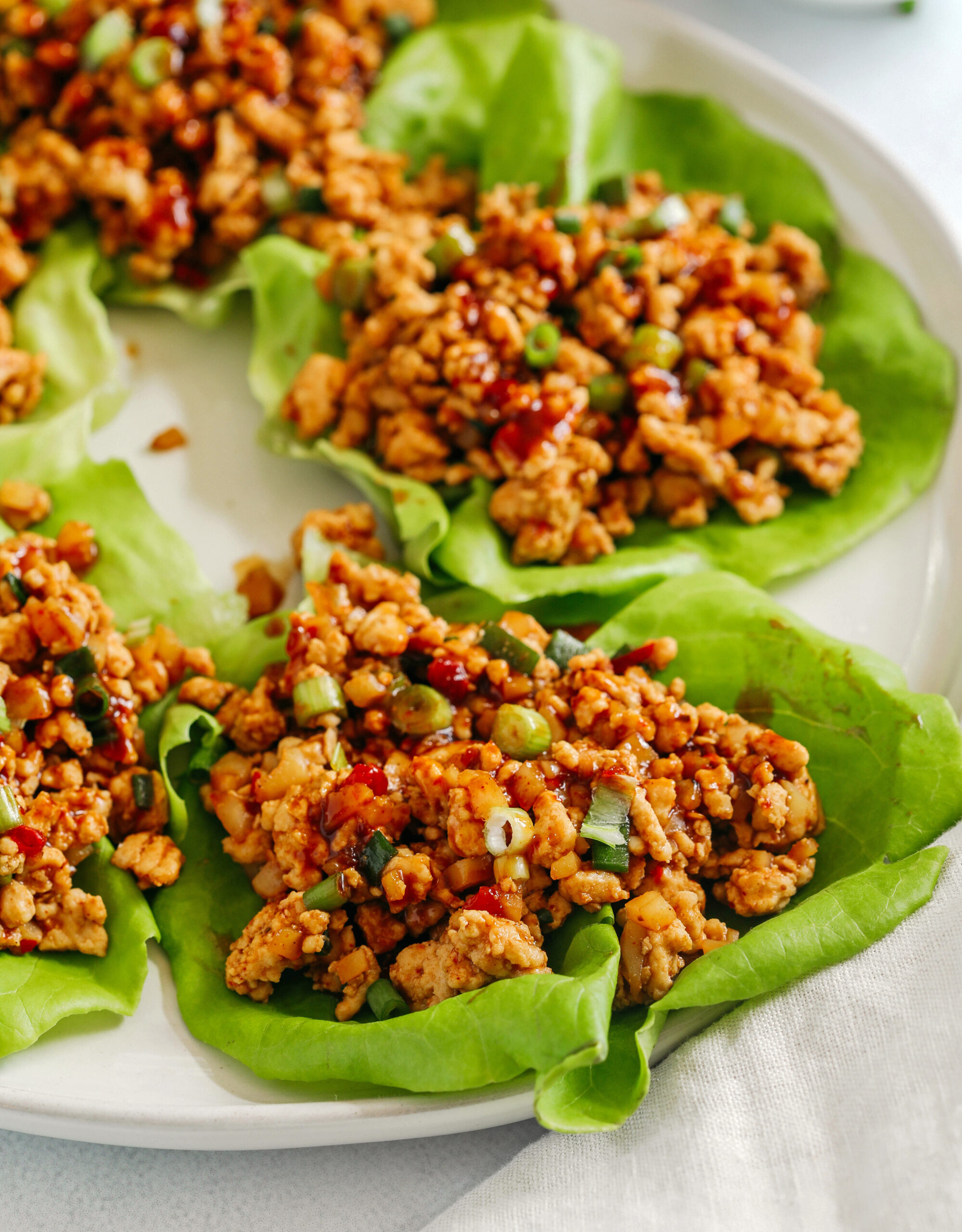
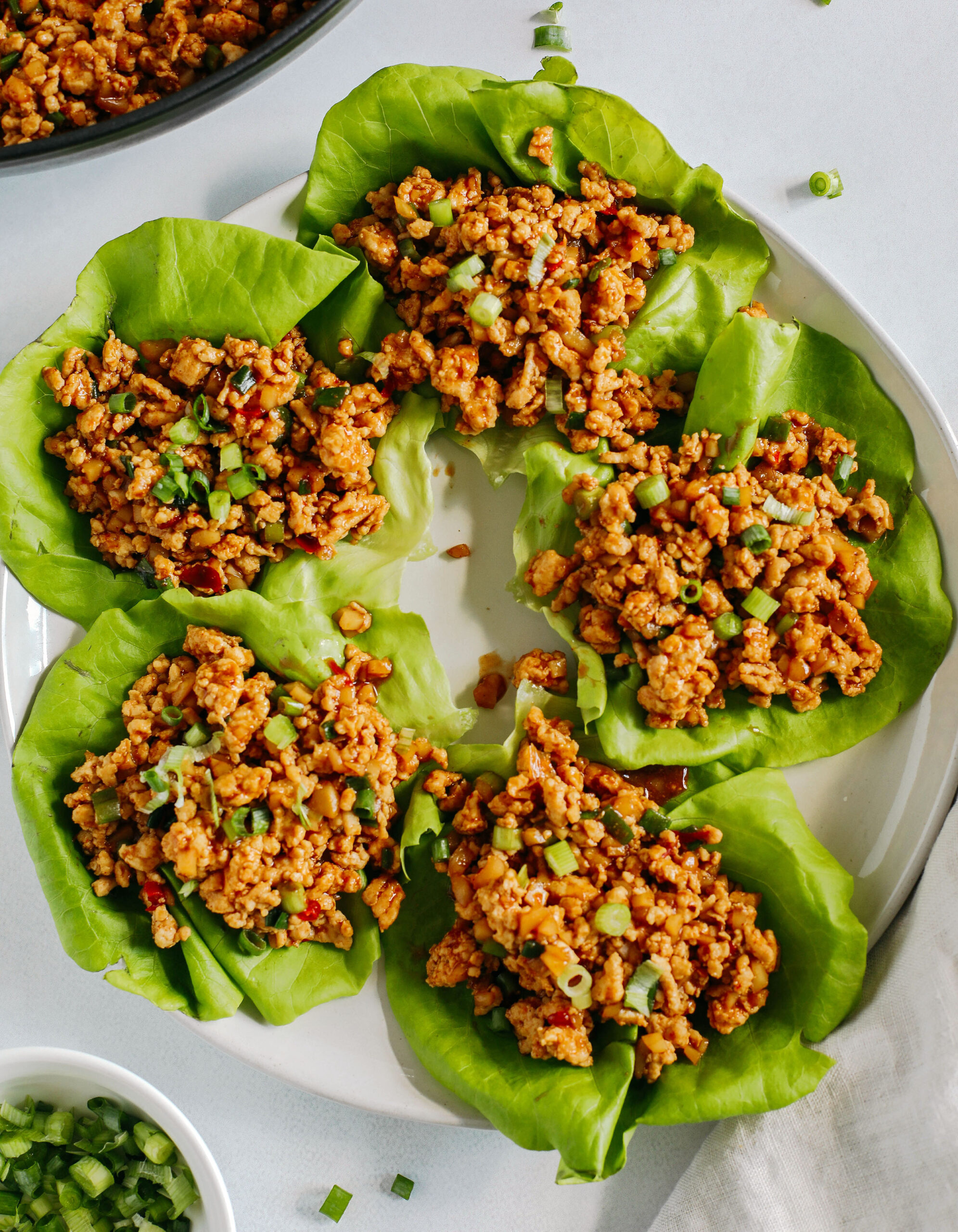
Inspired by PF Changs’ famous recipe, these Asian Turkey Lettuce Wraps are quick, easy to make and are full of so much flavor! Perfect as an appetizer, side or even main dish for a healthy meal the whole family will love!
If you are a fan of PF Changs’ lettuce wraps like us are then you will seriously LOVE these. Not only are the flavors in this dish insane, but the entire recipe literally only takes about 15 minutes from start to finish. These lettuce wraps are perfect for an easy weeknight meal, but they also make a delicious appetizer when having friends over. In fact, they’re so highly requested that I have passed this recipe out more times than I can count to friends and family would want to make them which is why I wanted to re-new this recipe for you all! So. much. FLAVORS
Ingredients You’ll Need
ground turkey – I use lean ground turkey for the filling in these wraps because of the lower fat content while being a great source of protein, but you could also make these using ground chicken, ground beef or ground pork (we LOVE chicken lettuce wraps too!)
soy sauce – I always use low-sodium soy sauce as I find that regular soy sauce can make dishes too salty. You could also swap the soy sauce with tamari or coconut aminos to make these gluten-free
Hoisin sauce – sticky sweet boost of flavor!
Rice Vinegar – adds a touch of acidity that helps balance all these flavors, but if you don’t have rice vinegar, feel free to substitute with white vinegar, apple cider vinegar or even a little lime juice
Roasted red chili paste – adds a little heat along with a boost of flavor, you can also add some red chili flakes or sriracha if you want even more spice
Garlic + ginger – fresh garlic and ginger are definitely the best in this dish,
Water chestnuts – add a nice crunch to these wraps, you could also add in shredded carrots and chopped mushrooms for some added nutrition
green onions – adds flavor and a pop of color
Red pepper flakes – this is optional, but adds a nice kick of spice to these wraps
Bibb lettuce – also known as butter lettuce, this is my favorite lettuce for wraps because of their perfect cup shape and how soft and buttery they are. Other great options include romaine lettuce leaves or iceberg lettuce
How to Make Healthy Turkey Lettuce Wraps
Brown the ground turkey. Heat 1 tablespoon of oil in a large skillet over medium-high heat. Add turkey, garlic and ginger to the pan and cook for about 6 minutes or until turkey is browned. Stir to crumble.
Make the sauce. While the turkey is cooking, whisk together hoisin, soy sauce, rice vinegar and roasted red chili paste in a small bowl.
Mix together. Once the ground turkey is cooked through, turn the heat off and add in the chopped green onions and water chestnuts. Drizzle with sauce and stir well until completely coated.
Assemble lettuce wraps. Spoon about a ¼ cup of the turkey mixture onto each lettuce leaf, serve and enjoy!
Prepping and Storage
To-Store: The delicious filling for these Asian lettuce wraps will last up to 4 to 5 days in the fridge stored in a sealed, airtight container. Trust me when I say, this meal tastes even better the next day! Make sure you don’t store the wraps already assembled as the turkey filling will wilt the leaves.
To Freeze: Let the turkey mixture cool completely and store in a sealed, airtight container in the freezer for up to 2 months. Let the filling thaw completely in the refrigerator before reheating in a skillet or microwave.
More Recipes You’ll Love
Hope you all enjoy these Asian Turkey Lettuce Wraps and if you love this recipe as much as we do, please leave me a five-star rating below and don’t forget to tag me on Instagram using the hashtag #eatyourselfskinny! I love seeing all your delicious recreations!
Prep Time:5mins
Cook Time:10 mins
Total Time:15mins
Ingredients
1¼ lb. lean ground turkey (or ground chicken)
1 tablespoon olive oil
1 clove garlic, minced
1/8 teaspoonground ginger
4 green onions, thinly sliced
1 (8 oz) can sliced water chestnuts, drained and coarsely chopped
3 tablespoons hoisin sauce
2 tablespoons lower-sodium soy sauce
1 tablespoon rice vinegar
2 teaspoons roasted red chili paste
Pinch of salt
12 Bibb/Butter lettuce leaves
Instructions
Heat 1 tablespoon of oil in a large nonstick skillet over medium-high heat. Add turkey, garlic and ginger to the pan and cook for about 6 minutes or until turkey is browned. Stir to crumble.
Combine turkey mixture, onions and chopped water chestnuts in a large bowl, stirring well and set aside.
Meanwhile in a small bowl, whisk together hoisin, soy sauce, rice vinegar and roasted red chili paste and drizzle over the turkey mixture. Toss to coat completely.
Add about ¼ cup turkey mixture to each lettuce leaf, serve and enjoy!
Nutrition Facts:
Serving Size:2 lettuce cups
Calories:162
Sugar:3.4 g
Sodium:441.5 mg
Fats:4.3 g
Saturated Fat:0.8 g
Carbohydrates:7.8 g
Fibers:0.9 g
Proteins:23.5 g
* Please note that all nutrition information is just estimates. Values will vary among brands, so we encourage you to calculate these on your own for the most accurate results.
TikTok’s footprint in the social media space exploded in 2022, as the short-from video site became the favorite of Gen-Zers and younger users. Its flexibility and popularity encourage creators and consumers to turn to the site for engaging, entertaining content spanning everything from humor to social trends to education—and beyond.
Unsurprisingly, businesses are looking to tap into the platform’s popularity to reach its wide and youthful audience, including the younger generation of business leaders. But just because TikTok captures a big share of social media users doesn’t mean business marketing content posted to the site will automatically succeed; it’s still essential to tailor your message and methods to the TikTok platform and audience. Below, 15 members of Forbes Agency Council discuss some of the common missteps business marketers should avoid when posting on TikTok.
Members pictured from left to right.
Photos courtesy of the individual members.
1. Ignoring TikTok Culture And Style
One big “don’t” when it comes to using TikTok for business marketing is ignoring the unique culture and style of the platform. Success on TikTok requires creating authentic content that resonates with the TikTok community, using catchy music and visual effects and incorporating humor and trends. Simply treating TikTok like any other social media platform will likely result in a lack of engagement. – Kenny Tripura, Edkent Media
2. Reusing Creative Assets
Don’t try to reuse creative assets that aren’t TikTok-first. TikTok videos should be created with a platform-first approach in mind. Recalibrating creative assets that were originally produced as Instagram Reels, for example, does not work on TikTok. But an interesting fact is that the reverse can drive performance (lower-funnel sales). – Steven Lambertink, The Circle
Forbes Agency Council is an invitation-only community for executives in successful public relations, media strategy, creative and advertising agencies. Do I qualify?
3. Burying The Lead
Brands should not bury the lead in a message and take forever to get to whatever point they’re trying to get to on TikTok. The platform is for people with short attention spans who want to be entertained, don’t sit and wait forever to learn something at the end of a post that’s a minute long. – Nicole Rodrigues, NRPR Group, Inc.
4. Posting Overly Produced and Polished Content
The biggest mistake brands make using TikTok is treating it like Instagram: using overly produced, polished, “perfect-feeling” content or pulling content that was previously used on Instagram. The content that works best on TikTok is real, unedited, raw, radically authentic and original. Leaning into that will breathe a crucial sense of fun, creativity and humanity into a brand. -Brad Zeifman, SHADOW
5. Post Promotional Or Self-Serving Content
Spamming users with unnecessary, irrelevant content is a big “no.” On TikTok, users want to be entertained and engaged with creative content, so if a business constantly posts promotional material or self-serving content, it will turn users off and damage its reputation. Businesses should focus on creating content that aligns with the values and interests of their target audience. – Frank Rojas, Qode Media Inc.
6. Representing Your Brand In A ‘Corporate’ Light
Do not repurpose other content for TikTok. Each channel has its own vibe, but creativity is paramount for TikTok. Content needs to be authentic; the TikTok audience craves uniqueness and entertainment. Don’t represent your brand in a stiff or “corporate” light. Show a different side of your brand’s personality and let your hair down. – Mario Mirabella, MSM Digital
7. Not Showing The Real You
Everyone knows that the demographic of TikTok is young. The one thing that young people cannot stand is when something isn’t authentic. You don’t have to hire a production crew and lighting specialists and have a script to go viral. Be real. Take your phone out and show the real you and how your company can help them. Speak to them like they are real people, not a demographic. Kids can spot a phony. -Jason Hall, FiveChannels Marketing
8. Jumping On A Trend Just To Fit In
Businesses using TikTok for marketing should stay away from jumping on a trend or challenge in order to fit in. If you know your product is not “cool” or a lifestyle product, any amount of trying to be that will only come across as trying too hard. Stick to your brand personality and bring value. If that can be done in a short and entertaining way, go for it. Above all, stick to your brand voice. – A. Lee Judge, Content Monsta
9. Not Boosting Paid Content
Not earmarking budget dollars for boosting the paid content you execute via a campaign is a huge miss. With the right partner, the right type of video and boosted content, your campaign can produce a high impact through sales and engagement. Gen-Zers love authenticity, so a copy-paste ad style isn’t going to perform. Tailor your content, and you’ll see a higher return. – Christine Faulhaber, Faulhaber Communications
10. Trying To Be Someone Else
In my opinion, brands must tread carefully when it comes to TikTok. Hopping on a bandwagon can help your brand go viral, but authenticity and realness are hugely important. So, don’t try to be someone else. It is important to remember your brand’s voice. Present content that is relevant to your clients and audience—that will ultimately resonate with your target audience the most. – Nataliya Andreychuk, Viseven
11. Trying To Force A Marketing Message
One big “don’t” when it comes to using TikTok for business marketing is being inauthentic or trying to force your marketing messages onto users. TikTok users tend to respond poorly to content that feels overly promotional or inauthentic, so it’s important to be genuine and authentic in your approach to marketing on the platform. – Zohaib Patoli, Lead Origin
12. Post Content That Doesn’t Relate To Your Brand
Don’t post irrelevant content that doesn’t relate to your brand or target audience. TikTok is all about creating unique and engaging content, so it’s important to stay on-brand and ensure that you create content that will resonate with your target audience. – Drew Urquhart, Banch Marketing
13. Not Carefully Vetting Micro-And Macro-Influencers
Brands and businesses should be very wary of how they spend their marketing dollars on micro- and macro-influencers. It’s critical they perform their due diligence by inspecting engagement metrics and overall audience fit. – Jordan Edelson, Appetizer Mobile LLC
14. Using a Hard Sales Push
One big “don’t” when it comes to using TikTok for business marketing is to try and push sales too hard. TikTok is all about entertaining and engaging content, not pushing sales messages. Trying to sell too much on TikTok can turn away potential followers and customers. – Justin Kline, Markerly Inc.
15. Not Considering Other Platforms
Test your audience and make sure TikTok is the right platform to use for the program in question. There are a variety of avenues available—LinkedIn, Facebook, Instagram and more—so make sure TikTok is the best place to showcase your campaign; otherwise, it will fail. – Leeza Hoyt, The Hoyt Organization, Inc.
Digital marketing agencies take note: Meta has launched a new certification for businesses, which will give you another way to showcase your Meta marketing expertise to prospective clients.
The new program aims to highlight businesses whose staff have accumulated a level of knowledge about Meta’s platforms, via its Blueprint training courses.
As explained by Meta:
“A Meta Certified Company is a company or organization that is recognized for their advanced expertise on the Meta Platform. For the first time, we’re offering Certification at the Organizational level, awarded to companies who achieve a threshold of individual Meta Blueprint certifications in specific focus areas.”
As you can see there are five different company certifications available:
MetaMedia, Certified Company
Meta Marketing Science, Certified Company
Meta Creative Strategy, Certified Company
Meta Community Management, Certified Company
Meta Spark, Certified Company
For each, a percentage of your employees will need to have undertaken the respective Blueprint training, which then enables you to apply for official recognition.
What are those percentages exactly?
So at least 20% of your staff have to undertake individual certification courses via Meta’s Blueprint offering. Those courses are free, but taking the certification exams does cost money, so there is a level of business expense involved in the process.
Meta’s Blueprint courses, in general, are not very difficult, although they do give you a good overview of the various elements of Meta’s systems, which Meta clearly thinks is enough to then approve full certification for businesses that reach these benchmarks.
“Once you are confirmed as a Certified Company, you will receive the following: confirmation of your achievement, your credential, guidance on bragging rights, and a trophy to display in your company office.”
A trophy? How about that?
It could be a good way to showcase your Facebook and Instagram marketing expertise, and win more business as a result.
You can apply for Meta’s new company certification here, where you can also find full overviews of the coursework required to meet the above-noted training thresholds. Once your staff has done the courses, you can enter the relevant details and verify their credentials via Meta’s system.
In our daily lives, each of us can have an experience that is overwhelming, frightening, and beyond our control. We may be involved in a car accident, be the victim of an assault or witness an accident. These experiences are more likely to happen to police officers, firefighters, ambulance crews – who are often faced with gruesome scenes. Also, military personnel may be shot or injured by explosions, or see friends killed or injured.
Most people, in time, get over such experiences without needing help. However, for some, traumatic experiences trigger a reaction that can last for many months or even years. This is called Post Traumatic Stress Disorder (PTSD).
How to say PTSD starts?
PTSD can begin after a traumatic event, meaning anything perceived to put us in danger, life threatening, or the sight of other people being injured or dying. Typical such events may be:
serious accidents
war battles
violent personal attack (sexual assault, physical violence, abuse, robbery)
hosting situation
terrorist attacks
war imprisonment
natural or man-made disasters
diagnosis of life-threatening illness.
PTSD can even be triggered by hearing of an unexpected injury or violent death of a family member or close friend.
When does PTSD start?
Symptoms of PTSD may appear immediately or with a delay of weeks or months, but usually within 6 months of the traumatic event.
How to say PTSD looks like?
Many people feel overwhelmed with grief, depressed, anxious, guilty and angry after a traumatic experience. Along with these expected emotional reactions, there are three main types of symptoms:
1. Flashbacks & nightmares
One finds oneself reliving the event over and over again. This can occur either as flashbacks during the day, or as nightmares during sleep. These can be so realistic that one feels like they are reliving the experience all over again. They see the scene in their minds, but can also feel the emotions and physical reactions they had when it happened – fear, sweating, smells, sounds, pain.
These flashbacks can be triggered by ordinary things. For example, if someone had a car accident in the rain, a rainy day could trigger such a reaction.
2. Avoidance & numbness
Reliving the experience can be very disturbing, so one looks in a way to distract oneself. They keep their mind occupied by being involved in a hobby, hard work, solving crosswords or doing puzzles. They avoid places and people that remind them of the traumatic event, and try not to discuss it.
One can manage emotional pain by trying not to feel anything at all – ending up emotionally “numb”. They communicate less with other people, creating difficulties in living together or working together.
3. Alert state
One feels on constant alert, looking for causes of danger. They can’t calm down. This is called “Hypervigilance”. They feel anxious and have difficulty falling asleep. One gives the image of a nervous and irritable person.
Other symptoms
muscle pains
diarrhea
irregular heartbeats;
headaches
feelings of panic and fear
depressed
alcohol abuse
use of medicinal substances (including painkillers)
Why are the traumatic events so shocking?
They undermine our sense that life is fair, that it is as safe as possible, and that we are protected. A traumatic experience makes it clear that we can lose our lives at any time and moment. PTSD symptoms are part of our normal response to a death that was avoided at the last minute.
Does everyone develop PTSD after a traumatic experience?
No. But almost everyone will have PTSD symptoms for the first month or so. This is because they can help someone cope, and make sense of the experience they’ve been through. This is an “acute stress reaction”. Over the course of a few weeks, most people gradually come to terms with what happened, and the stress symptoms begin to subside.
Not everyone is so lucky. About 1 in 3 people will find that the symptoms remain, and that they cannot accept what happened. It’s like the process is “stuck”. PTSD symptoms develop into a problematic condition when they persist for a long time.
What makes PTSD worse?
The more distressing the experience, the more likely it is that PTSD will occur. The most traumatic events:
are sudden and unexpected
last for a long time
occur when one is trapped without being able to escape
are man-made
cause many deaths
cause amputations and loss of limbs.
involve children
If one is still exposed to stress and uncertainty, it makes it difficult or impossible to improve the symptoms of PTSD.
What about common stress?
Everyone feels stressed from time to time. Unfortunately, the word “stress” is used to describe two rather different things:
· our inner sense of restlessness, the feeling of tension or heaviness or
· the problems in our lives that cause these feelings. It can be work, relationships, financial hardships.
Unlike PTSD, these follow us on a daily basis. They are part of our normal, everyday life, but they can cause anxiety, depression, fatigue and headaches. They can also worsen some physical problems, such as stomach ulcers and skin conditions. These are clearly worrisome, but they are not the same as PTSD.
Why does PTSD happen?
We don’t know for sure. There are several possible explanations for why PTSD occurs.
Psychological reasons
· When someone is scared, they remember situations very clearly. Although it can be painful to recall such memories, it can help one understand what happened, and in the long run, contributes to survival.
· Recalls are like replaying events. They force one to think about what happened so that one is better prepared in case it happens again.
· Remembering a traumatic experience is tiring and painful. Evasion and numbness keep the number of repetitions manageable.
· Being alert means that one can react immediately to any such crisis. This can be seen in earthquake survivors, where aftershocks can follow. It can also give someone the energy they need to respond after an accident or crisis.
But no one wants to spend the rest of their life trying to get over a traumatic experience and all they want is to think about it when they need to – if they find themselves in a similar situation.
Physical reasons
Adrenaline is the hormone that the body produces when it is in a state of stress. It “drugs” the body to prepare it for action. When the stress is gone, adrenaline levels should return to normal. In PTSD, vivid memories of the traumatic experience keep adrenaline high. This makes one tense, irritable, and creates difficulties in relaxing and sleeping.
How can one know if they have overcome a traumatic experience?
When they can:
think about it without it being painful.
not to feel constantly under threat.
not to think of it at inappropriate times.
How can I tell if I have PTSD?
Have you experienced a traumatic event like those mentioned at the beginning of this article? If yes, then:
do you have vivid memories, flashbacks or nightmares?
do you avoid things that remind you of the event?
do you feel emotionally numb at times?
do you feel irritable and constantly tense but can’t see the cause?
are you eating more than usual, or using more alcohol or drugs than usual?
do you feel like your mood is out of control?
do you have difficulty socializing with other people?
do you need to be constantly busy to cope?
feeling sad or exhausted?
If it has been less than 6 weeks since the traumatic event and these symptoms are gradually subsiding, this may be part of the normal adjustment process.
If more than 6 weeks have passed since the event and these symptoms do not seem to be subsiding, it is wise to have a discussion with your doctor.
Children and PTSD
PTSD can occur at any age. Younger children may have anxious dreams about the traumatic event, which can later turn into nightmares with monsters. They often relive the traumatic experience in their play. For example, a child involved in a serious car accident may re-enact the accident with their toy cars over and over again.
They may lose interest in things that used to please them. They may have difficulty believing that they will live long enough to grow up. They often complain of stomachaches and headaches.
How can PTSD be treated in everyday life?
What to do:
carry on with your life as normally as you can.
return to your daily routine.
discuss what happened with someone you trust.
try relaxation exercises.
go back to your work.
eat right and exercise regularly.
return to the scene of the traumatic event.
spend time with family and friends.
drive carefully because your attention may be impaired.
be generally more careful because accidents usually occur with greater frequency during this period.
see a doctor.
believe you will get better.
What not to do:
don’t blame yourself – PTSD symptoms are not a sign of weakness. It is a normal reaction of a normal person to frightening experiences.
don’t suppress your feelings. If you have developed symptoms of PTSD, do not internalize them because usually the treatment is very effective.
don’t shy away from discussing it.
don’t expect the memories to disappear immediately – you may have them for a long time.
don’t make too many demands on yourself. Try to relax as you adjust to what has happened to you.
don’t avoid other people.
don’t drink large amounts of alcohol or coffee and don’t smoke a lot.
don’t get too tired.
don’t skip meals.
find time for a vacation.
What can have a negative impact on recovery?
You may find that others may:
not give you the chance to discuss it.
avoid you.
get angry with you.
see you as weak.
accuse you.
These are all ways that people protect themselves from thinking about horrible or scary events. It doesn’t help you because it doesn’t give you the opportunity to discuss what happened to you, which is difficult in itself.
A traumatic event can send you into a state of trance that makes the situation seem fake and confusing. It’s harder to deal with such situations if you can’t remember what happened, if you can’t put it into words, or if you can’t give a logical explanation.
For friends, relatives & colleagues
What to do:
try to point out any changes in behavior – poor work performance, sick leave, tardiness, minor accidents.
observe behaviors of anger, irritability, depression, lack of interest, impaired concentration.
take time with someone who has had a traumatic experience to allow them to tell their story.
show interest by asking general questions.
let them talk, without interrupting their flow, or interjecting your own experiences.
What not to do:
don’t pretend you know how they feel – you don’t.
don’t tell them they’re lucky to be alive – they don’t feel lucky at all.
don’t downplay their experiences – “it couldn’t have been that bad…”
don’t suggest to them that all they need to do is forget about it and move on.
PTSD Complex
People who have repeatedly experienced:
severe neglect or abuse in childhood or as an adult;
severe and repeated violence as adults, such as torture or imprisonment
they may have similar reactions. This is called the PTSD complex.
It may begin weeks or months after the traumatic event, but may take years to recognize.
Traumatic events affect a child’s development – the younger the age, the greater the damage. Some children react with defensive or aggressive behavior. Others cut themselves off from what’s going on around them and grow up with a sense of shame and guilt instead of being confident and feeling good about themselves.
Adults who have been abused or tortured repeatedly develop a similar feeling of detachment from others, and a lack of trust in the world and people.
In addition to the many symptoms of PTSD described above, you may also experience:
Feeling of shame and guilt.
Numbness, lack of consciousness in the body.
Weakness of pleasure.
Trying to control emotions, using drugs, alcohol, self-injury.
Cut off from what is happening around (Disconnect).
Appearance of physical symptoms caused by mental pain.
Inability to verbalize feelings.
Desire to self-destruct.
Risky and impulsive behavior.
It is worse if:
it occurs at a young age – the younger the age, the worse the trauma
it is caused by a parent or other caregiver
the traumatic experience is severe
the traumatic experience lasts a long time
there is isolation · there is still contact with the person who caused it, and/or there are security threats.
Added sugar has been linked to many serious diseases, including obesity, heart disease, diabetes and cancer.
Fortunately, there are many ways to sweeten foods without adding sugar. There are many natural sweeteners that people often use instead of sugar. These include coconut sugar, honey, maple syrup and molasses. While these natural sweeteners may contain more nutrients than regular sugar, your body still metabolizes them in the same way.
The natural sweeteners listed below are slightly ‘less bad’ than regular sugar. Nevertheless, they are still forms of sugar.
Why sugar is bad for you
Sugar interferes with your body’s hormones that regulate hunger and satiety. This can lead to increased calorie intake and weight gain. It also impairs your metabolism, which can lead to increased insulin and fat storage. In fact, many studies have found a strong link between sugar and obesity. Simply put, people who consume the most sugar are much more likely to become overweight or obese than those who consume the least. High sugar intake is also associated with some of the world’s deadliest diseases, including heart disease, diabetes and cancer.
Stevia
Stevia is a natural sweetener extracted from the leaves of a South American shrub scientifically known as Stevia rebaudiana. It contains zero calories and is not associated with weight gain. Several studies show that stevioside, which is one of the sweetening compounds of stevia, can reduce high blood pressure by 6-14%. It has also been shown to lower insulin and blood sugar levels, which can help fight diabetes.
It is worth noting that the two different sweetener compounds extracted from the stevia plant – stevioside and rebaudioside A – have slightly different tastes. Products labeled “stevia” may contain one or both of the above compounds in varying amounts. This is why some varieties taste better than others.
Xylitol
Xylitol is a sugar alcohol, with a sweetness similar to sugar. It is extracted from corn or Finnish birch wood and is found in many fruits and vegetables. Xylitol contains 2.4 calories per gram, which has 40% fewer calories than sugar. It also does not increase sugar or insulin levels. Xylitol is generally tolerated, but its consumption can cause side effects in the digestive system such as bloating and diarrhea.
Erythritol
Like xylitol, erythritol is sugar alcohol, which contains even fewer calories. Erythritol contains 0.24 calories per gram and 6% of the calories of regular sugar. Your body does not have the enzymes to break down erythritol, so most of it is absorbed directly into your bloodstream and excreted unchanged in your urine. Therefore, it does not appear to have the harmful effects of regular sugar. In addition, erythritol does not increase blood sugar, insulin, cholesterol or triglyceride levels. Studies conducted show that its consumption is safe for the human body and has no side effects.
Coconut sugar
Coconut sugar comes from the sugary liquid that circulates in the coconut plant. It contains some nutrients, such as iron, zinc, calcium, potassium, as well as antioxidants. However, coconut sugar is still very high in calories and contains the same number of calories as regular sugar.
Honey
Honey contains trace elements of vitamins and minerals, as well as an abundance of beneficial antioxidants. Eating honey can help increase the levels of antioxidants in your blood. High levels of antioxidants in the blood are associated with a lower risk of disease. In fact, honey has been shown to improve several disease risk factors. One study found that consuming honey for eight weeks significantly reduced “bad” LDL cholesterol and blood triglycerides in people with diabetes. It also increased the ‘good’ HDL cholesterol.
However, in the same study, an indicator of blood sugar levels called HbA1c increased, which is not good. Another study found that consuming honey reduced levels of C-reactive protein (CRP), a measure of inflammation. It also lowers homocysteine , another blood marker associated with the disease. In addition, both studies showed that honey has slightly less harmful effects on blood sugar levels and metabolism than regular sugar.
Maple syrup
Maple syrup is a thick, sugary liquid produced by cooking the sap of maple trees. It contains a good amount of minerals such as calcium, potassium, iron, zinc and manganese. It also contains at least 24 different types of antioxidants. Two test-tube studies have shown that maple syrup may also have anti-cancer benefits , but more research is needed to confirm. While maple syrup contains some beneficial nutrients and antioxidants, it is very high in sugars. It has a lower glycemic index than regular sugar, but still raises blood sugar levels. Like coconut sugar and honey, maple syrup is a slightly better option than regular sugar, but should be consumed in moderation.
Molasses
Molasses is a sweet, brown liquid, which has a thick syrup-like consistency. It is made from boiled sugar cane or sugar beet juice. It contains an increased amount of vitamins and minerals, as well as various antioxidants. In fact, molasses contains more antioxidants than honey and maple syrup. Additionally, its high potassium and calcium content may benefit bone and heart health.
Sugar substitutes to avoid
Agave Nectar
Agave nectar is produced by the agave plant. It’s often promoted as a healthy alternative, but it’s probably one of the unhealthiest sweeteners on the market. It consists of 85% fructose, which is higher than regular sugar. As previously mentioned, high amounts of fructose are closely linked to obesity and other serious diseases.
High fructose corn syrup
High fructose corn syrup (HFCS) is a sweetener made from corn syrup. It is commonly used to sweeten processed foods and soft drinks. As its name suggests, it contains a lot of fructose. It can increase the risk of weight gain, obesity, diabetes and other serious diseases such as cancer. It is just as harmful as sugar and should be avoided at all costs.