Small businesses impacted by the evacuation orders related to recent wildfires can now apply for support through the Small Business Wildfire Relief Program.
“We’ve seen many businesses, even those directly impacted, step up to help their communities during their time of need,” said Premier Tim Houston. “But we know that an unexpected closure can still have a significant impact on small businesses. This funding will help address some of that financial stress.”
The program will provide a one-time grant of $2,500 to small businesses located in the mandatory evacuation zones related to the recent fires in Halifax Regional Municipality and Shelburne County.
Applications and information on eligibility are at: https://beta.novascotia.ca/small-business-wildfire-relief-program . Business owners with questions can email SBWRP@novascotia.ca
Quick Facts:
types of eligible businesses include restaurants and licensed drinking establishments; fitness, recreational and leisure facilities; independent retailers; wholesale operators; manufacturers; licensed fish processors; personal services; repair services; accommodations; independent gas retailers; self-regulated and unregulated health professionals; live performing arts venues; construction; private daycares
active charities may also apply
to be eligible, businesses must have stopped operating because they are within the mandatory evacuation zones related to recent wildfires
the program is expected to cost up to $1.5 million
on May 29, the government announced $500 for each household required to evacuate because of the wildfires
Brittany and Matt Giesbrecht of The Speckled Sow Butchery & Market earned first place in the business impact category at Small Business BC Awards
The owners of a Vanderhoof butcher shop took home a top honor from the Small Business BC Awards on Sunday.
Brittany and Matt Giesbrecht of The Speckled Sow Butchery & Market earned first place in the business impact category.
The award “recognizes a business that has taken positive action to invest in their community and views social responsibility as an integral part of their success,” the SBBCA said in a statement.
The shop provides a cut and wrap service for domestic and wild game.
“It goes to show that hard work and more hard work really do pay off,” Matt Giesbrecht said in the statement. “The support of your community, family and friends goes a long way.”
Judges commented, “They clearly love the work they do and that inspiration to bring that farm-to-table spirit to Vanderhoof shines. Through their business journey, they have remained committed to serving their community.”
Awards were presented in four categories. To select the winners, 613 nominees across 84 BC communities were narrowed down to the Top 5 Finalists based on more than 74,000 public votes and written responses judged by business experts. Finalists proceeded to pitch their businesses to a panel of BC business leaders, who then selected the winner of each award category.
“For twenty years, the Small Business BC Awards has offered a platform for entrepreneurs to showcase their drive and determination while receiving the recognition they so greatly deserve,” said SBBC CEO Tom Conway. “These are some of the most creative, passionate and resilient people and it’s truly our honor to share their stories through the Small Business BC Awards.”
Did you ever wonder why it is easier to gain weight than keeping it off?
The key to this is in the fat cells where a powerful hormone is produced called leptin. Leptin signals the brain to regulate the metabolism in order to store or burn fat.
Leptin is a hormone produced by fat cells that helps regulate appetite and energy expenditure. When leptin levels are high, it signals to the brain that the body has enough energy and can stop eating. However, when the body becomes resistant to leptin, this signaling system breaks down, leading to increased appetite and decreased energy expenditure. In this blog post, we will discuss some tips on improving leptin sensitivity.
WEIGHT LOSS STRUGGLES
85% of people who lose weight end up regaining weight because the “metabolic thermostat” of the body, leptin, is reset upward automatically. When people lose weight, leptin production decreases, which causes people to regain the lost weight. This protein hormone is derived from fat cells so when you lose fat, leptin levels drop. When you gain fat, leptin levels rise. Once leptin is secreted by your fat cells, it travels to the hypothalamus; which controls eating behavior. Once it’s there, leptin activates anorectic nerve cells, which decreases your appetite. At the same time, leptin stops cells from stimulating your appetite. To put it simply, when leptin levels drop, you get hungry. When they go up, you feel full. Leptin communicates directly to your brain, telling the brain how much fat is in storage. It controls appetite, energy, and metabolic rate. Leptin problems are the primary reason for food cravings, overeating, slow metabolism, food obsession and heart disease.
You’d think that having extra fat stores creates more leptin, but that is where an interesting mystery comes into play. 98% of those who are significantly overweight are leptin-resistant. Most defects in leptin signaling may lead to obesity, overeating and less energy expenditure. Leptin-resistance is similar to insulin-resistance in that it occurs after being overexposed to high levels of the hormone. At this point, the body no longer responds to the hormone. Much like high blood sugar levels result in surges in insulin, sugar metabolized in fat cells causes the fat to release surges in leptin. Over time, leptin-resistance may develop.
Leptin is a hormone that is produced by fat cells and is responsible for regulating appetite and energy expenditure. Leptin resistance occurs when the body no longer responds to leptin, leading to increased appetite and decreased energy expenditure. In this blog post, we will discuss what leptin resistance is, what causes it, and how to treat it.
Leptin Resistance and High Fat Keto/Carnivore
This is also why so many people don’t lose weight on high fat keto or carnivore. Or they lose a little weight then stall. If you are overweight or obese, you are likely leptin resistant so don’t get the “I’m full” signal like you should. So you overeat and overeat on fat means less of your own body fat burned for fuel. You have to dial the dietary fat down so you lose more body fat. Losing body fat will then help reverse the leptin resistance and help you feel full quicker.
What is Leptin Resistance?
Leptin resistance is a condition in which the body no longer responds to leptin. Leptin is released by fat cells and travels to the brain to signal that the body has enough energy stores and that it can stop eating. However, when the body becomes resistant to leptin, this signaling system breaks down, and the brain no longer receives the message that the body has enough energy. This leads to increased appetite and decreased energy expenditure, which can contribute to weight gain and obesity.
What Causes Leptin Resistance?
There are several factors that can contribute to leptin resistance. One of the main causes is obesity. When the body has excess fat, it produces more leptin. Over time, the body becomes resistant to leptin, and the signaling system breaks down. Other factors that can contribute to leptin resistance include a high-fat diet, inflammation, and genetics.
How to Eat to Reverse Leptin Resistance
The best way to reduce your chances of diabetes is to avoid surges in leptin; which is the leading cause of leptin-resistance. Eating the typical American diet, full of refined sugars and other processed foods, is a guaranteed way to cause unwanted surges. Focusing your diet on simple, real unprocessed foods is the best way to prevent leptin resistance.
One food to help with leptin is protein. Protein improves leptin sensitivity, which lowers calorie intake by helping you feel full faster. Increase your protein to at least 30 grams for breakfast and at least another 60 throughout the day. Choose quality proteins like salmon, grass fed meat, and free-range eggs!
Maximize your health goals with these FREE meal plans.
HOW TO IMPROVE LEPTIN SENSITIVITY
1. Reduce Calorie Intake
Reducing calorie intake can help improve leptin sensitivity. When the body has excess fat, it produces more leptin. Over time, the body becomes resistant to leptin, and the signaling system breaks down. By reducing calorie intake, the body can start to use stored fat as energy, which can decrease leptin resistance and improve leptin sensitivity.
2. Prioritize Protein
The best way to reduce your chances of diabetes is to avoid surges in leptin; which is the leading cause of leptin-resistance. Eating the typical American diet, full of refined sugars and other processed foods, is a guaranteed way to cause unwanted surges. Focusing your diet on simple, real unprocessed foods is the best way to prevent leptin resistance.
One food to help with leptin is protein. Protein improves leptin sensitivity, which lowers calorie intake by helping you feel full faster. Increase your protein to at least 30 grams for breakfast and at least another 60 throughout the day. Choose quality proteins like salmon, grass fed meat, and free-range eggs!
Maximize your health goals with these FREE meal plans.
3. Exercise regularly
Regular exercise can also improve leptin sensitivity. Exercise can increase energy expenditure and improve insulin sensitivity, both of which can improve leptin sensitivity. Resistance training, in particular, has been shown to be effective in improving leptin signaling.
4. Get Enough Sleep
A HUGE piece of healing leptin resistance and improving leptin sensitivity is sleep! Getting enough sleep is also important for improving leptin sensitivity. Lack of sleep can disrupt hormones, including leptin, and contribute to insulin resistance. Aim for 7-8 hours of sleep per night to improve leptin sensitivity and overall health.
5. Reduce Stress
Chronic stress can also contribute to leptin resistance. Stress can lead to inflammation and disrupt hormone balance, both of which can contribute to leptin resistance. Finding ways to reduce stress, such as meditation, yoga, or spending time in nature, can improve leptin sensitivity.
In conclusion, improving leptin sensitivity is important for regulating appetite and energy expenditure. By reducing calorie intake, prioritizing protein intake, exercising regularly, getting enough sleep, and reducing stress, it is possible to improve leptin sensitivity and promote a healthy weight. The best thing you can do to reverse leptin resistance is to shrink your fat cells by losing body fat.
“I can still hardly believe how much I’ve changed my health in a year!
God brought me through a series of major stressors but my body was worse for the wear. I tanked my adrenal system and gained a lot of weight. Step one was to accept myself with grace. Then a time came when I really started questioning how the weight was affecting my health. Is this the inevitable path of aging or can I change my future? I chose to go for a new life.
Knowing that I could do better with low carbs, I researched and decided to try Maria & Craig Emmerich’s keto plan. I studied her online courses and books, cooked her recipes, and immersed myself in their online group. I succeeded beyond my wildest dreams!
• 75 pounds lost in a year.
• From size 16/18 to a size 6/8.
• No more heartburn meds.
• Eating delicious food.
• Feeling like myself again, but better.
Thank you so much, Maria & Craig! You’re the best! – Jaya
Most people I consult are doing keto totally wrong. Get fast results with the my NEW Keto Packages!
Turn Key Brand-able Website for Certified Coaches!
We are always expanding the program and now we have very exciting NEWS to help our coaches be successful right after graduating!
We created a NEW brand-able website with packaged courses for your clients! The package includes; perfect meal plans made by Maria, the best keto recipes made by Maria, professional cooking tutorial videos and educational videos, and so much more! No need to pay for a website, we did it for you!
Now you can have your own logo or name on our branded page and use our checkout, credit card processing, security and our course for delivering content and meal plans to your clients! Then you provide the support. It is the ULTIMATE Business in a Box!
As soon as you graduate from the program you can start taking on clients, even if you don’t have your own website yet! This can be done through social media or other accounts.
Since launching this program almost two years ago we have added over 25 hours of new videos and content including new content on Carnivore! Every coach gets lifetime access to all the materials in the program. So every year you will get tons of new content to keep you up to date on the latest science and information.
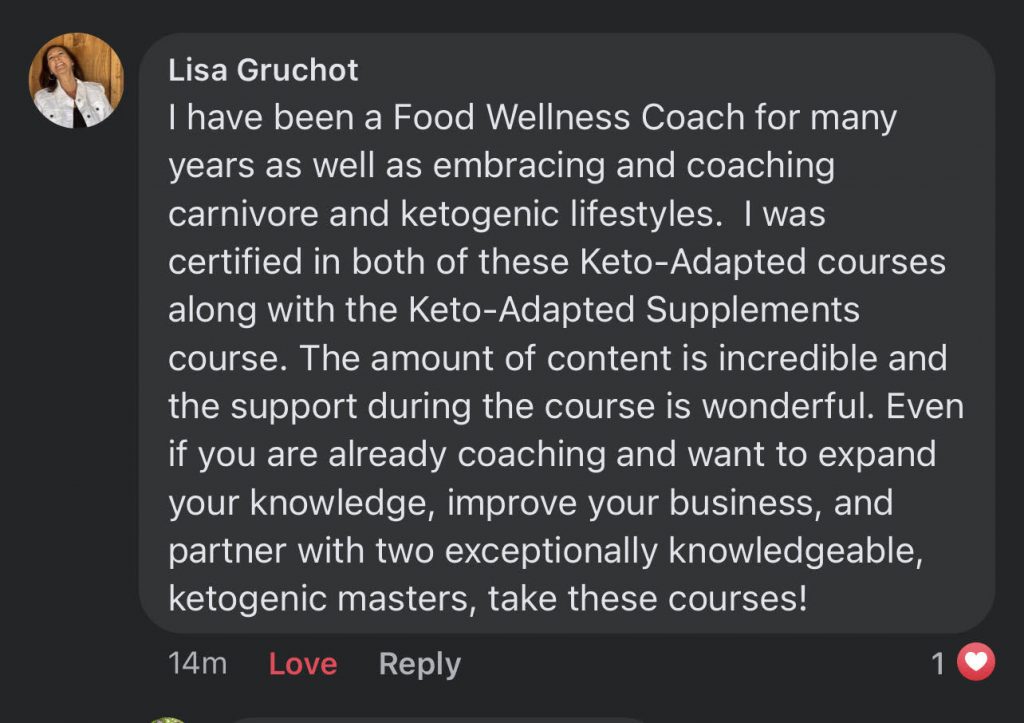
Here is another testimony from our Certified Keto Coach Lisa!
“I have been a Food Wellness Coach for many years as well as embracing and coaching carnivore and ketogenic lifestyles. I was certified in both of these Keto-Adapted courses along with the Keto-Adapted Supplements course. The amount of content is incredible and the support during the course is wonderful. Even if you are already coaching and want to expand your knowledge, improve your business, and partner with two exceptionally knowledgeable ketogenic masters, take these courses!” – Lisa
Meal Planner Tool!
One thing that can be a challenge is making meal plans for clients. All coaches with active coach support (you get 90 days included and can add more support if you like) can use our amazing new meal planner tool to make meal plans for your clients!
You can make PDFs of meal plans, recipes and grocery lists to give to clients who want custom meal plans. Here is a video showing you this amazing new tool.
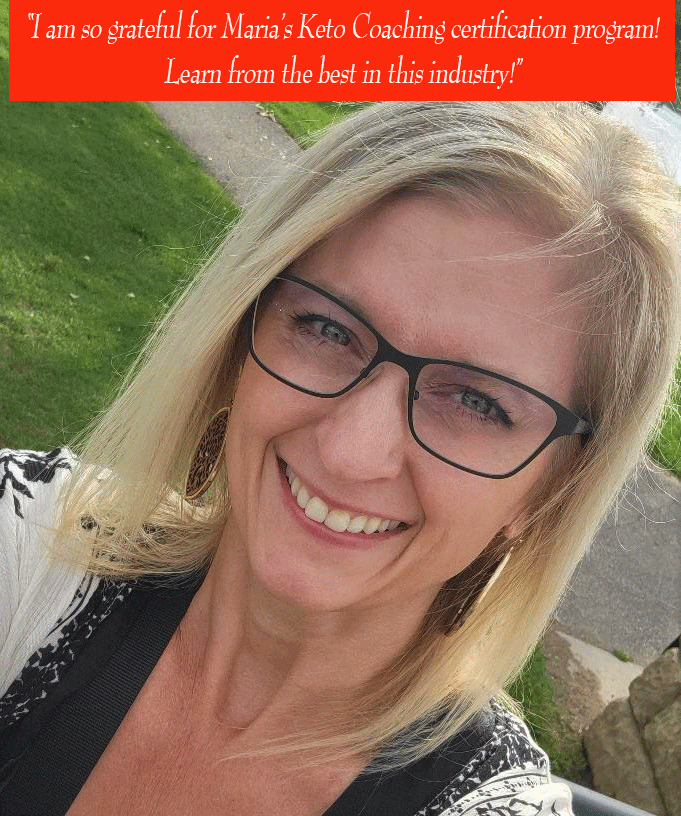
“I am so grateful for Maria’s Keto Coach certification program! You truly get to learn the best from the best in this industry. The coaching program is thorough, very well organised, and complemented by weekly support with both Craig and Maria. I feel confident and well-trained to work with my clients and I continue to receive the support I need if I have questions. You can tell they put a lot of work into this training program and they want you to succeed. I highly recommend!” – Tracey M.
Carnivore Coaching Included!
We also have an entire carnivore coaching certification too! There are 38 all new sections on carnivore diets, the Carnivore Autoimmune Protocol (CAIP), anti-nutrients in plants and much more! Everything you need to understand the carnivore diet and help clients who want to do carnivore for weight loss or healing.
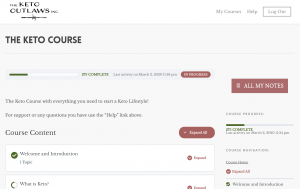
This self-paced keto coaching certification program has everything you need to become a keto coach along with 90 days of support and weekly webinars. It takes most coaches about 3 months to complete the program. The program includes:
Over 150 amazing educational videos
Biology, science, business education, health coach instruction and more
Business in a box. Meal plans, intake forms, pantry lists and more that you can brand and give to your clients!
NEW bandable website. Be up and running with a packaged course with meal plans! You supply your own support to make this a complete coaching solution the day you get your certification!
Instructions on setting up your own website
Building engagement and a strong following
How to be a health coach and support your clients
Photography and video training for blogging, food photos and social media
Expanding your social media presence
Implications for Taxes, LLC considerations and more
90 days of support including weekly live webinars!
Lifetime access to the courses and materials
Carnivore Coaching content with how to do carnivore and the Carnivore Autoimmune Protocol (CAIP)
Keto Adapted Virtual Conference included!
NEW Protein Sparing Modified Class included!
New content added every year which all coaches get lifetime access to!
The course is self-paced and can be completed on your time-frame
Private Facebook group for all Certified Keto Coaches!
CERTIFIED KETO COACH TESTIMONY
“To expand my nutritional health knowledge and make me a better coach, I was looking for a health coaching program that would provide a solid foundation in the science and functional medical aspects of Ketogenic and Carnivore diets, and Supplements. With integrity, this course by the Emmerich’s included many peer reviewed studies, medical articles and presentations to confirm the information that was being taught. Maria and Craig taught me the nutritionally healthy way to coach my clients into a new lifestyle. They share how to overcome overcome obstacles, dispel myths and mistakes which will help my clients succeed. This challenging program is very well done with step by step videos to make large amounts of information manageable. The weekly coaching calls and access to a large database of questions and answers helped me get answers to things I wasn’t sure about. Maria and Craig responded to my questions quickly if I did not find them on the coaches Q&A page.
The meal plans and thousands of recipes I was given access to changed my perspective on what it is to eat healthy and still have delicious options in any food category. Little did I know that this exceptional coaching program would change my health as well. I am no longer on thyroid medication and am no longer pre-diabetic. Maria and Craig are a true inspiration with all the hard work and creativity they put into the program and their recipes. From their teaching, I am grateful to now have the ability to help my clients on a broader level.
If you’re looking for a professional, science based, turn key program to start or enhance your coaching program and your health I would highly recommend Maria & Craig Emmerich’s Keto Adapted coaching program.” Search Camps
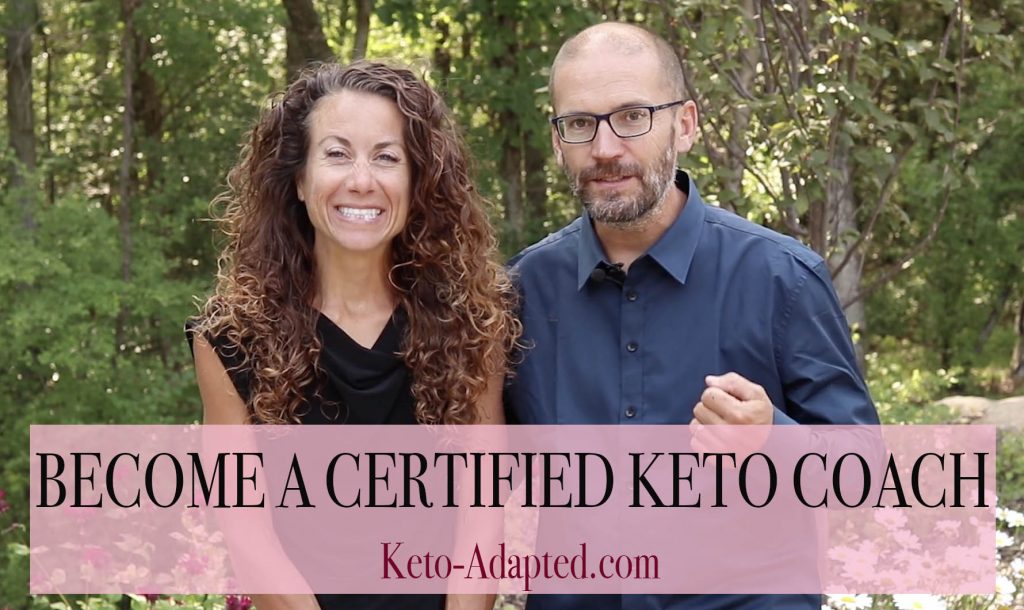
This is the most complete keto coaching program that exists. It is also certified with NASM and AFAA. Once completed you will be listed on our site as a certified keto and carnivore coach!
Now is a great time to start your own business, help coach your friends, reach out to communities in need to help them realize a healthier lifestyle. You can help change people’s lives for the better. Craig and I have been doing this for almost 20 years and it is some of the most rewarding work we have ever done. Being able to change people’s lives is a powerful thing.
NASM and AFAA certified!
This course is certified by both NASM and AFAA. It is the maximum amount of credits for each (1.9 and 15.0 respectively). Anyone taking this course can get NASM and AFAA credits!
Optional Supplements Certification:
Once you sign up for the Keto and Carnivore Coach Certification you can add the optional Supplement program to also get certified in supplements. This tract will give you all the tools you need to recommend supplements to your clients that can help improve their results and help them heal faster.
What Our Coaches Say About the Program:
“And I believe that you received these comments many times. However, I do want to say that it is so beneficial for me to learn your style of Keto and the Keto Coaching Program – the information that you packaged in this program and in the book Keto really made me learn a lot .. the information and how to think about many issues now from other angles … And the website .. like a big well that I can always get unlimited information there. Thank you very much for your and Maria’s hard work and sharing the important knowledge with us.” – Lumin
Sign Up!
We will be holding three 90-day sessions each year. You get access to the course as soon as you sign up. The next sign up period will be in April. The enrollment is open for 2 WEEKS ONLY! And space is limited! Get your spot now and start your career helping people get healthy and lose weight!
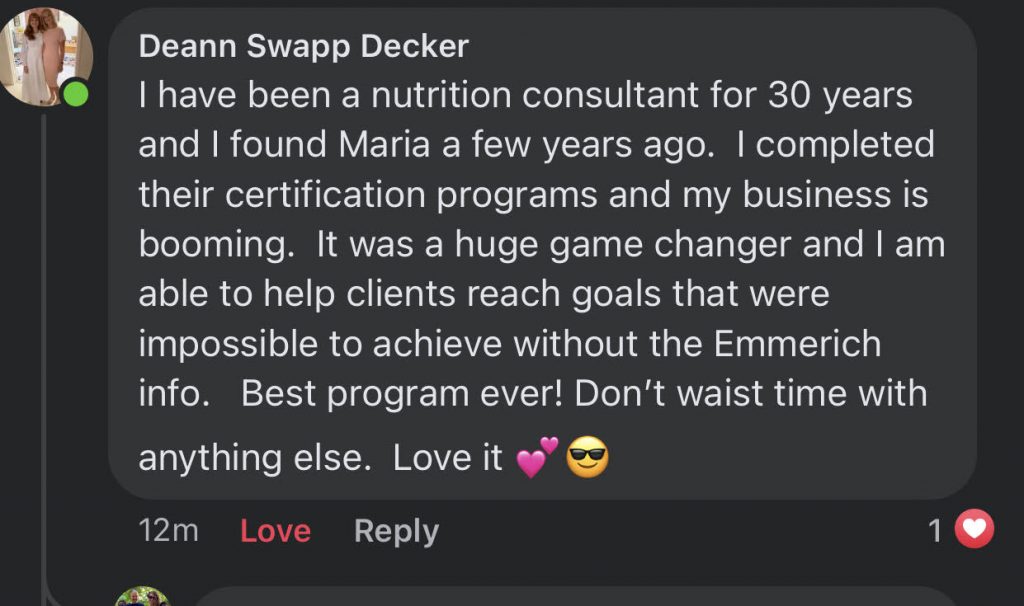
“I have been a nutrition consultant for 30 years and I found Maria a few years ago. I completed their certification programs and my business is booming. It was a huge game changer and I am able to help clients reach goals that were impossible to achieve without Emmerich’s info. Best program ever! Don’t waist time with anything else. Love it” – Deann
Payment Options:
We also have a payment plan option too. It is three monthly payments after which you have lifetime access to the course. CLICK HERE to get this option or use the button at the bottom of the above link.
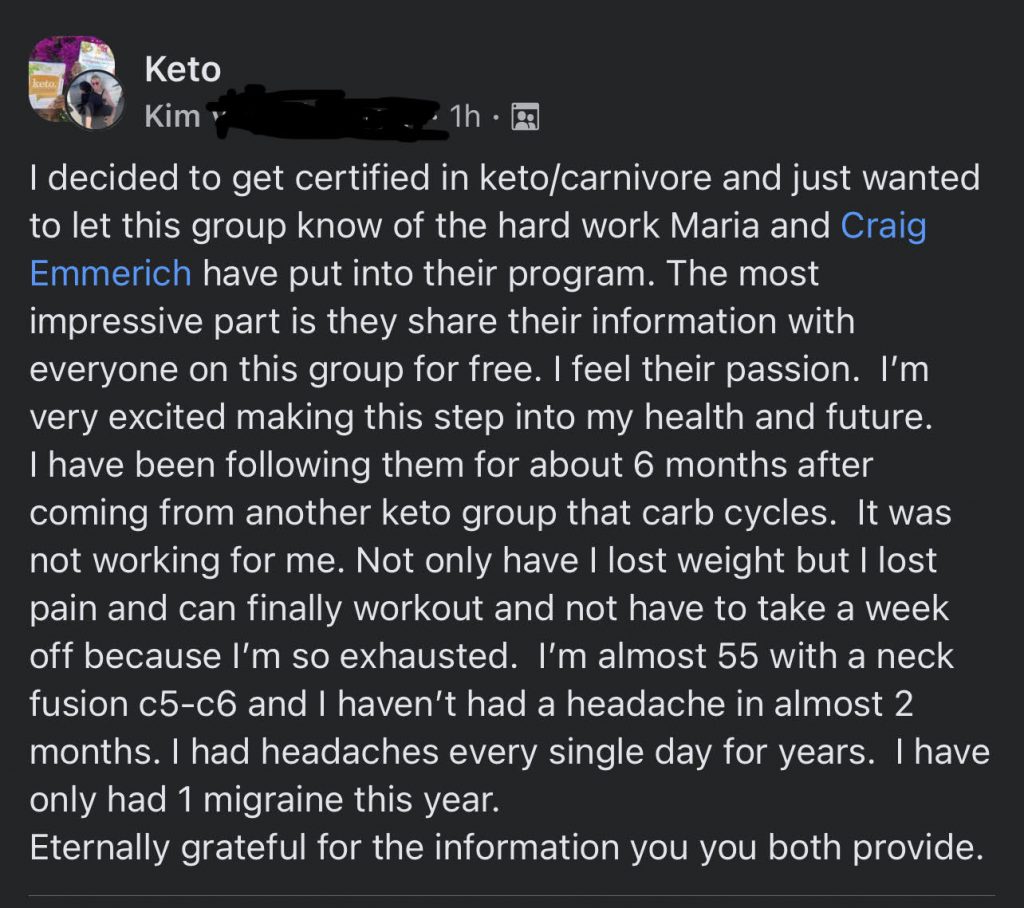
“I decided to get certified in keto/carnivore and just wanted to let this group know of the hard work Maria and Craig Emmerich have put into their program. The most impressive part is they share their information with everyone on this group for free. I feel their passion. I’m very excited about making this step into my health and future.
I have been following them for about 6 months after coming from another keto group that carb cycles. It was not working for me. Not only have I lost weight but I have lost pain and can finally workout and not have to take a week off because I’m so exhausted. I’m almost 55 with a c5-c6 neck fusion and I haven’t had a headache in almost 2 months. I had headaches every single day for years. I have only had 1 migraine this year.
Eternally grateful for the information you you both provide.” – Kim
Most people I consult are doing keto totally wrong. Get fast results with the my Mind-blowing Keto School!
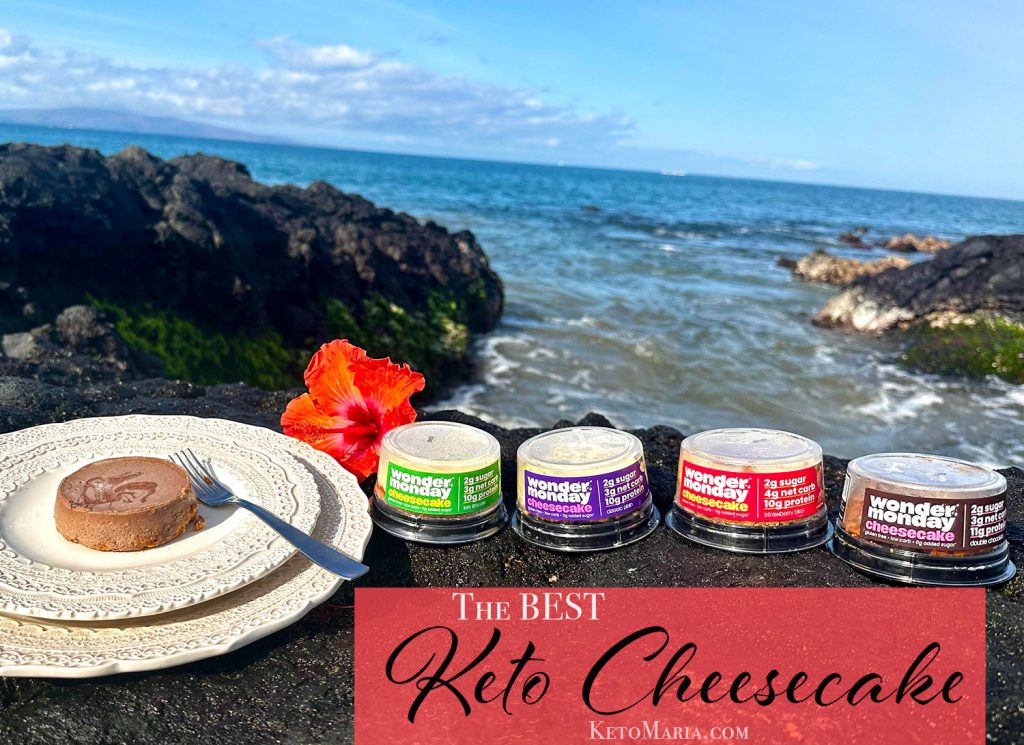
Who wants to come over for the BEST Keto Cheesecake?
Well, maybe you can’t come to the Keto Condo BUT these delicious keto cheesecakes can be delivered to your front door!
Wonder Monday makes the best keto cheesecakes and they are so cute and delicious! Perfect for a holiday party!
I’m so excited to share with you Wonder Monday’s brand new, restaurant-sized cheesecakes!
Easter is coming! Why not order a box of these cute healthy cheesecakes for a keto dessert?
There’s so much to love about these new keto cheesecakes, so let’s dive in!
NEW CRUSTS: A brand new crispy, slightly crumbly crust that contrasts beautifully with the creamy, velvety cheesecake filling.
BOLDER FLAVOR: Upgraded recipes in collaboration with professional chefs pack even more flavor into each of these decadent batters.
BIGGER SIZES: These cheesecakes are TRIPLE the size of the minis and big enough for a few servings or sharing with others…or not, let’s be real! 😉
BETTER PRICE: These new cakes give you 10% savings on a per ounce basis! Woohoo!
Already excited? good. Because the list doesn’t stop there.
BETTER NUTRITION: With a fresh boost of protein, each cake now boasts 10 grams of complete protein, or 20% of your recommended daily intake. A
BETTER VARIETY: What’s better than cheesecake? Multiple flavors of cheesecake! Try their new Variety Pack with all 4 of our best-selling flavors.
BETTER PACKAGING: These new cakes come individually packaged with a tamper evident seal. Now you can thaw out a single cake at a time, and easily take your Wonder Monday cheesecakes anywhere you go!
So why settle for ordinary when you can have bigger, better, and bolder?
These new keto cheesecakes are the perfect treat for any occasion, whether you’re celebrating a special milestone or simply treating yourself to a delicious indulgence!
I know these new cheesecakes are gonna fly off the shelf, so I have a special exclusive launch for you before anyone else. Order the best keto cheesecakes now while supplies last!
I also love that Wonder Monday cheesecake delivery is a small business that has very kind owners! You all know I love supporting small businesses!
Candace is also so generous, she is offering a special discount on the best keto cheesecakes for all of you!
Yesterday, the Administrator of the Small Business Administration (SBA) Isabel Guzmán, the Deputy Secretary of the Treasury Wally Adeyemo, American Rescue Plan Coordinator Gene Sperling, and Deputy Director of the National Economic Council Bharat Ramamurti were joined by US Senator John Hickenlooper (D -CO) and small business leaders, advocates, and mission lenders with particular expertise in reaching minority small businesses to discuss the Biden-Harris Administration’s small business agenda to expand capital access, including newly proposed rules from the SBA and historic investments by the Treasury Department in CDFIs. The group includes non-profit mission lender groups, Community Development Financial Institutions (CFIs), foundations, and advocacy groups all seasoned in meeting the needs of historically underserved small business owners.
Participants agreed on the importance of breaking down barriers to capital by meeting small business owners where they are, providing multiple paths to accessing capital, and offering support services needed to navigate available programs to better reach underserved small business owners. The Biden-Harris Administration is working to address these needs in a number of ways, including through investments in the American Rescue Plan that have helped set the stage for supporting small businesses for years to come. SBA is proposing reforms that would make it easier for lenders to work with SBA to offer small dollar loans, expanding the pool of lenders and capital options for small businesses with a focus on the historically underserved. Treasury has launched an interagency effort to identify gaps in services for underserved communities and made historic investments in the CDFIs that often serve as the primary lender for minority-owned businesses.
Administrator Guzmán provided an overview of her capital access reform agenda for the SBA. This included the proposal to lift the moratorium on Small Business Lending Company (SBLC) licenses, proposed reforms to the Small Business Investment Company (SBIC) Program, and proposed streamlining and modernization of the affiliation, lending criteria, and employee ownership requirements for the SBA’s Business Loan Programs. The proposed SBLC rule would allow SBA to pilot this expansion of lending activity while ensuring proper lender engagement and protection protocols. The Administrator identified the priority for these new SBLC licenses to focus on a diverse representation of lenders that responsibly meet the capital needs of the smallest businesses, minority businesses, and rural communities. In addition, later this year SBA plans to launch significant technological improvements to its small business borrower-lender matching tool, improving the experience and ease of matching potential borrowers and lenders.
The Deputy Secretary spoke to the historic cooperation in the Biden-Harris Administration between agencies to support underserved communities, especially when it comes to community investment and access to capital. Through the Emergency Capital Investment Program, CDFI Fund, and State Small Business Credit Initiative, the Treasury has deployed billions in funding to assist small and minority-owned businesses and consumers. In July, Vice President Harris announced the formation of the Interagency Community Investment Committee (ICIC), chaired by the Treasury Department, which has since led a process to solicit input on how agencies can better align to support underserved communities.
Senator Hickenlooper emphasized the critical nature of expanding small business activity nationwide and highlighted the role responsibly regulated fintechs can play in expanding access to affordable capital for underserved small businesses while protecting the integrity of the system.
In the meeting, participants recommended the Biden-Harris Administration on these initiatives that have improved access to capital and addressed persistent gaps in lending. One participant raised how welcome and necessary the proactive consideration around expanding SBLC licenses to focus on mission-based lenders would be, and recommended SBA for prioritizing a measured expansion of licenses to ensure consumer protections. Another leading small business advocate highlighted how the expansion of SBLC licenses would allow for a diversification of lending options, including mission lenders and responsible fintech options, to fill acute capital gaps and commended the SBA’s borrower protection principles. Multiple participants highlighted the importance of making sure capital allocators reflect the diversity of America and its small business owners. The group discussed the critical opportunity to expand the use of technology to scale lending operations, alternative underwriting models, and technical assistance delivery.
Education continues to evolve offering students an assortment of opportunities to earn college credit while still attending high school. In the state of Idaho, the Fast Forward Program provides students attending public schools access to $4,125.00 to help pay for dual/concurrent enrollment credits, Advanced Placement College Board, and Professional Technical Education exams and overload course fees. Dual/concurrent enrollment is a collaborative partnership between higher education and high schools to provide college courses for high school students. The high school instructors are pre-approved by the college/university academic departments to deliver college-level courses.
A fundamental component of this partnership is that the courses dually taught are closely aligned while still allowing some academic freedom between instructors. From our learned experience, this process can be tedious, drawn out, and complicated. Therefore, we offer the following strategies for success in navigating the dual credit program.
Perspectives from a College Instructor
Observations. As a dual credit liaison, the role of the college instructor is to reach out to all assigned high school dual credit instructors and determine a course observation time, per the requirements of the liaison contract. In our efforts to streamline this process, observation times are scheduled on dates that correspond with the completion of signature assignments. For example, one signature assignment is a student-taught skill presentation. Thus, the high school instructor coordinates an observation time which allows the liaison the opportunity to view the completion of this signature assignment.
As a liaison, it is critical to ensure the course offerings are as similar as possible while maintaining academic autonomy among teachers. In addition, while the liaison is required to complete evaluations for each dual credit instructor, this role should not be viewed as “employer-employee.” With this in mind, the observations have led to a productive discussion of how to better align the signature assignments and associated grading rubrics. For example, one grading criterion used for the aforementioned signature assignment is the inclusion and presentation of joint movements and muscle actions for the skill. Through observation, we identified the need for students to spend more time identifying and presenting these criteria to a group. Thus, the role of observation proved vital to the improvement of the student’s experience.
Establishing Communication Best Practices When a college instructor is approached about being a dual credit liaison, there are several incentives to take on the role. As a dual credit liaison, there is an opportunity to create relationships with high school instructors, recruit students, review and improve courses, etc. However, one of the most critical components of a successful dual credit program is establishing communication best practices. In our experience, the following practices listed below are essential for the alignment of courses.
Face-to-Face Discussions. For both instructors to be on the same page about course delivery and content, having frequent face-to-face conversations is a must, especially at conception. This requires time out of everyone’s schedules, posing the largest hindrance. That said, in face-to-face meetings, topics for discussion should include (at a minimum) identifying primary goals and determining alignment strategies.
Shared Documents. Documents shared between both instructors allow for even greater course alignment. Instructors should take time to review the course syllabi together to ensure similarity, specifically in learning outcomes. Additionally, signature assignments can and should be used across courses as a means of improving coursework symmetry and content review. For example, students at both high school and college may be required to complete a project. The instructions and guidelines provided to the students, as well as the rubric used by the instructors could be the same or at least very similar in criteria. We have learned to be comfortable in sharing created assignments and in the process have resolved to edit and improve assignments for the betterment of the students.
Perspectives from a High School Instructor
Observations. The dual credit program is a great academic opportunity for students as the rigor of the dual credit assignments is valuable for student learning and in preparing students for the post-secondary level. The dual credit program is also valuable for the high school instructor. The opportunity for instructors to learn new ideas and share with like-minded, supportive partners is beneficial and welcomed by both parties. Instructors can improve their teaching practices when they have another colleague to share ideas with and learn from without fear of judgment.
Considerations Before Getting Involved in the Program. Once forms of communication have been established, the classes that will be offered as dual credit will need to be identified. By sitting down with a faculty liaison and reviewing common courses, instructors will be able to determine which courses can be offered as dual credit. Lastly, identify the primary goals of the dual credit program.
Establishing Communication Best Practices. It is important for high school and college instructors to make time for regularly scheduled check-ins and team meetings. While face-to-face discussions may be preferred, the use of virtual meeting methods and email is necessary when schedules conflict and physical distance is a barrier. In-person visits and observations at the beginning and near the end of the course are highly recommended to ensure the course starts off well and ends strongly. Regular communication helps build and maintain the dual credit relationship.
Teams should discuss course goals, syllabi, overall content, and signature assignments to define and maintain course alignment. These documents should be in a shared location (eg, a Google Drive folder) to help both instructors collaborate and utilize shared signature assignments.
Another important part of communication is to share best practices to improve instruction and student learning. Teachers learn best from each other. When the college instructor comes in to observe the high school setting, both instructors should take time to share best practices and be a sounding board for each other on what is going well and what areas they are seeking improvement. The sharing of best practices to improve student learning should be an integral part of any dual credit program.
Strategies for Success
Make Sure the Student is Ready. Helping students understand whether they are truly ready for the college-level course is important. This can be achieved by maintaining high expectations for student learning, grading assignments in a timely manner, and providing consistent feedback so students understand if they have meeting expectations.
When students are not ready for the college level rigor, they need a lot more support than traditional-aged college students and this takes more time and support on the high school instructor’s part to help them be successful. If a student is not ready or willing to work at the college level expectations, they need to be encouraged to drop the dual credit portion of the course before the penalty-free drop date ends so their future funding is not jeopardized. In the physical education dual credit course, this means they still complete the high school course but do not earn dual credit. They can retake the high school course for dual credit in a different semester and use their previous experience to be more successful and ready for college-level work. Most often, the younger students are not ready and teachers should be honest with students about the rigor of the course so they can make an informed decision about whether or not to take it for dual credit. High school instructors should consider recommending the course to upperclassmen due to readiness and maturity levels. The younger students would benefit the most by taking the first course without dual credit and then taking it again as a dual credit course.
Collaboration. It is important for the high school instructor to maintain a high level of expectation for the course, especially in a physical education setting where the course content and calendar may not match that of the college-level course due to time constraints and course/teacher availability at the high school level. Both high school and college instructors must strive to match the course content as best as they can and achieve the planned signature assignments that achieve course goals. Both instructors should go over these at the beginning and end of each semester to reflect upon the data and make adjustments for the next semester.
Alignments. A best-case scenario is when the physical education course is aligned more like the college course and has the same work for all students, especially the signature dual credit assignments. The course is best aligned when students are not having to do “extra” work for dual credit. Unfortunately, due to scheduling and section availability, dual credit physical education courses do not have prerequisite requirements and are open to all students regardless of their grade, readiness, and desire to take the dual credit course. This makes it challenging for the high school instructor to manage the different needs of the students (those who are there for dual credit and the high level of rigor and those who don’t and just want a general physical education credit) and adds stress to managing the course overall. This scenario can cause students who are not prepared for the rigor of dual credit work to do poorly in class. A workaround here may be to have separate grading expectations on the signature assignments for the regular education vs. dual credit students. This would help introduce students to the concepts of dual credit work and still require the same work throughout the course, modifying expectations, while still holding college level dual credit students to the high standards of the dual credit work.
Sharing. The good news is that it gets easier the more you teach the course. New teachers need more support and check-ins as they are overwhelmed with expectations and how hard it is to push students for the dual credit course requirements. College instructors should share student work samples and rubrics as well as discuss grading and assessment practices. Sharing sample teaching videos or having the high school instructor observe the college instructor in person or virtually would be valuable.
Conclusion The dual credit program has afforded students the opportunity to save money and earn college credit. However, there are many considerations prior to implementation and along the way. When all involved work as a team, relationships are built and education is heightened.

 Did you ever wonder why it is easier to gain weight than keeping it off?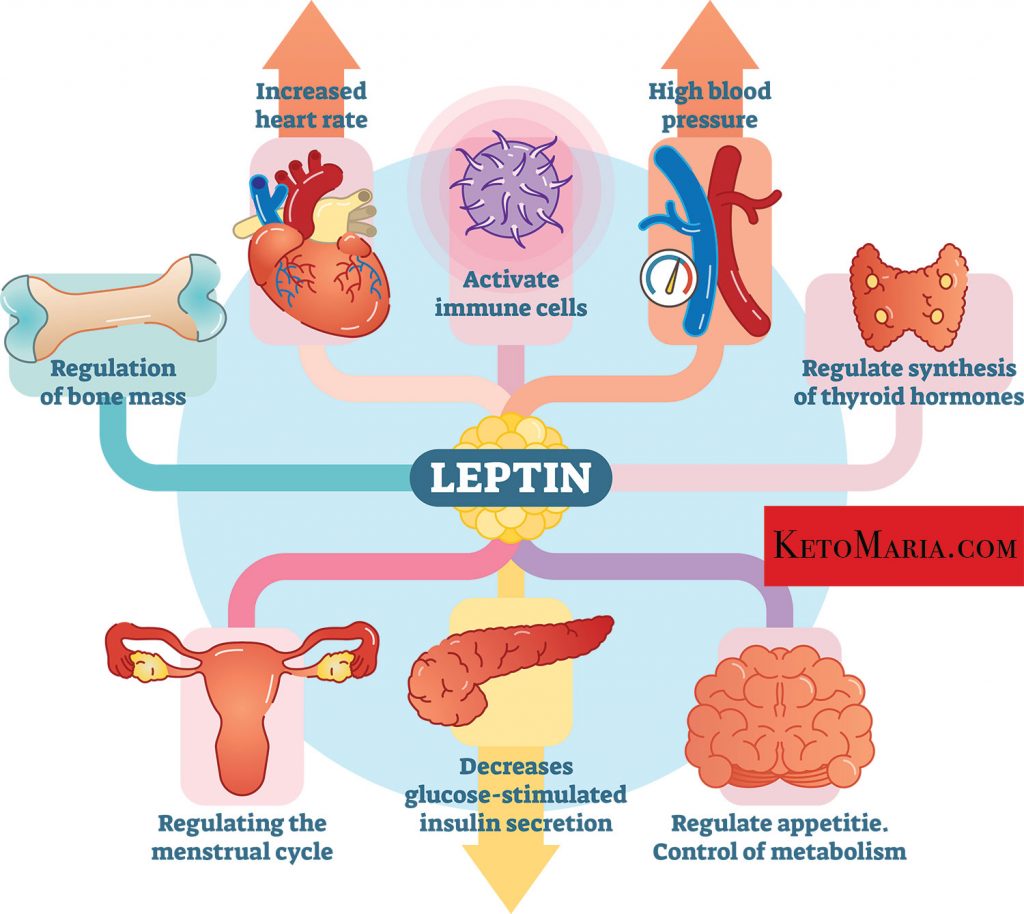

 – Jaya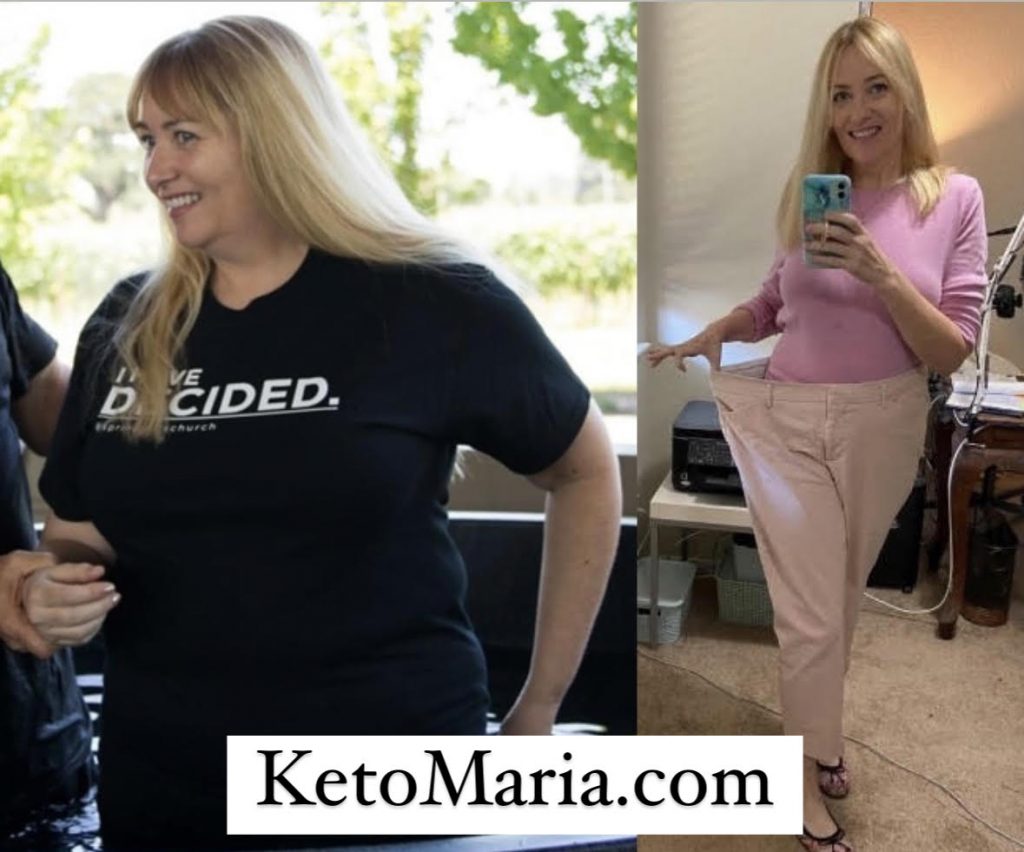

 Optional Supplements Certification:





 Establishing Communication Best Practices