
sample business plans

Healthcare Effectiveness Data and Information Set (HEDIS)

HEDIS is a set of performance measures that are used to compare health plan performance and measure the quality of health plans. These measures were created by the National Committee for Quality Assurance (NCQA). About 90% of health plans use HEDIS as a standard to measure the performance of their plan. The data is tracked from year to year to measure the performance of the health plan and thus provide information regarding the population served.

The data that is collected is used to monitor the health of the general population, evaluate treatment outcomes, etc., and the data is collected through administrative, hybrid, and survey methods.

HEDIS Measure Domains:

About 95 HEDIS measures are categorized under the following six “domains of care”.

Effectiveness of Care

  • Controlling High Blood Pressure
  • Care for Older Adults
  • Hemoglobin A1c Control for Patients With Diabetes
  • Blood Pressure Control for Patients With Diabetes
  • Eye Exam for Patients With Diabetes
  • Breast Cancer Screening
  • Colorectal Cancer Screening

Access/Availability of Care

  • Adults’ Access to Preventive/Ambulatory Health Services
  • Utilization and Risk Adjusted Utilization.

Experience of Care (CAHPS)

  • CAHPS Health Plan Survey 5.1H, Adult Version
  • Utilization and Risk Adjusted Utilization

Utilization and Risk-adjusted Utilization

  • Well-Child Visits in the First 30 Months of Life
  • Child and Adolescent Well-Care Visits

Health Plan Descriptive Information

  • Language Diversity of Membership
  • Utilization and Risk Adjusted Utilization

Measures Collected Using Electronic Clinical Data Systems

  • Childhood Immunization Status
  • Breast Cancer Screening
  • Depression Screening and Follow-Up for Adolescents and Adults

How is data collected for HEDIS?

Health plans collect and report performance data about specific services and types of care to NCQA. NCQA health insurance rates based on 90-plus measures.

HEDIS data is collected through three methods:

  1. Administrative data: Data collected from office visits, hospitalizations, and pharmacy data
  2. Hybrid data: It’s a combination of administrative data from claims as well as from patient’s medical records
  3. Data surveys: This is data collected through survey questionnaires from members.

Why do HEDIS scores matter?

HEDIS scores are critical for health care planning. HEDIS scores help payers understand the quality of care their members receive for chronic and acute conditions. The better the score, the more effectively the payer competes with other payers in the market.

Benefits of HEDIS measures:

  • It helps health plans assess the quality and variance of health care provided to enrollees.
  • It determines how the plan is best for chronic disease management and preventive care.
  • The use of preventive screening measures helps to improve patient outcomes and reduce healthcare costs
  • Quality interventions are based on closing gaps in care and expanding preventive services such as vaccinations, pap smears, mammograms, and treatment for hypertension or cholesterol.
  • Star ratings enable providers to measure the success of their improvement initiatives

Effects of HEDIS on Reimbursement:

CMS has directly tied reimbursement of medical costs to patient outcomes. As a result, health insurance providers face the challenge of bridging coverage gaps and improving quality. By focusing on quality results, members can maximize their benefits and ultimately make better use of limited resources.

HEDIS is recognized as the highest standard of reimbursement by health care providers and payers. Health care plans take HEDIS tests and quality measures seriously because they know that money is at stake. Leaders need to be more aware of the importance of organizations continuing to engage in all quality improvement activities.

Ultimately, CMS penalizes health plans if they underperform for more than three years. HEDIS as a whole is changing the company’s understanding of the importance of measuring quality, a fundamental concept underlying performance-related quality initiatives.

Effects of HEDIS on gaps in care

HEDIS measures can help identify gaps in care for participants who have not been screened for breast cancer or who have not been vaccinated against HPV. This can affect your quality score. Improving Star and HEDIS performance requires closing the gap. These gaps can be filled by reaching these participants through home testing kits, home health care, and screening visits.

Why is HEDIS important to providers?

  • Ensure timely and appropriate care for their patients.
  • Help identify and address gaps in patient care.
  • As HEDIS rates rise, providers are able to capture maximum or additional revenue through a pay-for-quality, value-based service, and pay-for-performance model.

Why is HEDIS important to payers?

  • HEDIS scores help health plans understand the quality of care provided to people with chronic and acute conditions.
  • Helps identify gaps in health network performance and care delivery
  • Helps improve patient outcomes and reduce care costs through preventive services
  • HEDIS identifies public health impacts such as heart diseases, cancer, smoking, and asthma which provides useful data on health issues.
  • Care is provided to help identify and treat at-risk groups who have not completed immunizations, dental care, screenings, etc.

NCQA Health Plan Rating vs Medicare Star Ratings:

The Centers for Medicare and Medicaid Services (CMS) uses a five-star rating system to rate how well Medicare Advantage (MA) health plans (Parts C and D) and providers serve their members. Assessment results are based on the implementation of the plan, the quality of care provided, and customer service. Ratings range from 1 to 5 stars. 5 is the highest score for excellent performance, and 1 is the lowest score for poor performance.

Both the NCQA Health Plan Rating (HPR) and the Medicare Star Rating are used to assess health insurance quality and performance, and both rate and report plan performance. The goal of HPR and star ratings is to provide the plan with a metric to assess its current operational status. This allows us to ensure the quality of our plans so that consumers can choose a quality health plan that meets their needs.

HEDIS and Star ratings are important because they represent the effectiveness of patient care provided by healthcare organizations, and HEDIS and Star ratings decrease when there are gaps in care. Another reason HEDIS and Stars need to maintain high ratings is for reimbursement purposes. Healthcare organizations with a lower rating are not eligible for bonus payments and are subject to fines.
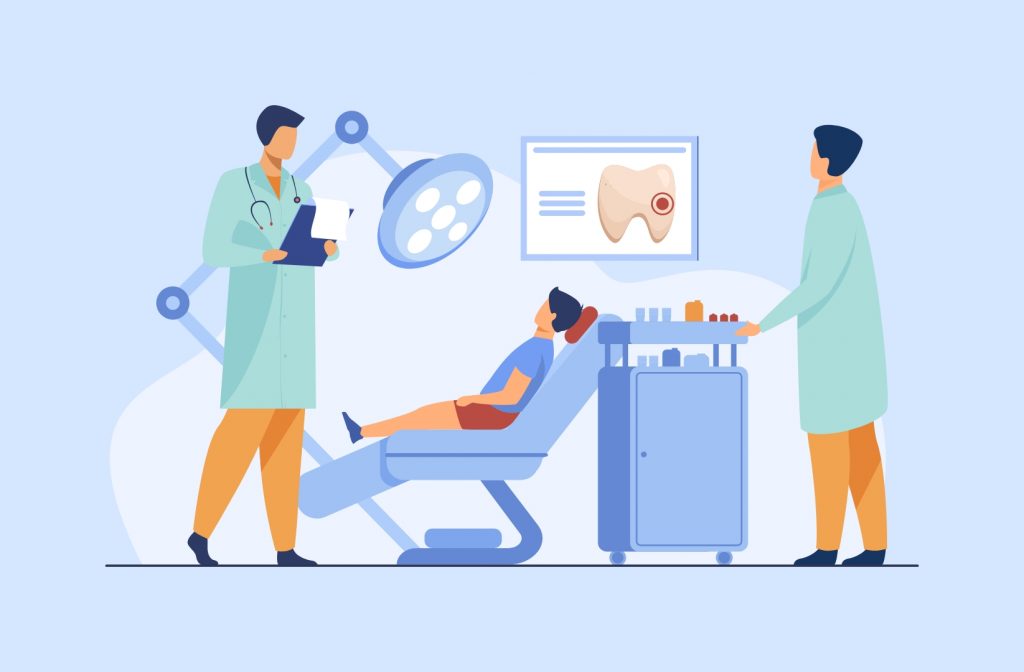
Rising Affected person Retention and Income with Referral Administration

The ratio between the variety of dentists and the inhabitants within the USA is 61:100000. A couple of in 5 (21.3%) stated that that they had not visited the dentist in the previous couple of years. One of many high causes adults cite for avoiding the dentist is the lack to discover a handy location or appointment time. Particularly, 19% of adults had not visited the dentist in a couple of years as a result of they can’t discover a handy location or appointment time. As a dentist or dental follow supervisor, it’s essential to not simply handle present sufferers however to account for misplaced alternatives and plans to enhance affected person expertise, particularly with appointment schedule and completion. This may lead to a rise within the variety of sufferers visiting dental facilities.

Dental facilities/teams can start by leveraging know-how to handle the affected person referral workflow. Inbound affected person referrals having dental points often have accompanying illnesses reminiscent of diabetes or unintended accidents. A seamless expertise from appointment scheduling to therapy completion will positively influence affected person satisfaction and the amount of inbound affected person referrals.

Present Affected person Referral Administration Workflow in a Dental Middle

Do you know? In a 12 months, 15 billion faxes are despatched out with affected person referral info within the USA. Practices obtain referrals via fax, on-line types, direct messaging, e-mail, digital print, direct walk-ins, and different channels. A typical dental heart or dental group is a excessive inbound referral setup. Dental facilities obtain giant volumes of referrals weekly (starting from 50 per week to even a number of hundred per week) relying on the variety of sufferers visiting the middle and the variety of clinics sending referrals to them. An efficient referral administration resolution will assist handle small or huge volumes of referrals by decreasing handbook duties and utilizing automation and construction the place potential.

How to increase Revenue with Referral Management

Dental facilities often have a devoted group of referral coordinators who obtain, settle for, and course of the referral requests. These referral coordinators manually key within the crucial particulars into an EMR/ EHR system and create a referral. The time spent by a referral coordinator in a totally handbook course of will be lowered by utilizing know-how. Productiveness and effectivity are elevated by introducing know-how to assist the method. It leads to piling up requests that aren’t but processed. When the referral coordinator doesn’t have the required info to course of the referral, he has to contact the referring supplier. This additional incurs time and leads to a sluggish referral processing charge. This, in flip, has a adverse influence on affected person expertise. Therefore, affected person referral leakage additionally turns into imminent.

Penalties of a Gradual Referral Community

  1. Income loss is a direct results of the premature processing of referrals
  2. Suppliers cease referring to the middle thereby harming its popularity
  3. Ready instances and appointment scheduling course of impacts sufferers requiring crucial and instant consideration

Challenges Confronted by a Dental Middle

  1. A number of Referral Channels: For the specialist/imaging heart that receives referrals, face extra difficulties than the referring supplier. They obtain referrals via numerous channels like fax, e-mail, direct message, web site, user-filled types, and many others. Managing and monitoring all of it manually is a tedious job. The possibilities of lacking out on a referral are excessive.
  2. Appointment Scheduling and Affected person No-Present Charges: After receiving the referral, the specialist/imaging heart schedules appointments with the affected person. In some instances, the sufferers aren’t notified clearly in regards to the appointment. When sufferers don’t present up, it’s tough for the specialist/imaging heart to trace. It leads to income loss and affected person dissatisfaction.

Allow us to assessment a typical referral course of to elaborate on the challenges confronted by the dental facilities.

  1. Affected person Visits the PCP

Andrews met with an accident just lately. He met his PCP, Dr. John, instantly as he was experiencing ache in his jaw. After inspecting him, Dr. John needed him to seek the advice of a dentist. The physician then initiated the referral.

  1. PCP Initiates the Referral

John created a referral in his EMR. He didn’t have time to do the insurance coverage pre-authorization so he left it to Andrews. He then discovered a dentist and gave him referral info verbally. Now when he met the specialist, Andrews needed to once more elaborate on his situation and issues to him. That is time-consuming for the specialist as he wastes time on the identical info twice.

  1. Specialist Requires Extra Info

The specialist, Dr. James, is a well-known dentist within the locality. After receiving the referral, he schedules an appointment with Andrews. After the appointment, Dr. James needs extra details about the affected person’s historical past and diagnostic studies. Now, he has to attend for the PCP, Dr. John, to ship him the related info.

  1. No Monitoring System for Referrals

As Dr. James is a well-known dentist within the locality, he receives quite a few referrals in a day. There is no such thing as a monitoring system for him to know what number of referrals he obtained, what number of have been processed, in what standing every referral is in, and many others. So it’s tough for Dr. James to know the analytics of his specialty.

Overcome your challenges with HealthViewX Affected person Referral Administration Answer:

With a Referral Administration resolution like HealthViewX, you may get rid of all of your challenges and obtain referral loop closures in an environment friendly manner. Listed below are a few of the key options that may enable you remodel your referral course of:

  1. Multi-Channel Referral Consolidation

The HealthViewX resolution can seize fax, telephone, e-mail, on-line kind referrals or every other referrals in a single interface. It makes it simple to observe and handle all channels of referrals in a single queue.

  1. Affected person Coordination Framework

After discovering the receiving supplier, the referral coordinator refers the affected person. When the receiving supplier receives the referral, the supplier will get notified of the referral. Even the affected person shall be notified of the referral. The receiving supplier can schedule appointments based mostly on the affected person’s consolation. This may minimize down affected person no-show charges.

  1. Referral Monitoring

HealthViewX offers a transparent image of how a referral has progressed with the assistance of a timeline view. Each referral has a standing that conveys wherein stage the referral is in. With the assistance of a customizable dashboard, the precise variety of referrals ready to be processed will be recognized simply.

  1. New Referral Channel

HealthViewX Referral Administration resolution helps a brand new channel for sending and receiving referrals. That is referred to as the desktop utility. Sources like e-mail, web site, direct message, fax, and many others aren’t safe and tough to deal with. Alternatively, desktop functions are a safe supply for sending and receiving referrals. Additionally, paperwork will be hooked up and despatched as a referral.

  1. Referral Knowledge Consolidation

It has choices for printing the consolidated information in regards to the referrals and the referral historical past of any affected person as a tough copy at any time in pdf/excel.

  1. Safe Knowledge Administration

HealthViewX Affected person Referral Administration is HIPAA compliant. It manages all patient-related paperwork securely.

  1. Referral Analytics

Helps in monitoring the variety of referrals and offers full details about the referrals processed, missed, scheduled, and many others. with the assistance of a Referral Knowledge-centric Dashboard.

Discuss to us to know the right way to streamline and automate the end-to-end referral cycle with out disturbing your present EMR setup.