
business plan template word

Technology companies are proving to be the great equalizer

[Part 1 of a 12-Part Series]

Healthcare is rife with significant challenges that can in some cases be minimized at the very minimum and in most cases be eliminated by the use of technology. The 12-part series begins by elaborating on macro-level challenges that the healthcare industry is starting to address with technology to stem the bleeding/reverse the onset of more severe complications.

Challenge 1: Supply and demand

Healthcare service delivery provisioning across the globe is starkly marked by the lack of adequate supply of qualified clinicians and specialists. This situation has been significantly exacerbated in the post pandemic new normal which has seen clinicians of all stripes leave their stated professions in droves. Technology companies like HealthViewX have helped alleviate this problem by building care orchestration platforms [the HOPE platform for providers and the POPE platform for payors] that allow clinicians and clinical service delivery providers the ability to render care to more patients by streamlining and automated work processes. These platforms allow patients’ access to clinicians and services that are not limited or constrained by physical locations and boundaries.

Challenge 2: Variation in care

Healthcare outcomes see sigma levels of variation as a direct consequence of the variation in care delivery. A fundamental challenge to addressing such variations in care stems from the lack of contextualized data around care encounters including clear data attribution, capture appropriateness and integrity of the measurement system (repeatability and reproducibility). Care orchestration tech platforms are designed to capture data during a care encounter that can be analyzed across a host of attributes for clinical and operational streamlining of services. HOPE for example is capable of gathering millions of individual data points that can be aggregated and analyzed at both the patient and population level to see patterns and probabilities. This is then turned into actionable insights.

Challenge 3: Evolving consumerization

Consumer expectations around Healthcare service delivery in the new normal have permanently evolved from begrudging acceptance of the confines of large monolithic infrastructure driven points of care to a strong demand for care around their individual ecosystem. In short the uberization of the healthcare except at scale. Healthcare however thus far has been severely constrained by its business model in that it has required a significant upfront investment in infrastructure followed by a significant lead time before the return on investment is reached. Technology has become the bridge to serve the new discerning consumer that will not settle for the limitations of an industry that still uses fax machines and paper to pre-digital. Care platforms again come to the rescue by helping construct engaging digital hubs that enable the patient to have a digital ecosystem built to his or her preferences. These digital hubs are being built at scale on a disease specific level that lend themselves to cohort level and individual specific management and reversal of disease progression.

Challenge 4: Illiquidity of data

One of the biggest challenges is the pooling of an individual’s healthcare data across islands of service delivery. This is exacerbated by the fact that the quantum of data over a lifetime can be in orders of magnitude and is unfortunately not available in a continuum of care/longitudinal fashion. This illiquidity is however being solved by care orchestration platforms like HOPE and POPE that address both the interoperability problem by building engines that serve as bridges between these islands of data that are linked through technology as well as building out a new care plan centered approach that is defined by and around each patient by his or her care team.
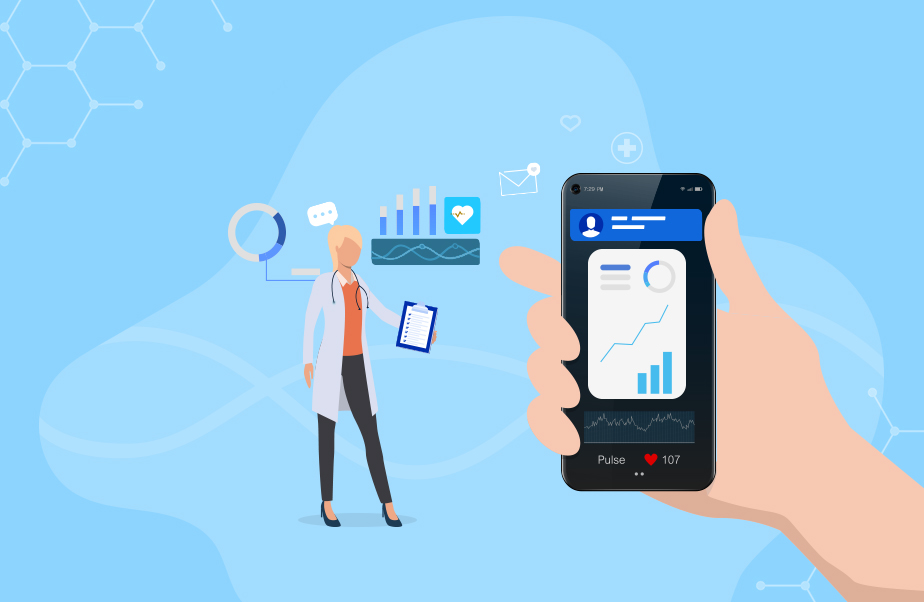
This entry was posted in blog, Population Health, Value-Based Care and tagged Data Interoperability on by Vignesh Eswaramoorthy.

Modern RPM Developments that can revolutionize Care Supply

The effectivity and effectiveness of Distant Physiological Monitoring (RPM) has allowed it to emerge as a preferred observe within the healthcare trade. RPM has tremendously elevated the accessibility of healthcare, particularly for persistent care sufferers. It has additionally allowed care suppliers to extend their income via the CPT reimbursement codes. The trade shift in direction of a patient-centric, Worth-Based mostly Mannequin has allowed for sustained progress for RPM units out there. The present improvements in RPM units have the chance to reshape the general Affected person expertise.

Modern RPM Developments that can revolutionize Care Supply

How COVID-19 is accelerating RPM progress

The COVID-19 Pandemic has expedited the large-scale adoption of RPM. As well being facilities the world over deal with treating COVID-19, sufferers with different circumstances have been inspired or inspired to keep away from well being amenities. This has brought about a big deficiency within the switch of care. This disproportionately impacts small clinics that want periodic money circulation and persistent care sufferers who require frequent clinic visits. RPM units enable sufferers to bypass the restrictions by monitoring their well being circumstances from residence. These machines assist sufferers and suppliers keep updated with their care plan progress. It additionally permits clinics to recuperate a few of their misplaced income as a result of pandemic. Shifting ahead, it seems that RPM will improve turn into an integral a part of care supply.

Robotic Assistants

The prospect of robotic units has lengthy been entertained within the healthcare trade. Developments in Synthetic Intelligence (AI) and Machine Studying (ML) up to now decade have made a future with these units extra life like. Performing as a private assistant to long-term sufferers is a technique that robots may make their manner into mainstream healthcare. Many sufferers with persistent circumstances require periodic monitoring and prolonged hospital stays. Robotic Assistants may observe the vitals of the sufferers and enter the outcomes into the affected person’s Digital Well being File (EHR). These machines can be particularly helpful to sufferers at rural or undermanned well being clinics. It’s at such locations the place Robotic Assistants would considerably improve the standard of care with out Changing a human. A big subject related to Robotic assistants are legal responsibility/authorized issues. Ought to any points come up whereas the affected person is underneath the robotic’s care, it’s unclear who can be accountable.

Distant Surgical procedure Robots

A extra sophisticated method during which Robots can enter the trade is thru Distant Surgical procedure. These machines can help surgeons by simplifying advanced procedures in methods that aren’t humanely potential. For instance, they will use AI or ML to enhance the accuracy of present practices. One other advantage of Distant Surgical procedure is the chance for long-distance procedures. A sophisticated Distant Surgical procedure Robotic may enable for a surgeon to carry out on a affected person 1000’s of miles away. The first hurdle going through Robotic units contain excessive improvement and operational prices. Each the software program and {hardware} of those machines are extraordinarily intricate in nature. If this concern is addressed, Robots may turn into a cornerstone of recent healthcare.

Wearable Gadgets

Wearable RPM units are already in widespread use by persistent care sufferers throughout the nation. In a extra loosely outlined method, health and smartwatches may also be thought of as they carry out many comparable duties as a medical RPM gadget. On this sense, over 20% of People already use considered one of these wearable units. The principle purpose wearable RPM units have but to take off is the dearth of multi-use units. Whereas a smartwatch has a number of capabilities, many medical RPM units have very particular makes use of. This causes many sufferers to draw back from making a monetary dedication to those merchandise. An instance of how this subject could be solved is exemplified in DexCom’s partnership with Apple. DexCom is utilizing the Apple Watch as a platform for individuals to entry their Glucose monitoring merchandise. By utilizing a longtime, multi-dimensional platform, DexCom is ready to generate a bigger outreach. A breakthrough in wearable RPM units would tremendously profit sufferers with diabetes or cardiovascular points. A tool that they may put on across the clock would supply medical professionals with the information to higher perceive their situation.

Way forward for RPM

The RPM market has important potential for progress within the upcoming many years. The shift in direction of a extra patient-centric focus has resulted in a constructive outlook for future RPM improvement. Developments within the general high quality and scale of RPM units can rework the Affected person Care Journey of tomorrow.

Schedule a demo to speak to our RPM answer consultants and get your RPM began in a jiffy!