Business News

Advanced Tips to Improve Your Business: Elevate Your Enterprise Beyond the Basics

Advanced Tips to Improve Your Business: Elevate Your Enterprise Beyond the Basics

In today’s fiercely competitive landscape, merely keeping your business afloat isn’t enough. True success lies in continuous evolution, strategic innovation, and a relentless pursuit of excellence. While foundational business principles are crucial, to truly thrive and dominate your market, you need to move beyond the basics. This article delves into advanced tips to improve your business, offering sophisticated strategies designed to unlock new growth avenues, optimize performance, and cement your position as an industry leader.

Re-evaluating Your Core Business Model for Disruptive Growth

The first step in advanced business improvement is to critically examine your foundational structure. Is your current business model still fit for purpose, or is it ripe for disruption? Advanced businesses don’t just innovate products; they innovate how they deliver value.

Consider whether a shift towards platform-based models, subscription services, or ecosystem partnerships could unlock new revenue streams and customer engagement. Think “Blue Ocean Strategy” – how can you create uncontested market space rather than competing in crowded “Red Oceans”? This involves identifying unserved customer needs or entirely new value propositions that traditional models overlook.

  • **Embrace Ecosystem Thinking:** Instead of operating in isolation, explore strategic alliances, joint ventures, and co-creation opportunities that expand your reach and value proposition.
  • **Pivot to Service/Experience-Centricity:** Even product-based businesses can enhance value by embedding services, support, and unique customer experiences that become part of the core offering.
  • **Monetize Data & Expertise:** Beyond your primary products/services, identify opportunities to leverage your accumulated data or specialized knowledge as a salable asset.

Deep-Dive Competitive Analysis and Niche Exploitation

Moving beyond basic SWOT analysis, advanced competitive intelligence involves sophisticated tools and methodologies to uncover granular insights. Understand not just who your competitors are, but *how* they operate, their key vulnerabilities, and potential future moves.

Employ tools for sentiment analysis, predictive analytics, and AI-driven market scanning to identify emerging trends and underserved micro-niches. This isn’t about copying competitors; it’s about anticipating shifts and positioning your business to fill gaps or create new demand before others.

Exploiting niches means understanding specific customer segments at a profound level – their psychographics, unmet desires, and pain points that current solutions fail to address. This often requires shifting from broad market appeals to highly targeted, personalized offerings that resonate deeply with a select group, thereby building fierce loyalty and reducing price sensitivity.

  • **Advanced Market Intelligence:** Utilize AI and machine learning to analyze vast datasets, track competitor patent filings, investment rounds, and social media sentiment for foresight.
  • **Uncover Latent Needs:** Conduct in-depth ethnographic research and ‘jobs-to-be-done’ analysis to discover customer needs they can’t articulate themselves.
  • **Strategic Niche Domination:** Focus resources on becoming the undisputed leader in a specific, profitable niche before gradually expanding into adjacent segments.

Implementing Lean Six Sigma Principles at Scale

Operational efficiency is a cornerstone of business improvement, but advanced businesses apply methodologies like Lean Six Sigma not just in manufacturing, but across all departments. This is about more than just cutting costs; it’s about optimizing processes to deliver maximum value with minimum waste.

Applying Lean Six Sigma at scale means embedding a culture of continuous improvement, data-driven decision-making, and waste reduction in every facet of your organization. From sales pipelines and marketing campaigns to customer service workflows and HR processes, every operation can be streamlined.

  • **Value Stream Mapping:** Identify and eliminate non-value-adding steps in every major process, from ideation to delivery.
  • **DMAIC Methodology (Define, Measure, Analyze, Improve, Control):** Systematically approach problem-solving and process enhancement using this robust framework.
  • **Empower Front-Line Employees:** Train and empower your teams to identify inefficiencies and propose solutions, fostering a bottom-up culture of improvement.

Harnessing Automation and AI for Hyper-Efficiency

While many businesses use basic automation, advanced improvement involves integrating Artificial Intelligence (AI) and Machine Learning (ML) to achieve hyper-efficiency and unlock new capabilities. This moves beyond Robotic Process Automation (RPA) to intelligent automation that learns and adapts.

Consider AI for predictive maintenance in operations, intelligent chatbots for customer service, personalized marketing automation, or AI-driven insights for financial forecasting. The goal is to offload repetitive, data-intensive, or complex decision-making tasks to AI, freeing up human capital for strategic, creative, and empathy-driven roles.

  • **Intelligent Process Automation (IPA):** Combine RPA with AI capabilities to automate complex, unstructured tasks requiring cognitive abilities.
  • **Predictive Analytics for Proactive Decision-Making:** Use AI to forecast trends in sales, inventory, customer churn, and market shifts, enabling proactive rather than reactive strategies.
  • **Personalized Customer & Employee Experiences:** Leverage AI to tailor recommendations, training paths, and support based on individual behavior and needs.

Crafting Hyper-Personalized Customer Journeys

Basic customer segmentation is no longer enough. Advanced businesses are moving towards hyper-personalization, leveraging big data and AI to create bespoke experiences for individual customers at every touchpoint. This deep understanding builds unparalleled loyalty.

This involves collecting and analyzing vast amounts of customer data – purchase history, browsing behavior, social media interactions, support tickets – and using AI to create dynamic, individualized pathways. From personalized product recommendations and custom content to proactive support and tailored offers, every interaction feels uniquely designed for them.

  • **Dynamic Content Delivery:** Use AI to serve real-time, personalized content on your website, emails, and ads based on individual user behavior.
  • **Proactive Customer Service:** Utilize predictive analytics to anticipate customer issues before they arise and offer solutions proactively.
  • **Personalized Product/Service Development:** Gather feedback and data to co-create or adapt offerings that precisely match niche customer desires.

Fostering a Culture of Innovation & Psychological Safety

Innovation is often touted as key, but advanced businesses understand that true innovation stems from a culture that embraces experimentation, learning from failure, and psychological safety. Employees must feel safe to propose daring ideas, even if they don’t always succeed.

This goes beyond suggestion boxes; it involves dedicated innovation labs, hackathons, cross-functional project teams, and leadership that actively champions risk-taking. Encourage intrapreneurship, where employees act as entrepreneurs within the company, driving new initiatives with support and resources.

  • **Dedicated Innovation Sprints:** Allocate specific time and resources for teams to work on experimental projects without immediate performance pressure.
  • **Blameless Post-Mortems:** When projects fail, focus on learning and process improvement rather than assigning blame.
  • **Open Communication & Feedback Loops:** Implement systems for continuous feedback, ensuring every voice is heard and considered.

Advanced Financial Modeling and Risk Management

Beyond standard budgeting and forecasting, advanced businesses employ sophisticated financial modeling techniques to understand future scenarios, optimize capital allocation, and manage risks proactively.

This includes stress testing various economic conditions, performing Monte Carlo simulations to assess probabilities of different outcomes, and integrating real-options analysis into investment decisions. Focus shifts from merely tracking expenses to maximizing the return on every dollar invested, exploring strategies like optimizing working capital and intelligent hedging.

  • **Scenario Planning & Stress Testing:** Model various economic and market scenarios to understand potential impacts and develop contingency plans.
  • **Real Options Analysis:** Treat strategic investments as options, giving the flexibility to expand, defer, or abandon projects based on future information.
  • **Dynamic Capital Allocation:** Continuously re-evaluate capital deployment to ensure it aligns with the highest-growth, highest-return opportunities.

Integrating ESG (Environmental, Social, Governance) for Long-Term Value

Sustainability and ethical practices are no longer peripheral; they are central to advanced business strategy. Integrating Environmental, Social, and Governance (ESG) principles creates long-term value, attracts conscious consumers and investors, and builds resilience.

This involves assessing your environmental footprint, ensuring ethical supply chains, fostering diverse and inclusive workplaces, and maintaining robust governance structures. Beyond compliance, consider how your business can actively contribute to positive social and environmental impact, turning responsibility into a competitive advantage.

  • **Circular Economy Principles:** Design products and processes that minimize waste and maximize resource utilization, transforming waste into value.
  • **Ethical Supply Chain Transparency:** Implement advanced tracing and auditing to ensure ethical labor practices and environmental stewardship throughout your supply chain.
  • **Impact Measurement & Reporting:** Quantify and report your ESG performance transparently, attracting impact investors and building brand trust.

Conclusion: The Journey of Continuous Evolution

Improving your business at an advanced level is not a one-time project but a continuous journey of strategic introspection, technological adoption, cultural transformation, and relentless optimization. By moving beyond conventional wisdom and embracing these advanced tips, you’re not just aiming for incremental gains; you’re positioning your enterprise for transformative growth, sustained competitive advantage, and lasting impact in an ever-changing world. The future belongs to businesses that dare to evolve.


External Reference: Business News

How to Build an Essential Business News Strategy for Long-Term Success

How to Build an Essential Business News Strategy for Long-Term Success

How to Build an Essential Business News Strategy for Long-Term Success

In the modern corporate landscape, information is the most valuable currency. However, we are no longer suffering from a lack of information; we are suffering from an overwhelming surplus of it. Every day, thousands of articles, press releases, and market reports are published, making it nearly impossible for busy professionals to keep up. This is why building a structured business news strategy is no longer optional—it is essential for survival.

A well-defined business news strategy allows you to filter through the noise, identify emerging market trends, and make data-driven decisions that keep your organization ahead of the competition. Whether you are an entrepreneur, a C-suite executive, or a marketing professional, the following guide will help you construct a robust system for consuming and leveraging business intelligence.

Step 1: Define Your Strategic Objectives

Before you start subscribing to every newsletter available, you must define why you need the news. A strategy without a goal is just a hobby. Your objectives will dictate the types of sources you follow and the frequency with which you consume them.

  • Competitive Intelligence: Are you looking to track what your direct competitors are doing, their product launches, and their hiring patterns?
  • Market Trends: Do you need to stay ahead of consumer behavior shifts or technological advancements like AI and automation?
  • Regulatory Compliance: Are you in a highly regulated industry (like fintech or healthcare) where legislative changes can impact your bottom line?
  • Economic Awareness: Are you monitoring interest rates, inflation, and global trade shifts to manage your company’s capital?

By identifying these pillars, you can categorize your news intake and avoid spending time on interesting but irrelevant information.

Step 2: Curate a Multi-Tiered Source List

To build a comprehensive view of the market, you cannot rely on a single source. A successful business news strategy utilizes a tiered approach to ensure both breadth and depth.

Tier 1: Macro-Economic and Global News

These are the “heavy hitters” that provide a high-level view of the global economy. Sources like The Wall Street Journal, Bloomberg, The Financial Times, and Reuters are essential for understanding the broader environment in which your business operates.

Tier 2: Industry-Specific Publications

Every industry has its “bible.” If you are in tech, it might be TechCrunch or Wired. If you are in retail, it could be Retail Dive. These sources provide the granular detail that general news outlets miss. They cover niche innovations, specialized regulations, and key personnel moves within your specific field.

Tier 3: Primary Sources and Raw Data

To truly stay ahead, you must look at raw data before it is interpreted by journalists. This includes SEC filings (10-Ks and 10-Qs), earnings call transcripts, and white papers from consulting firms like McKinsey or Gartner. Monitoring these ensures you are forming your own opinions rather than just following the consensus.

Step 3: Leverage Tools for Information Management

Manual browsing is the enemy of productivity. To build an efficient strategy, you must automate the collection and organization of news. Use the following tools to streamline your workflow:

Content Illustration
  • RSS Aggregators: Tools like Feedly or Inoreader allow you to pull content from hundreds of websites into a single, organized dashboard. You can categorize feeds by topic or priority level.
  • Newsletter Curators: Newsletters have seen a resurgence because they provide curated insights directly to your inbox. Use tools like Stoop or a dedicated email folder to keep “Morning Brew,” “The Hustle,” or industry-specific digests from cluttering your primary workspace.
  • Social Listening and Alert Systems: Set up Google Alerts for your company name, your competitors, and key industry keywords. Additionally, use X (formerly Twitter) lists to follow thought leaders and journalists in real-time.
  • AI Summarization Tools: With the rise of LLMs, you can now use AI to summarize long reports or daily news cycles. This allows you to grasp the core message of a 3,000-word article in seconds.

Step 4: Develop a “Signal vs. Noise” Filter

The biggest challenge in a business news strategy is discerning “signals” (information that necessitates action) from “noise” (interesting but non-actionable information). To do this, apply a mental framework to every piece of news you consume:

Ask yourself: “Does this change my current strategy?” If the answer is no, the news is likely noise. If the answer is yes, you must determine the urgency. A “signal” usually falls into one of three categories: an immediate threat, a long-term opportunity, or a shift in the fundamental assumptions of your business model.

Practicing “Information Dieting” is also crucial. Just as you wouldn’t eat everything in a buffet, you shouldn’t consume every headline. Focus on high-signal sources and give yourself permission to skip the rest.

Step 5: Synthesize and Distribute Insights

A business news strategy is only valuable if the insights lead to action. If you are a leader, your role is to act as a “Chief Curation Officer” for your team. Information hoarded is information wasted.

  • Internal Briefings: Create a weekly “Intelligence Digest” for your team or department. Summarize the top three news items that actually impact your projects and explain *why* they matter.
  • Collaborative Channels: Use Slack or Microsoft Teams channels dedicated specifically to market intelligence. Encourage team members to share relevant articles and engage in discussion about their implications.
  • Strategic Pivots: Use your news findings to inform your quarterly or annual planning sessions. If the news suggests a looming economic downturn, your strategy should reflect a shift toward resilience and cost-saving.

Step 6: Review and Refine Your Strategy

The business world is dynamic, and your news strategy should be too. Every six months, conduct an audit of your sources and tools. Are you spending too much time on a newsletter that no longer provides value? Is there a new emerging technology or competitor that you aren’t tracking yet?

Refining your strategy ensures that you are not just consuming news for the sake of being “busy,” but rather for the sake of being “informed.”

The Competitive Advantage of Being Well-Informed

In an era of rapid disruption, the companies and individuals who succeed are those who can connect the dots before anyone else. Building an essential business news strategy is about more than just reading the paper; it’s about creating a sophisticated system that turns global events into local advantages.

By defining your goals, curating your sources, using the right tools, and filtering for signal, you transform information from a burden into a powerful strategic asset. Start small—pick three key objectives and five trusted sources—and build your system from there. In the long run, your ability to navigate the news will be the foundation of your professional success.

11 Ultimate Tips to Improve Your Business News and Boost Authority

11 Ultimate Tips to Improve Your Business News and Boost Authority

“`html


11 Ultimate Tips to Improve Your <a href="https://businessistrend.com" target="_blank" rel="noopener" style="color: #2563eb; text-decoration: underline; font-weight: 500;">Business News</a>

11 Ultimate Tips to Improve Your Business News and Boost Authority

In today’s hyper-connected digital landscape, information is cheap, but attention is expensive. Every day, thousands of companies blast out press releases, corporate updates, and industry insights, yet only a fraction of them actually resonate with their target audience. If your business news feels like it’s falling on deaf ears, you aren’t alone. Most corporate communication fails because it focuses too much on the company and not enough on the reader.

Improving your business news isn’t just about better grammar; it’s about strategic storytelling, search engine optimization (SEO), and psychological triggers that drive engagement. Whether you are writing a LinkedIn update, a company blog post, or a formal press release, these 11 ultimate tips will help you transform dry corporate updates into compelling narratives that build brand authority.

1. Know Your Audience’s Pain Points

The biggest mistake in business news is writing for yourself rather than your audience. Before typing a single word, ask yourself: “Who is this for, and why should they care?” If your news is about a new software update, don’t just list the technical specs. Instead, explain how those specs solve a specific problem your customers face.

  • Segment your readers: Are you talking to investors, customers, or employees?
  • Address the “So What?”: Every piece of news should answer the reader’s internal question: “How does this benefit me?”

2. Master the Art of the Magnetic Headline

Your headline is the most important element of your business news. It is the gatekeeper of your content. According to advertising legend David Ogilvy, five times as many people read the headline as read the body copy. If your headline is boring, your news is invisible.

To improve your headlines, use power words, keep them under 70 characters for SEO purposes, and ensure they promise a clear value. Avoid “clickbait” that doesn’t deliver, as this destroys brand trust, but don’t be afraid to create a “curiosity gap.”

3. Use the Inverted Pyramid Style

Originating from traditional journalism, the inverted pyramid puts the most important information at the top of the article. In the digital age, readers have an incredibly short attention span. They won’t scroll to the bottom to find out the “who, what, where, when, and why.”

  • The Lead: State the most critical news in the first two sentences.
  • The Body: Provide supporting details and context.
  • The Tail: Include background information and “nice-to-know” details.

4. Focus on the “Why,” Not Just the “What”

Standard business news often reads like a grocery list of facts. To make your news more engaging, lean into the “Why.” Why did you decide to expand into a new market? Why does this new partnership matter for the future of the industry? People connect with purpose and vision more than they connect with dry facts. Storytelling in business news humanizes your brand and makes your message more memorable.

5. Back Your Claims with Data and Statistics

Credibility is the currency of the business world. If you claim that your company is “growing rapidly,” provide the percentage. If you say a new trend is emerging, cite a reputable study or your own internal data. Using hard numbers transforms an opinion piece into a piece of authoritative news. It also makes your content more “linkable,” as other journalists and bloggers are more likely to reference your news if it contains valuable data points.

6. Optimize for SEO (Search Engine Optimization)

If people can’t find your news on Google, it might as well not exist. SEO is crucial for ensuring your business news has a long shelf life. Don’t just post news; optimize it so it continues to drive traffic months later.

Content Illustration
  • Keywords: Identify 1-2 primary keywords related to the news and include them in the title, H2 headers, and first paragraph.
  • Internal Links: Link back to your product pages or previous relevant articles.
  • Meta Descriptions: Write a compelling 155-character summary to encourage clicks from search result pages.

7. Incorporate Human Elements with Quotes

Nothing kills interest faster than a “robotic” corporate tone. To improve your business news, include authentic quotes from key stakeholders, such as the CEO, a project lead, or even a satisfied customer. Avoid “corporate speak” quotes that sound like they were written by a committee (e.g., “We are excited to leverage our synergies…”). Instead, aim for quotes that convey passion, insight, and personality.

8. Leverage Visual Storytelling

A wall of text is intimidating and often ignored. Enhance your business news with high-quality visuals. This could include professional photography of your team, infographics that break down complex data, or short video clips summarizing the news.

Visuals don’t just make the page look better; they improve information retention. Studies show that people remember 65% of information when it’s paired with a relevant image, compared to only 10% when it’s text-only.

9. Keep It Scannable

Digital readers are “skimmers.” They want to get the gist of the story without reading every word. To accommodate this behavior, use a clear hierarchy in your formatting:

  • Use descriptive subheadings (H2 and H3 tags).
  • Keep paragraphs short (2-3 sentences).
  • Use bullet points and numbered lists.
  • Bold important phrases or statistics.

10. Include a Clear Call to Action (CTA)

Every piece of business news should lead somewhere. What do you want the reader to do after finishing the article? Without a CTA, you are wasting a marketing opportunity. Depending on the news, your CTA could be:

  • “Sign up for our webinar to learn more.”
  • “Download the full industry report.”
  • “Contact our sales team for a demo.”
  • “Follow us on LinkedIn for daily updates.”

11. Be Consistent and Timely

In the world of business news, timing is everything. If you have news regarding a current industry trend, publish it while the topic is still trending. Furthermore, consistency builds trust. If you only post news once a year, your audience will forget you exist. Establish a regular cadence—whether it’s a weekly industry roundup or a monthly company update—to stay top-of-mind with your stakeholders.

Conclusion

Improving your business news is an ongoing process of refinement. By moving away from self-centered corporate jargon and toward value-driven, SEO-optimized storytelling, you can turn your company updates into a powerful engine for brand growth. Remember, the goal of business news isn’t just to inform—it’s to influence, inspire, and build lasting relationships with your audience.

Start applying these 11 tips today, and watch your engagement metrics, search rankings, and brand authority reach new heights.

“`

Why Mastering Business News is Your Secret Career Weapon

Why Mastering Business News is Your Secret Career Weapon

Why Mastering Business News is Your Secret Career Weapon

In the modern economy, information is the most valuable currency. Whether you are an aspiring entrepreneur, a mid-level manager, or an investor, the ability to interpret business news is what separates the leaders from the followers. However, for many, the world of finance, macroeconomics, and corporate strategy feels like a foreign language. The jargon is dense, the pace is relentless, and the sheer volume of data is overwhelming.

What if you could bridge that gap in less than three weeks? Mastering business news isn’t about memorizing stock tickers; it’s about understanding the “why” behind the headlines. By following a structured 19-day plan, you can transform from a passive observer into a sharp analytical thinker who can connect global events to bottom-line impacts. Here is your roadmap to mastering business news in just 19 days.

Phase 1: Days 1–5 – Building the Foundation

The first five days are about setting up your infrastructure and learning the core vocabulary of the business world. Without a solid foundation, you will get lost in the nuance of market fluctuations.

Day 1: Curate Your Information Ecosystem

Success starts with your sources. Stop relying on social media “fin-fluencers” and go to the primary sources. Spend Day 1 subscribing to high-quality outlets. Focus on a mix of legacy media and modern aggregators:

  • The Wall Street Journal or Financial Times: The gold standard for daily reporting.
  • Bloomberg: Excellent for data-heavy market news.
  • Reuters or AP Business: Great for unbiased, fact-based reporting.
  • Newsletter aggregators: Sign up for Morning Brew or Robinhood Snacks for digestible summaries.

Day 2: Master the Jargon

Business news is full of acronyms. Spend today creating a “cheat sheet” for the most common terms. You need to know more than just the definition; you need to know why they matter. Focus on:

  • EBITDA: Earnings Before Interest, Taxes, Depreciation, and Amortization (a measure of operational profitability).
  • P/E Ratio: Price-to-Earnings (helps determine if a stock is over or undervalued).
  • Bull vs. Bear Markets: Optimism vs. Pessimism.
  • Market Cap: The total value of a company’s shares.

Day 3: Understand Macro Indicators

The “Macro” view dictates the environment in which all businesses operate. Research how the following three indicators interact: GDP (Gross Domestic Product), Inflation (CPI – Consumer Price Index), and Unemployment rates. When GDP is high, the economy is growing; when inflation is high, the cost of living rises and purchasing power falls.

Day 4: The Role of Central Banks

In the business world, the Federal Reserve (or your country’s central bank) is the most powerful entity. Today, learn how interest rates affect everything. When the Fed raises rates, borrowing becomes expensive, which slows down business expansion but fights inflation. Understanding this “seesaw” is crucial to interpreting any economic headline.

Day 5: Navigating Financial Statements

You don’t need to be an accountant, but you must know how to read an Income Statement and a Balance Sheet. Look up a public company (like Apple or Tesla) and find their latest “10-K” filing. Look at their revenue versus their net income. This provides the reality check against the “hype” often found in news headlines.

Phase 2: Days 6–12 – Decoding Sectors and Market Forces

Now that you have the vocabulary, it is time to look at how different industries behave and how they are interconnected.

Day 6: The Tech Sector and Innovation

Tech drives the modern market. Spend Day 6 looking at the “Magnificent Seven” (Apple, Microsoft, Alphabet, Amazon, Nvidia, Meta, Tesla). Understand how trends like AI, cloud computing, and semiconductor supply chains dictate the movement of the entire S&P 500.

Day 7: Energy and Commodities

Everything you buy requires energy to produce and transport. Study the relationship between crude oil prices and consumer inflation. Look at commodities like gold (a “safe haven” during crises) and copper (a bellwether for industrial health).

Day 8: Retail and Consumer Sentiment

Consumer spending accounts for about 70% of the U.S. economy. Read reports on “Consumer Confidence.” When people feel good about the future, they spend money at retailers like Walmart and Target, which signals a healthy economy.

Day 9: The Global Perspective

Business doesn’t stop at borders. Spend Day 9 looking at international trade. How does a slowdown in China’s manufacturing affect German carmakers or American tech firms? Understand the concept of “Supply Chains” and how “Near-shoring” is changing where companies build factories.

Day 10: Understanding Earnings Season

Four times a year, public companies “show their cards.” Read news from a recent earnings season. Pay attention to “Forward Guidance”—often, a company’s stock will drop even if they made a profit, simply because they predicted lower sales for the next quarter.

Day 11: Mergers & Acquisitions (M&A)

Why do companies buy each other? Is it for “synergy,” to eliminate a competitor, or to acquire new technology? Look at a recent major merger and analyze if the market thought it was a good deal based on the stock price reaction of the buyer and the seller.

Day 12: Geopolitics and Market Volatility

Politics and business are inseparable. Spend today looking at how elections, trade wars, or regional conflicts impact market volatility. Use the VIX (Volatility Index), often called the “fear gauge,” to see how nervous investors are about the current political climate.

Phase 3: Days 13–19 – Synthesis and Strategic Thinking

The final week is about moving from “reading” to “analyzing.” You will start to form your own opinions and spot trends before they become mainstream.

Day 13: Connecting the Dots

Pick a single headline today. For example: “The Fed keeps interest rates steady.” Now, trace its impact through three levels: How does it affect the housing market? How does it affect tech startups? How does it affect the value of the dollar? This “second-order thinking” is the hallmark of a master.

Day 14: Analyzing Contrarian Views

Don’t fall into an echo chamber. If everyone is saying the market is about to crash, find a reputable analyst who says it’s about to soar. Understanding the “bear case” and the “bull case” for any news story ensures you have a balanced perspective.

Day 15: Deep Dive into Long-form Journalism

Daily news is “noise.” Long-form journalism (like features in The Economist or The New Yorker) is “signal.” Spend Day 15 reading one 3,000-word piece on a specific industry or company. This provides the context that daily headlines lack.

Day 16: The Audio Edge – Podcasts

Use your commute or gym time to listen to expert analysis. Podcasts like The Daily Check-Up, Odd Lots, or The Journal provide behind-the-scenes insights from journalists who have spent decades on their beats.

Day 17: ESG and the Ethical Shift

Modern business news isn’t just about profit; it’s about ESG (Environmental, Social, and Governance) factors. Learn how sustainability scores and corporate ethics are beginning to dictate where institutional investors (like pension funds) put their money.

Day 18: Risk Assessment and Mitigation

Every business story contains a “risk” element. Practice identifying it. If a company announces a new product, what is the risk? Is it regulatory? Is it a hardware failure? Is it a competitor’s response? Identifying risk makes you a better strategist.

Day 19: Setting Your Perpetual Routine

On your final day, create a sustainable 20-minute daily routine. Mastering business news is a marathon, not a sprint.

  • 5 Minutes: Scan top headlines for global context.
  • 10 Minutes: Read one “Deep Dive” article in your specific industry.
  • 5 Minutes: Check the markets (Indices, Bond yields, Commodities).

Conclusion: From Consumer to Strategist

By the end of these 19 days, the “financial fog” will have lifted. You will no longer see business news as a collection of random numbers and confusing events, but as a giant, interconnected puzzle. Mastering business news gives you the confidence to speak up in meetings, the insight to make better investment choices, and the foresight to pivot your career when industries shift.

The world of business moves fast, but with the foundation you’ve built, you are no longer just chasing the news—you are anticipating it. Keep reading, keep questioning, and keep connecting the dots.

Mastering the Art of Corporate Communication: 21 Hidden Tips to Improve Your Business News

Mastering the Art of Corporate Communication: 21 Hidden Tips to Improve Your Business News

“`html


21 Hidden Tips to Improve Your <a href="https://businessmodals.click" target="_blank" rel="noopener" style="color: #2563eb; text-decoration: underline; font-weight: 500;">Business News</a>

Mastering the Art of Corporate Communication: 21 Hidden Tips to Improve Your Business News

In an era of information overload, business news often falls into the trap of being dry, repetitive, or overly technical. Whether you are a corporate communications professional, a business journalist, or an entrepreneur sharing updates, the way you present information determines whether it is read or ignored. Improving your business news isn’t just about better grammar; it’s about strategic storytelling, search engine optimization (SEO), and psychological triggers.

In this guide, we dive deep into 21 hidden tips that will transform your business updates from mundane press releases into compelling, high-ranking news stories that captivate your audience and drive authority.

1. Prioritize the “Human Angle” Over Profit

While bottom lines are important, readers connect with people. Instead of focusing solely on the “15% increase in revenue,” highlight the team, the leadership, or the customers who made that growth possible. Humanizing the data makes the news relatable and shareable.

2. Use the Inverted Pyramid Structure

Standard in journalism but often forgotten in corporate news, the inverted pyramid places the most critical information (who, what, where, when, why) at the very beginning. In an age of 8-second attention spans, don’t bury the lead in the third paragraph.

3. Pass the “So What?” Test

Before publishing, ask yourself: “So what?” If your news doesn’t explain how it affects the reader, the industry, or the market, it lacks value. Always explicitly state the impact of your news to give it weight and relevance.

4. Optimize Headlines for Search and Curiosity

Your headline should contain your primary keyword (e.g., “Tech Innovation”) while also creating a “curiosity gap.” Avoid clickbait, but ensure the title promises a specific benefit or a unique insight that the reader can’t find elsewhere.

5. Leverage Data Visualization

Business news is often dense with numbers. Instead of listing statistics in a paragraph, use high-quality infographics or simple charts. Search engines love original images, and readers are far more likely to retain information presented visually.

6. Implement “Entity-Based” SEO

Modern SEO is moving away from simple keywords toward “entities.” When writing business news, mention related brands, industry leaders, and geographical locations. This helps Google’s Knowledge Graph understand the context of your news and rank it for broader industry terms.

7. Master the Art of the Quote

Stop using “canned” quotes that sound like they were written by a legal team. A powerful quote should provide an opinion, an emotional reaction, or a bold prediction. Authentic quotes add a layer of credibility that standard prose cannot provide.

8. Create a “News Hub” on Your Website

Don’t just post news on a blog. Create a dedicated “Press” or “Newsroom” section. Use schema markup (specifically “NewsArticle” schema) to tell search engines that this content is timely, which can help you appear in the “Top Stories” carousel on Google.

9. Use Subheadings to Direct the Narrative

Business readers are “scanners.” Use descriptive

and

tags that tell the story on their own. If someone only reads your headers, they should still walk away with a basic understanding of the news.

10. Internal Linking for Longevity

One common mistake in business news is treating it as a “one-off.” Link your current news to past reports, white papers, or service pages. This keeps readers on your site longer and passes “link juice” to your core commercial pages.

Content Illustration

11. Incorporate Video Snippets

A 30-second video clip of a CEO explaining a new initiative can increase time-on-page significantly. Video content is favored by social media algorithms and provides an accessible alternative for users who prefer listening over reading.

12. Focus on “Evergreen” Angles

While news is by nature timely, try to include an evergreen component. For example, if you are announcing a merger, include a section on “The Future of [Industry] Trends.” This ensures the article continues to get traffic long after the initial announcement date.

13. Use Active Voice

Passive voice (e.g., “The decision was made by the board”) sounds bureaucratic and sluggish. Active voice (e.g., “The board decided”) creates a sense of movement and authority. It makes your business news feel more dynamic.

14. Optimize for Mobile Readers

Most business professionals check news on the go. Ensure your paragraphs are short (2-3 sentences max) and your images are compressed. If your news page takes more than three seconds to load on a smartphone, you’ve lost half your audience.

15. Engage with Niche Communities

Don’t just blast your news to the general public. Share it in specific LinkedIn groups, Reddit subreddits, or industry forums. Tailor the introductory message for each community to show you aren’t just spamming, but contributing value.

16. The Power of “Micro-Influencer” Outreach

Instead of only targeting major publications like Forbes or The Wall Street Journal, send your news to micro-influencers and niche bloggers in your industry. Their audiences are often more engaged, and a backlink from a relevant niche site is SEO gold.

17. Add a “Key Takeaways” Section

At the top or bottom of your article, include a bulleted list of key takeaways. This respects the reader’s time and ensures your core message isn’t lost in the details.

18. Fact-Check and Source Aggressively

Nothing kills the credibility of business news faster than an easily debunked stat. Link to original research, government reports, or reputable third-party data. High-quality outbound links to authoritative sites also improve your SEO profile.

19. Utilize “Social Proof”

If your news involves a product launch or a milestone, include testimonials or mentions of notable partners. Social proof validates the news and builds trust with stakeholders and potential investors.

20. Implement a “Call to Action” (CTA)

What should the reader do after reading your news? Sign up for a newsletter? Download a report? Invest? Every piece of business news should have a clear, logical next step to move the reader through the marketing funnel.

21. Monitor and Update

Business news doesn’t end once you hit “publish.” Monitor the comments and social media mentions. If new information emerges or if a reader asks a poignant question, update the article. Google loves “freshness,” and updated content often sees a spike in rankings.

Conclusion

Improving your business news is a multifaceted endeavor that combines technical SEO with old-school journalistic integrity. By focusing on the human element, optimizing for mobile scanners, and utilizing data visualization, you can ensure your updates stand out in a crowded marketplace. Start implementing these 21 tips today to build authority, engage your stakeholders, and dominate the search engine results pages.

  • Focus on value: Always answer the “So what?”
  • Optimize for speed: Mobile-first is non-negotiable.
  • Build authority: Use data, quotes, and internal links.

“`

How to Master Business News in 36 Days: A Step-by-Step Guide to Financial Literacy

How to Master Business News in 36 Days: A Step-by-Step Guide to Financial Literacy

How to Master Business News in 36 Days: A Step-by-Step Guide to Financial Literacy

In today’s fast-paced global economy, staying informed isn’t just an advantage—it’s a necessity. Whether you are an aspiring entrepreneur, a seasoned investor, or a professional looking to climb the corporate ladder, understanding business news is the key to making informed decisions. However, the world of finance often feels like it’s written in a foreign language, filled with jargon like “quantitative easing,” “EBITDA,” and “bear market rallies.”

The good news is that financial literacy is a skill that can be developed. You don’t need an MBA to decode the Wall Street Journal. By following a structured 36-day plan, you can transform from a confused observer into a savvy market analyst. This guide breaks down the process into five manageable phases to help you master business news efficiently.

Phase 1: Days 1-7 – Decoding the Vocabulary

The first week is all about breaking down the language barrier. You cannot understand the story if you don’t know the words. Business news is often dense because it assumes a baseline level of knowledge.

  • Build a Glossary: Start a digital notebook. Every time you see a term you don’t understand—like “IPOs,” “yield curves,” or “market capitalization”—look it up and write a one-sentence definition in your own words.
  • Focus on the Big Three: Spend the first week focusing on the three pillars of business news: the Stock Market, Central Banks (The Fed), and Corporate Earnings.
  • Use Educational Resources: Websites like Investopedia or the “Economics Help” blog are invaluable during this phase. Don’t just read the news; read the definitions behind the news.

Phase 2: Days 8-14 – Curating Your News Feed

Once you understand the basic terms, you need to find the right sources. Not all business news is created equal. Some sources focus on day-to-day “noise,” while others focus on long-term “signals.”

  • Diversify Your Mediums: Don’t just rely on articles. Incorporate podcasts like The Daily Check-In by Bloomberg or The Indicator from Planet Money. Listening to experts discuss trends helps you understand the tone and context of financial shifts.
  • Subscribe to Newsletters: Newsletters like Morning Brew or The Skimm Money provide bite-sized summaries that make complex topics approachable. For deeper analysis, consider the Financial Times or The Economist.
  • Follow Influential Analysts: Use social media platforms like LinkedIn and X (formerly Twitter) to follow reputable economists and business journalists. Seeing their real-time reactions to market events provides a masterclass in analysis.

Phase 3: Days 15-21 – Understanding Macroeconomics and Global Impact

In the third week, move from individual companies to the “big picture.” Macroeconomics deals with the economy as a whole, including inflation, unemployment, and interest rates.

Why Macro Matters

If the Federal Reserve raises interest rates, it affects everything from your mortgage to the valuation of a tech startup in Silicon Valley. During this week, your goal is to understand these connections.

  • Monitor Economic Indicators: Pay attention to the Consumer Price Index (CPI) and Gross Domestic Product (GDP) reports. Understand that “good news” for the economy (like high employment) can sometimes be “bad news” for the stock market (if it leads to higher interest rates).
  • Geopolitics and Markets: Observe how international events—such as trade wars, elections, or conflicts—impact commodity prices like oil and gold.
  • Supply Chain Awareness: Learn how a shortage of semiconductors in Taiwan can delay car production in Detroit. This “connectivity” is the essence of modern business news.

Phase 4: Days 22-28 – Mastering the Earnings Season

Now it’s time to get granular. Publicly traded companies are required to release financial reports every quarter. This is where the “rubber meets the road” in business journalism.

Content Illustration
  • Read an Earnings Press Release: Pick a company you admire (e.g., Apple, Tesla, or Starbucks). Instead of reading a summary, go to their “Investor Relations” page and read the actual press release.
  • Focus on “The Guidance”: Markets care less about what a company did in the last three months and more about what they plan to do in the next six. This is called “guidance.” If a company beats profit expectations but lowers guidance, its stock price will often drop.
  • Understand the “Why”: If a retail giant reports lower profits, is it because people are spending less (macro) or because the company managed its inventory poorly (micro)? Learning to distinguish between these two is a hallmark of mastery.

Phase 5: Days 29-36 – Synthesis and Active Application

The final eight days are about moving from passive consumption to active analysis. This is where your 36 days of hard work culminate in true understanding.

Develop Your Own Thesis

Pick a current business trend—such as the rise of Generative AI or the shift toward electric vehicles. Based on the news you’ve consumed, write a 200-word summary of where you think that industry is headed. Comparing your thoughts to professional op-eds will sharpen your critical thinking.

  • Start a Mock Portfolio: Use a tool like Yahoo Finance to “invest” a hypothetical $10,000. Track how the news affects your holdings. When a stock in your portfolio moves, find the news story that explains why.
  • Engage in Discussion: Join a forum or a local business networking group. Explaining a concept to someone else is the best way to ensure you have mastered it yourself.
  • Identify the “Narrative”: Recognize that business news often follows narratives (e.g., “The Tech Sell-off” or “The Great Resignation”). Learning to see the narrative allows you to look for the data that either supports or contradicts it.

The Long-Term Habit: Beyond Day 36

By day 36, you will no longer feel intimidated by a CNBC broadcast or a complex financial spreadsheet. You have built the foundation of a life-long skill. However, the business world never stops evolving. To maintain your mastery, you must turn these 36 days into a permanent habit.

Set aside 15 to 20 minutes every morning to scan the headlines. Focus on the “why” rather than just the “what.” Over time, your ability to connect the dots between a policy change in Washington, a technological breakthrough in Japan, and the price of goods at your local grocery store will become second nature.

Conclusion

Mastering business news in 36 days is an ambitious but highly rewarding goal. It requires consistency, curiosity, and a willingness to embrace complexity. By breaking the process down into vocabulary, curation, macro-analysis, corporate reporting, and synthesis, you demystify the world of finance.

In a world of information overload, the ability to filter noise and identify meaningful trends is a superpower. Start your Day 1 today, and in just over five weeks, you will view the world of commerce through a completely different—and much clearer—lens.

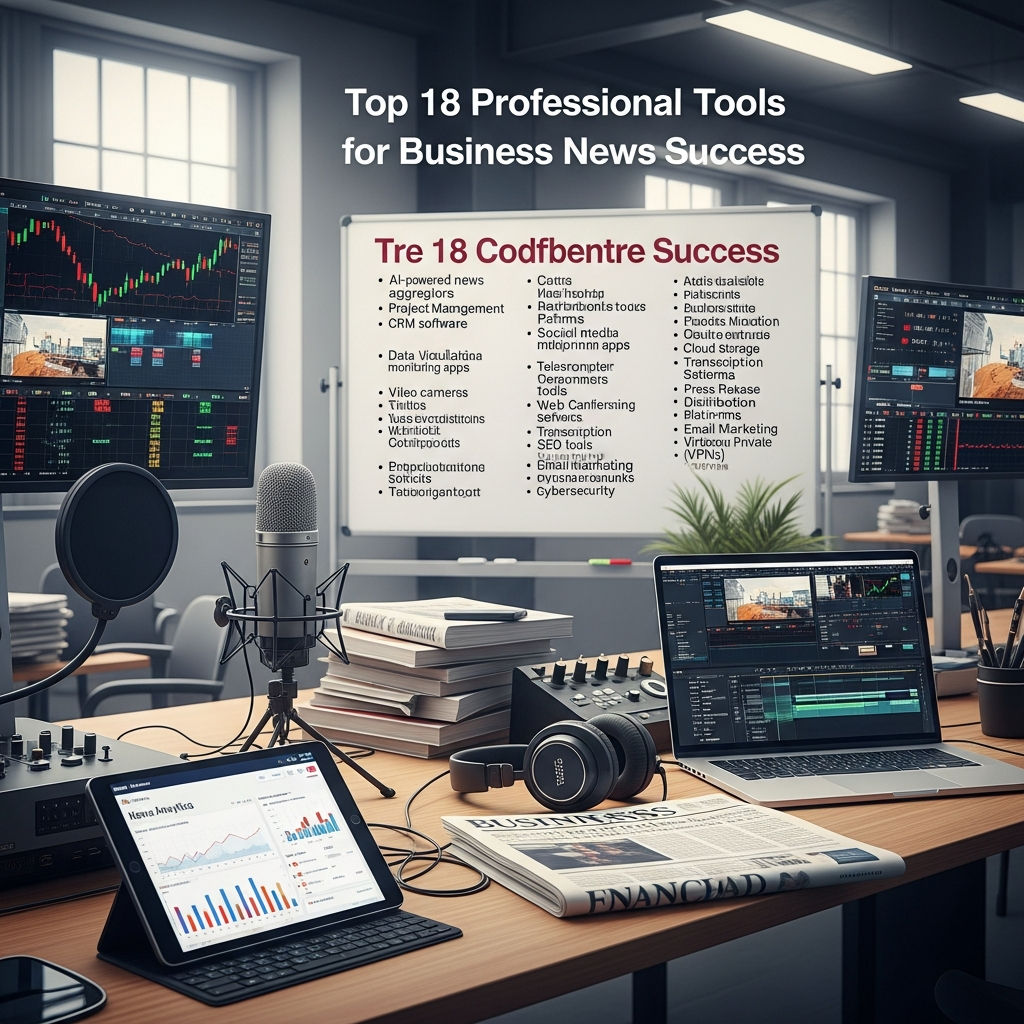
Top 18 Professional Tools for Business News Success

Top 18 Professional Tools for Business News Success

“`html


Top 18 Professional Tools for <a href="https://businessmodals.xyz" target="_blank" rel="noopener" style="color: #2563eb; text-decoration: underline; font-weight: 500;">Business News</a> Success

Top 18 Professional Tools for Business News Success

In the high-stakes world of global commerce, information is the most valuable currency. Whether you are a financial analyst, a corporate executive, or a business journalist, the ability to access, analyze, and disseminate news quickly can define your professional success. The landscape of business media has shifted from traditional print to a complex ecosystem of real-time data, AI-driven insights, and hyper-niche newsletters.

To stay ahead of market shifts and economic trends, you need a specialized toolkit. Below, we explore the top 18 professional tools for business news success, categorized by their specific utility in the modern information economy.

1. Bloomberg Terminal

The Bloomberg Terminal remains the gold standard for financial professionals. It provides real-time data, breaking news, and proprietary analytics that are often minutes ahead of public sources. For anyone serious about business news success, the Terminal offers an unparalleled look into market movements, company financials, and global economic indicators.

2. Reuters Eikon (Refinitiv Workspace)

A direct competitor to Bloomberg, Reuters Eikon (now part of Refinitiv Workspace) is essential for those who require deep-dive financial analysis and global news coverage. Its strength lies in its intuitive search functionality and its massive database of historical economic data, making it a favorite for institutional investors and newsrooms alike.

3. FactSet

FactSet is a powerful solution for those who need to integrate news with heavy-duty financial modeling. It excels at consolidating data from multiple sources into a single, streamlined interface. It is particularly useful for investment bankers and research analysts who need to correlate breaking news with specific portfolio performance metrics.

4. Feedly

In an era of information overload, Feedly is the premier tool for news aggregation. By using AI-powered “Leo” assistants, Feedly can filter through thousands of RSS feeds to find the specific business topics that matter to you. It allows professionals to build a customized news dashboard that cuts through the noise of general media.

5. Dow Jones Newswires

For those who need the institutional weight of The Wall Street Journal and Barron’s, Dow Jones Newswires provides ultra-fast, actionable intelligence. It is designed specifically for professionals who need to act on news the second it breaks, offering a specialized feed that focuses on market-moving events.

6. Google Trends

Success in business news often requires understanding what the public is searching for in real-time. Google Trends allows you to track the popularity of specific business topics, brand names, or economic terms. This is an essential tool for content creators and marketers looking to align their news delivery with current public interest.

7. Statista

Data visualization is key to making business news digestible. Statista provides access to over one million statistics and facts across 170 industries. When you need to back up a news report with hard data or create a compelling infographic, Statista is the most reliable resource for professional-grade charts and reports.

8. BuzzSumo

To understand which business stories are gaining traction on social media, BuzzSumo is indispensable. It allows you to see the most shared content across platforms like LinkedIn and Twitter. This tool is vital for identifying viral trends before they hit the mainstream cycle, giving you a competitive edge in “trend-jacking.”

9. SEMrush

While often viewed as an SEO tool, SEMrush is a powerhouse for business news intelligence. By monitoring the “Topic Research” and “Market Explorer” features, professionals can see what keywords and news topics are driving traffic to competitors. It helps news-driven businesses optimize their digital presence for maximum visibility.

10. Meltwater

Meltwater is a comprehensive media intelligence platform that monitors news and social media in real-time. For PR professionals and corporate communications teams, it is the best tool for tracking brand sentiment and executive mentions across millions of global sources.

Content Illustration

11. Talkwalker

Similar to Meltwater, Talkwalker specializes in “social listening.” In the modern business world, news often breaks on social media first. Talkwalker uses AI to analyze images, videos, and text across the web, ensuring that no mention of a client or a market trend goes unnoticed.

12. Ahrefs

Ahrefs is critical for analyzing the “authority” of business news sources. By using its Site Explorer, you can see which news outlets are gaining the most backlinks and authority. This is useful for PR professionals who need to identify the most influential publications for their news releases.

13. Substack

Business news has become increasingly decentralized. Substack has become the home for elite analysts and former journalists who have moved to independent newsletters. Subscribing to key voices on Substack allows you to access niche insights that are often too specialized for traditional broadsheets.

14. LinkedIn News

LinkedIn is no longer just a networking site; it is a primary news hub. By following “LinkedIn News” and specific industry thought leaders, you can participate in real-time discussions around business trends. The “Daily Rundown” feature is particularly effective for a quick morning briefing on global corporate affairs.

15. Quartz (Briefs)

Quartz has mastered the art of the “mobile-first” news experience. Their daily briefs and obsession-based tracking are perfect for busy professionals who need high-level summaries of the global economy without the fluff. Their focus on the “new economy” makes it a favorite for tech-forward business leaders.

16. Tableau

For newsrooms and analysts who want to tell a story through data, Tableau is the industry standard for interactive data visualization. It allows you to take complex business datasets and turn them into interactive dashboards, making news insights easier for stakeholders to visualize and act upon.

17. Canva

In the digital age, business news must be visual. Canva allows professionals to quickly create high-quality graphics for social media, reports, or newsletters. With its vast library of templates, even those without a design background can produce professional-looking visuals to accompany breaking news updates.

18. Pocket

Success in business news requires constant reading, but you won’t always have time the moment a story breaks. Pocket allows you to save articles, videos, and stories from any publication to view later. Its “best of” recommendations also help surface high-quality long-form journalism you might have otherwise missed.

Conclusion: Building Your Custom Intelligence Stack

Achieving success in the realm of business news is not about using every tool available; it is about building a “stack” that serves your specific goals. If you are a trader, the speed of the Bloomberg Terminal is non-negotiable. If you are a content strategist, BuzzSumo and SEMrush will be your primary drivers.

The common thread among all successful business professionals is the integration of these tools into a daily routine. By leveraging a mix of real-time data, AI-driven aggregation, and deep-dive analysis, you can move from being a consumer of news to a master of business intelligence. In a world that never stops moving, these 18 tools provide the leverage you need to stay ahead of the curve.

  • Speed: Use terminals and newswires for instant alerts.
  • Context: Use Statista and Tableau to understand the “why” behind the numbers.
  • Distribution: Use Substack and LinkedIn to share your insights with the world.

“`

50 Secret Tips to Improve Your Business (and Boost Your Bottom Line)

50 Secret Tips to Improve Your Business (and Boost Your Bottom Line)

Every entrepreneur dreams of a thriving business, but the path to success isn’t always obvious. While big strategies grab headlines, it’s often the subtle shifts and “secret” tips – those less-talked-about yet incredibly impactful actions – that truly propel a business forward. From refining your marketing to empowering your team, these 50 actionable insights are designed to help you identify untapped potential, streamline operations, delight customers, and ultimately, significantly improve your business performance.

Marketing & Sales Mastery: Attract, Convert, Grow

Your ability to reach the right audience and convert them into loyal customers is the lifeblood of your business. These tips focus on refining your outreach and sales processes.

  • 1. Define Your Micro-Niche: Instead of broad targeting, identify a hyper-specific segment of your ideal customer. This allows for incredibly focused marketing efforts and higher conversion rates.
  • 2. Master Storytelling: Don’t just sell products; sell the transformation your product provides. Weave compelling narratives that resonate emotionally with your audience and build brand connection.
  • 3. Leverage User-Generated Content (UGC): Encourage customers to share their experiences. UGC is authentic, builds trust, and is often more effective than traditional advertising.
  • 4. Implement a “Value-First” Content Strategy: Provide immense value through your blog, videos, or social media before asking for a sale. Educate and solve problems to build authority.
  • 5. Optimize for Voice Search: With the rise of smart speakers, ensure your SEO strategy includes conversational long-tail keywords relevant to how people speak.
  • 6. Create Personalized Retargeting Ads: Tailor ads to visitors based on their specific actions on your website. Remind them of items they viewed or services they showed interest in.
  • 7. Offer Irresistible Lead Magnets: Give away valuable free resources (e-books, templates, webinars) in exchange for email addresses to build your subscriber list quickly.
  • 8. Embrace Micro-Influencers: Partner with smaller influencers whose audience is highly engaged and relevant to your niche. They often offer better ROI than mega-influencers.
  • 9. Analyze Competitor Ad Strategies: Use tools to see what ads your competitors are running successfully. This offers insights into what resonates in your market.

Elevating Customer Experience: Build Loyalty & Advocacy

Exceptional customer service isn’t just a department; it’s a philosophy that permeates every touchpoint. Happy customers become repeat buyers and powerful brand ambassadors.

  • 10. Proactive Customer Support: Anticipate common issues and address them before customers even have to ask. Provide FAQs, tutorials, and helpful resources upfront.
  • 11. Personalize Every Interaction: Use customer names, remember past purchases, and tailor communications to make each customer feel valued and understood.
  • 12. Implement a Feedback Loop: Actively solicit customer feedback through surveys, reviews, and direct conversations. More importantly, demonstrate that you act on it.
  • 13. Empower Front-Line Employees: Give your customer service team the authority and resources to solve problems on the spot, reducing friction and increasing satisfaction.
  • 14. Create a Delightful Unboxing Experience: For physical products, make the unwrapping memorable with thoughtful packaging, a small gift, or a handwritten note.
  • 15. Follow Up Post-Purchase: Check in with customers after they’ve received their product or service. Offer support, gather feedback, and reinforce their buying decision.
  • 16. Streamline Returns & Exchanges: Make this process as painless as possible. A positive return experience can turn a potentially lost customer into a loyal one.
  • 17. Build a Brand Community: Create spaces (online forums, social groups) where customers can connect with each other and your brand, fostering a sense of belonging.
  • 18. Turn Complaints into Opportunities: View negative feedback as a chance to demonstrate your commitment to customer satisfaction and often win over a dissatisfied customer.

Operational Efficiency & Productivity: Streamline for Success

Work smarter, not harder. Optimizing your internal processes can save time, reduce costs, and free up resources for growth and innovation.

  • 19. Automate Repetitive Tasks: Identify manual, time-consuming tasks and find software or tools to automate them (e.g., email sequences, data entry, social media scheduling).
  • 20. Document All Core Processes: Create clear, step-by-step guides for every essential task. This ensures consistency, simplifies onboarding, and reduces errors.
  • 21. Embrace Cloud-Based Collaboration Tools: Utilize platforms like Slack, Asana, or Google Workspace to improve communication, project management, and remote work efficiency.
  • 22. Conduct Regular Process Audits: Periodically review your workflows to identify bottlenecks, inefficiencies, and areas for improvement.
  • 23. Implement the “Two-Minute Rule”: If a task takes less than two minutes, do it immediately. This prevents small tasks from piling up and becoming overwhelming.
  • 24. Delegate Effectively: Learn to entrust tasks to team members, clearly outlining expectations and providing necessary resources, rather than trying to do everything yourself.
  • 25. Optimize Your Meeting Culture: Make meetings shorter, have clear agendas, define objectives, and ensure actionable outcomes to maximize their productivity.
  • 26. Leverage Data Analytics: Use insights from your sales, marketing, and operational data to make informed decisions and identify trends.
  • 27. Declutter Your Digital Workspace: Organize files, emails, and desktop to reduce cognitive load and improve focus and speed.

Financial Savvy & Stability: Secure Your Future

Smart financial management isn’t just about making money; it’s about protecting it, understanding its flow, and making it work harder for your business.

  • 28. Monitor Cash Flow Daily/Weekly: Stay on top of your incoming and outgoing funds to predict potential shortfalls and manage liquidity proactively.
  • 29. Negotiate Better Vendor Terms: Don’t be afraid to renegotiate contracts with suppliers for better pricing or payment terms. Small savings add up.
  • 30. Diversify Revenue Streams: Explore complementary products, services, or subscription models to reduce reliance on a single income source.
  • 31. Implement a Profit First System: Allocate a percentage of every dollar earned to profit first, before expenses. This ensures profitability from day one.
  • 32. Regularly Review & Cut Unnecessary Expenses: Scrutinize all expenditures, from software subscriptions to office supplies, and eliminate anything that doesn’t provide clear value.
  • 33. Understand Your True Cost of Acquisition (CAC): Know exactly how much it costs to acquire a new customer and continually work to reduce it while increasing Customer Lifetime Value (CLTV).
  • 34. Build an Emergency Fund: Set aside at least 3-6 months of operating expenses. This financial cushion is vital for weathering unexpected downturns or seizing opportunities.

Innovation & Strategic Growth: Future-Proof Your Business

To stay relevant and competitive, businesses must continuously evolve. These tips encourage a mindset of curiosity, adaptability, and forward-thinking.

  • 35. Foster a Culture of Experimentation: Encourage your team to test new ideas, even if they fail. Learning from failure is crucial for innovation.
  • 36. Stay Ahead of Industry Trends: Regularly read industry publications, attend webinars, and network with peers to anticipate shifts and prepare your business.
  • 37. Seek Strategic Partnerships: Collaborate with other businesses that complement yours. This can open new markets, share costs, and enhance offerings.
  • 38. Conduct Regular SWOT Analysis: Periodically assess your Strengths, Weaknesses, Opportunities, and Threats to inform your strategic planning.
  • 39. Encourage Employee Innovation: Create channels for employees to submit ideas for new products, services, or process improvements. Reward creative thinking.
  • 40. Develop a “Minimum Viable Product” (MVP): Instead of launching a perfect product, release a basic version to gather feedback and iterate quickly.
  • 41. Globalize Your Thinking: Even if you operate locally, understand global market dynamics and how they might impact your industry or create new opportunities.
  • 42. Invest in Research & Development (R&D): Allocate a portion of your budget to exploring new technologies, materials, or methods that could give you a competitive edge.

Leadership, Team & Personal Growth: Empower Your People (and Yourself)

A strong business is built on strong leadership and a motivated, capable team. These tips focus on developing both.

  • 43. Lead with Empathy: Understand your team’s challenges and perspectives. Empathetic leadership builds trust and fosters a supportive work environment.
  • 44. Provide Continuous Learning Opportunities: Invest in training, workshops, and certifications for your employees. A skilled team is a powerful asset.
  • 45. Encourage Autonomy and Ownership: Give employees the freedom to make decisions and take ownership of their projects. This boosts engagement and innovation.
  • 46. Practice Active Listening: Truly listen to your employees and customers. Understanding their needs and concerns is fundamental to effective problem-solving.
  • 47. Implement Regular 1:1 Check-ins: Move beyond annual reviews. Frequent, informal check-ins provide valuable feedback and mentorship opportunities.
  • 48. Foster a Culture of Recognition: Acknowledge and celebrate achievements, big and small. Acknowledgment boosts morale and motivation.
  • 49. Prioritize Your Own Growth: As a leader, continuously learn, read, and seek mentorship. Your personal development directly impacts your business’s potential.
  • 50. Protect Your Work-Life Balance: Burnout is real. Set boundaries, delegate, and take time for yourself to recharge. A healthy leader leads a healthy business.

Implementing even a handful of these “secret” tips can lead to significant improvements in your business’s efficiency, profitability, and overall health. The key is not to try and do everything at once, but to identify the areas where you can make the most impact, start small, iterate, and commit to continuous improvement. Your business is a dynamic entity – nurture it with these insights, and watch it thrive.

External Reference: Business News