


Syria Rebounds as Regional Energy Hub Post-Sanctions
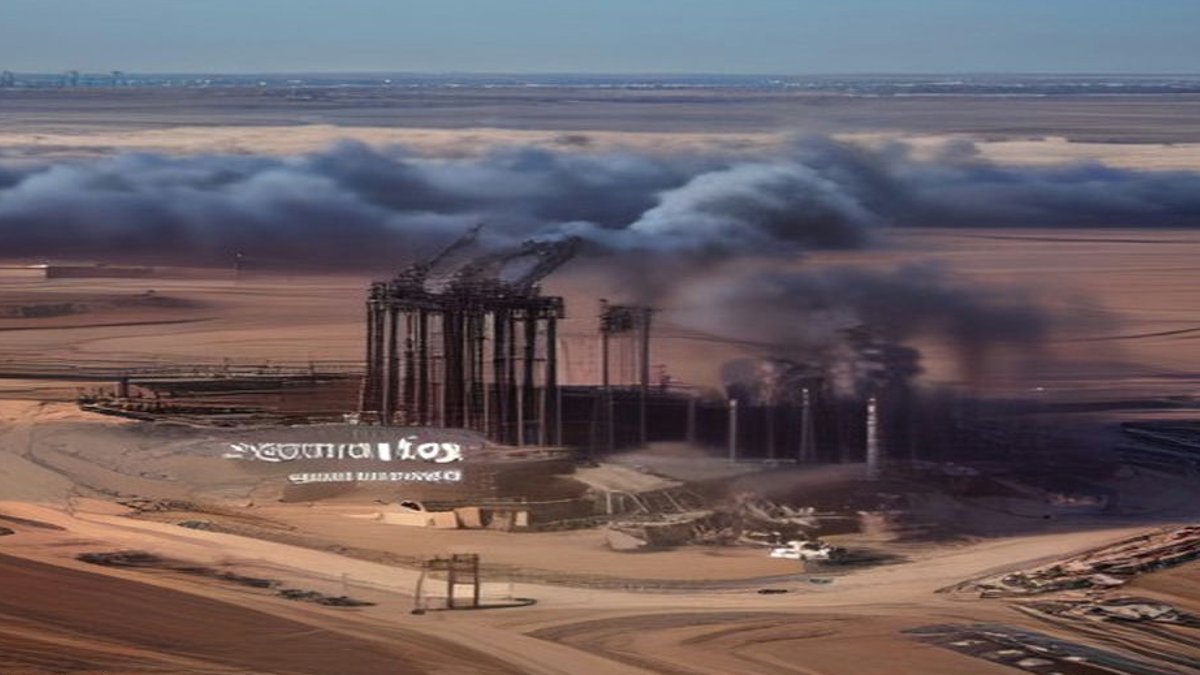
Syria is emerging from more than a decade of conflict to rebuild its energy sector, with the transitional government under President Ahmed al-Sharaa positioning the country as a potential regional energy hub. The government took control of key energy assets including the Omar oil field and Tabiyeh gas complex in May 2025, reuniting oversight of production sites that had been scattered across the country during the war. This consolidation follows the lifting of U.S. and EU sanctions after the Assad regime fell, which has made it easier for international companies to invest in Syrian energy projects.
Before the 2011 conflict, Syria produced an average of 380,000 barrels of crude oil per day and 900 million cubic feet of natural gas. Wood Mackenzie figures show production has since dropped 80 per cent for oil and 50 per cent for gas. Despite this decline, the country holds estimated reserves of 1.3 billion barrels of oil equivalent, with vast unexplored onshore areas and an entirely untapped offshore sector waiting for development.
Foreign Investment Returns to Syrian Energy
In May 2025, Syria announced its first deep-water oil and gas exploration project offshore, bringing together Chevron, UCC Holding, and the Syrian Petroleum Company. The project marks a significant milestone as the transitional government actively courts foreign investment across its energy portfolio. Multiple U.S. oil and gas firms have since expressed interest in Syrian projects, signaling renewed confidence in the country’s energy potential.
The geopolitical environment further enhances Syria’s strategic value. Iran’s restrictions on energy trade through the Strait of Hormuz have created demand for alternative pipeline routes. Syria’s border with Turkey provides direct access to major pipeline networks, positioning the country as a potential “energy land bridge” for transporting Persian Gulf oil and gas to European markets, according to analysis from the Baker Institute.
The transitional government’s national strategy emphasizes institutional reorganization and economic stabilization, with energy development central to long-term recovery goals. A 2026 agreement with the Kurdish-led Syrian Democratic Forces could integrate SDF forces into state structures, potentially further unifying energy governance across previously divided regions.
Read Also: US Treasury Grants Six-Month Russian Diesel Waiver
The country’s renewable energy development has accelerated alongside traditional sector recovery. Off-grid solar capacity grew from around 250 MW in 2022 to over 2 GW by 2025, as small-scale projects began emerging across the nation. In June 2025, a $7 billion consortium deal with Qatar, Turkey, and the United States launched to rebuild Syria’s power sector, including four gas-fired power plants and a 1 GW solar park.
The project is expected to add 5 GW of capacity, which will cover almost half of the current electricity demand. A Joint Development Agreement with the Saudi energy group ACWA Power in September 2025 aims to develop 1 GW of solar PV capacity and approximately 1.5 GW of wind power.
The Syrian Ministry of Energy also signed a deal with Dubai’s Marv Energy in February to build a 700-MW wind farm with 140 locally manufactured turbines, aiming for completion within five to seven years. This localized manufacturing effort highlights Syria’s growing domestic capacity to support energy infrastructure development.
The Ministry of Energy issued a request for expressions of interest for the Halabiya-Zalabiya Dam project on the Euphrates River. The project would include the construction of an 81-MW hydropower plant and a 1.2-GW pumped-storage hydropower facility, with an estimated investment cost of $1.16 billion. The project would require the development of a 1,200-metre-long, 23-metre-high dam. The hydropower plant would have three 27-MW turbines.
Integration of SDF Forces and Energy Governance
During the war, Damascus lost control of major production sites in the northeast, while gas operations in central regions remained under government management. The SDF agreement aims to bridge this divide, enabling coordinated management of resources like the Omar oil field and Tabiyeh gas complex under a centralized authority. This consolidation is critical for attracting foreign investors seeking stable partnerships.


